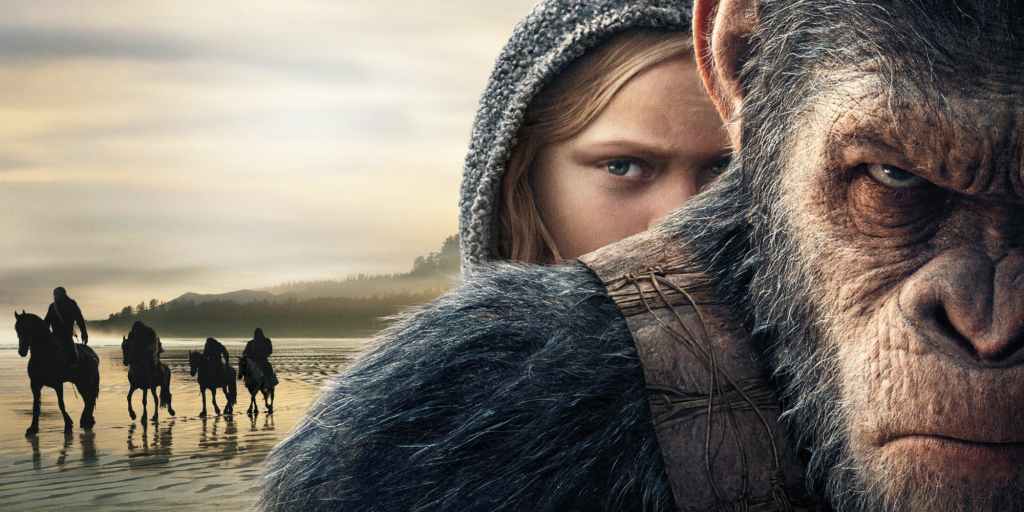
Apes together strong
Review by Vives Anunciacion
War for the Planet of the Apes
Directed by Matt Reeves
Third in the Planet of the Apes reboot series
Rated PG
Possible spoilers ahead
Published 7.11.2017 Inquirer Libre, PH
War for Planet of the Apes trailer
If there’s anything to learn from the 1968 original Planet of the Apes, it is that “man understands nothing.” Nearly fifty years since and we’re still on the brink of destroying the planet.
War for the Planet of the Apes is a stunning, poetic, emotional and fitting closure to Ceasar’s cinematic legacy. Its gloom and doom make for a dark and unhappy blockbuster film, but that’s the magic of it – it has stayed true to its core of creating the back story as to how Earth became ruled by apes.
Nearly fifteen years since the Simian flu decimated the human population in the franchise reboot Rise of the Planet of the Apes, the deadly conflict between humans and apes continue in the third chapter War for the Planet of the Apes.
Ceasar (Andy Serkis) and his colony of apes are fortified in the forests of northern California, while an army of humans led by a rogue Colonel (Woody Harrelson) slowly closes in, determined to destroy the colony.
Ceasar battles against his own conscience when he decides to challenge the Colonel, avenge those he lost and take back the remainder of his ape kin from the “zoo.’ However, the colonel believes that the earth only belongs to either ape or human.
The series has quite a resonant message on the self-destructive nature of humans, even after the second installment, Dawn of the Planet of the Apes, explored that self-destructiveness may come with the added intelligence from the likes of Koba (Toby Kebbel.) WFTPOTA takes this to a new level when the supposedly evolved and more intelligent apes exhibit the full range of human experience from Ceasar’s benevolence to Maurice’s (Karin Konoval) nurturing of the human orphan Nova (Amiah Miller) to the scene-stealing Bad Ape’s (Steve Zahn) neurosis.
Much of the magic onscreen comes from the computer-captured emotions from Serkis et al, the stunningly realistic render of water, fur and snow and ape face by WETA Digital, to the haunting shades of light and dark by cinematographer Michael Seresin and the otherworldly music by Michael Giacchino. It is two and a half hours of almost unbelievable fusion of human and digitally-created images and sound.
For a blockbuster movie about war, it would have been easier and clichéd if the film explored a more explosive exchange between Ceasar and the Colonel. WAR cleverly focuses on the conflict within Ceasar himself, digging deeper into his consciousness rather than showing an endless stream of bullets – reminiscent of classic war films (such as Apocalypse Now and Schindler’s List) that are about its characters rather than the plot.
It may not be your usual superhero summer blockbuster, but it is one with a lot of meaning, made riveting by compelling storytelling, performances and state-of-the-art film technology. It still ends on a Hollywood formula, though – one that keeps this smart film away from Best Picture territory.
 acid reflects
Leave a comment