
About halfway through the movie, Capt. Pete “Maverick” Mitchell (Tom Cruise) tells his students that time is the enemy.
For a good while, we the viewing audience thought we would never see a Top Gun sequel in theaters, ever. It’s been that long a time. Getting to see Top Gun: Maverick on the big screen was almost never going to be a possibility for many years. But impossible is Tom Cruise’s mission (different movie, I know.) “Never” was not going to happen.

As the titular pilot explains midway through the film, the mission’s crucial success begins with a limit set in time, and it is their team’s first target.
1986 was a very interesting year: the Philippines has just ousted a dictator, Rafael Nadal was born in Manacor, Spain; the Oprah Winfrey Show debuted on television; Studio Ghibli released its first animation, Laputa: Castle In The Sky; IBM introduced the first laptop computer, the PC Convertible; and Halley’s Comet made a fly-by. It was the year Peter Cetera went solo to sing Glory of Love for Karate Kid. (The year had its lows, of course, Chernobyl being one of them.)
But what all these didn’t have was one Tom Cruise.
Cruise’s career began in 1981 with a bit role in Endless Love, and quickly took off after starring in the 1983 comedy Risky Business. By 1985, he has appeared in films directed by Francis Ford Coppola, Michael Chapman, and Ridley Scott. In 1986, Top Gun directed by Tony Scott became the highest-grossing film of the year, raking in US$356M worldwide out of a production budget of $15M. Tom Cruise just became a certified international superstar.
Cruise would embark on a remarkable run of blockbuster hits (Edge of Tomorrow, Minority Report) and critically-acclaimed masterpieces (Rain Man, Born on the Fourth of July, Magnolia.) He would revisit his role as Ethan Hunt in the highly successful adaptation of Mission: Impossible several times – but no word on coming back to the role that made him famous everywhere.
Then in 2010 director Scott and Cruise rewatched the original with making a sequel in mind. But Scott would pass on in 2012. Production of Top Gun: Maverick would sit again. A breakthrough came in 2018 with Cruise returning tp the same military base where the original Top Gun was mostly filmed, to undergo full aviation training required to qualify to fly one of the US Navy’s F/A-18s with Jerry Bruckheimer returning as producer and Joseph Kosinski (Tron: Legacy, Oblivion) at the helm. Not so fast, said Fate. Hold my beer.
The film’s release would be delayed to allow the production to “work out its complex flight sequences” which was industry-speak for, “we’re having scheduling issues.” And then Covid-19 struck, almost thirty-five years since the original film came out. Cruise was not getting any younger. One could almost say the sequel was running out of time.
As the world turned to a third year of the pandemic, the entertainment industry stayed its course in producing content that reminded people of days gone by. * Hollywood was quite good at regurgitating the familiar, whether it was E.T. by way of Stranger Things, or I Love Lucy by way of WandaVision. For Tom Cruise it was only Maverick. “One last time,” he says in the film.
And so we are given all these elements as a lengthy introduction to a mission dealt by time.
Top Gun: Maverick, AD 2022. Finally.
Captain Pete “Maverick” Mitchell has been one of the US Navy’s most distinguished pilots for more than thirty years, purposely dodging promotion to avoid getting himself grounded.
After thirty-six years, the audience returns aboard an unidentified aircraft carrier for the film’s opening credits which looks and sounds exactly like the original’s. Maverick appears onscreen donning his signature jacket and shades, and heads off to work on his Kawasaki motorcycle. Pure cinematic nostalgia. His work now involves experimental test flights – the current one, unsurprisingly, he botches. Yup, that’s our Maverick, he hasn’t changed a bit. But change is about to come.
Instead of getting discharged, he is sent back to Naval Fighter Weapons School (aka TOPGUN) in California to train a batch of the school’s best graduates for a secret mission against a real enemy target. It’s a cornucopia of alpha-personalities just waiting to clash with Maverick’s. If that wasn’t troubling enough, complicating Maverick’s new assignment is the presence of Lt. Bradley “Rooster” Bradshaw (Miles Teller,) son of Nick “Goose” Bradshaw (Anthony Edwards) – Maverick’s best friend and former Radar Intercept Officer who died in a training accident. The flashbacks can be harsh. Maverick thinks Rooster isn’t ready for the deadly mission, while Rooster thinks Maverick is keeping him down and safe to make amends to the past. Meanwhile, the fate of the world is on the line. That’s the story’s conflict, to put it simply. And yet I’ve never seen Cruise appear so relaxed in a role such as this. His moments with co-actors are authentic. His doubts, cockiness – the entire Maverick package, genuine – as if it was the real Tom Cruise and the actor is not.
Enter the wingman. Up for debate. (Also, wingpersons?) Maverick was sent back to the school by the commanding admiral of the Pacific Fleet, Tom “Iceman” Kazansky (Val Kilmer) – Maverick’s former Top Gun rival. Iceman’s presence in the story adds a counterpoint to the dynamic between Maverick and Rooster, as it was Maverick’s and Iceman’s rivalry that created Maverick’s arc of becoming the school’s top student. They get a quiet moment together, the ace and the wingman (again, debatable on who’s who.) Kleenex please, Louise! Iceman (in Kilmer’s remaining raspy voice) closes one chapter in Maverick’s past. It’s up to the new blood like Rooster to take Top Gun (franchise?) to new possibilities.
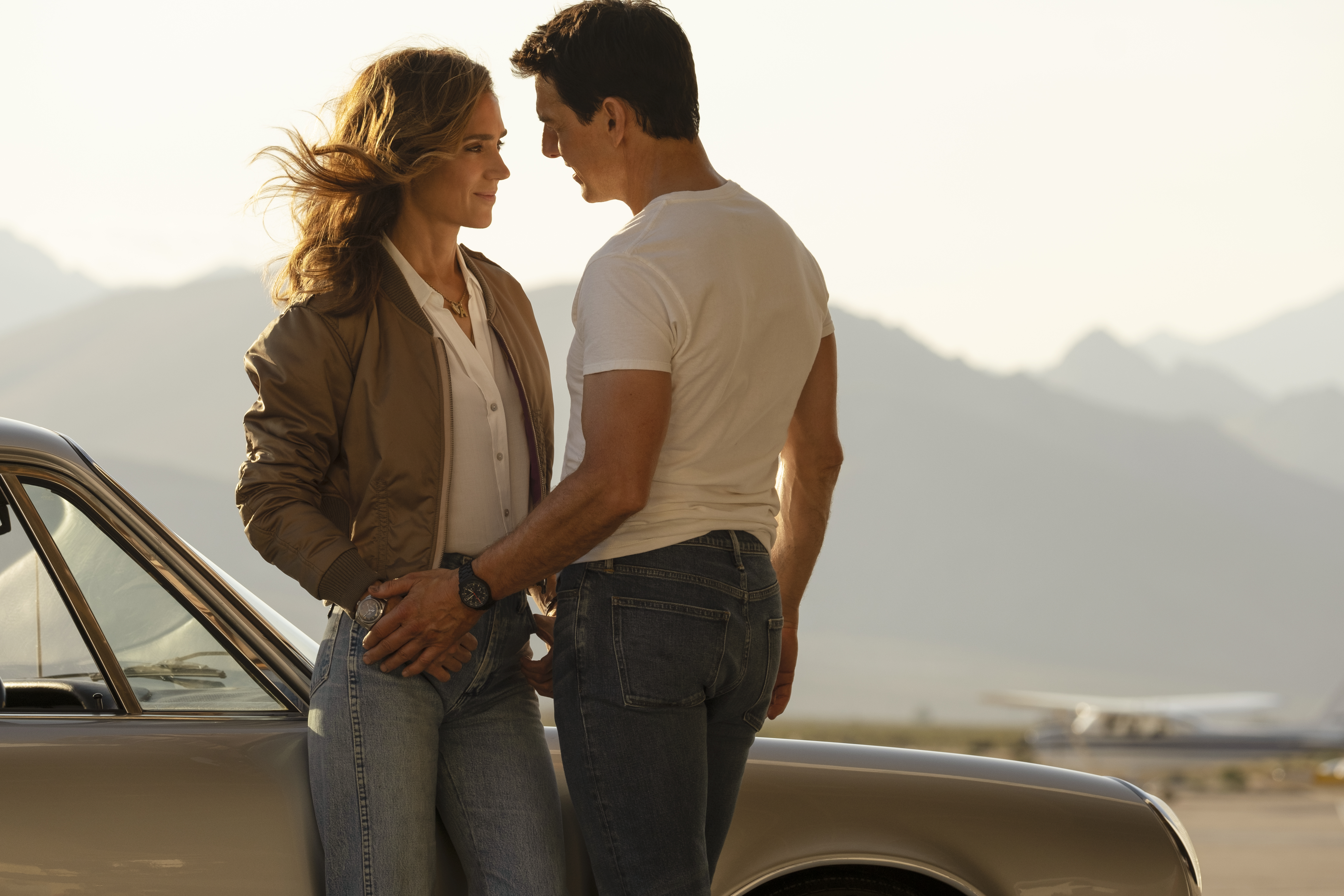
But of course, Maverick can’t ride his Kawasaki motorcycle down memory lane without someone riding behind him, no? The gorgeous Jennifer Connelly plays Penny Benjamin, the new owner of The Hard Deck bar and an old flame of Maverick’s. It’s the first time Cruise and Connelly are working together on the same film though it feels like they have worked together before. Now that is veteran talent right there.
Penny was barely in the original, mentioned only in passing during one of the many times Maverick was being scolded by his superiors. But this aspect reveals a sad selfish note to Maverick’s life: that he has chosen solitude to spare others or even a possible child from loss and pain should he suffer the same fate as Goose’s. Penny’s character is written just enough to give her a strong personality and a knack for boat racing. But as I have said above, the film’s emotional core is the dynamic between Maverick and Rooster. Penny is here to complete Maverick (oops, wrong movie reference again.)
Miles Teller has had noteworthy screen performances in The Spectacular Now and Whiplash, but he has yet to land a role that defines him as an actor. He goes toe to toe with Cruise’s screen presence here, somewhat making Rooster his own while keeping a safe distance from Maverick who is still the center of the narrative. Rooster’s journey is to reestablish the trust that he lost from Maverick, the trust that he needs to accomplish their team’s special mission. But the character is nothing unique, honestly. Fleshed out enough for a clear character arc, but Rooster’s identity for the moment is to remind Maverick of Goose. He’ll be his own by the next sequel, for sure.
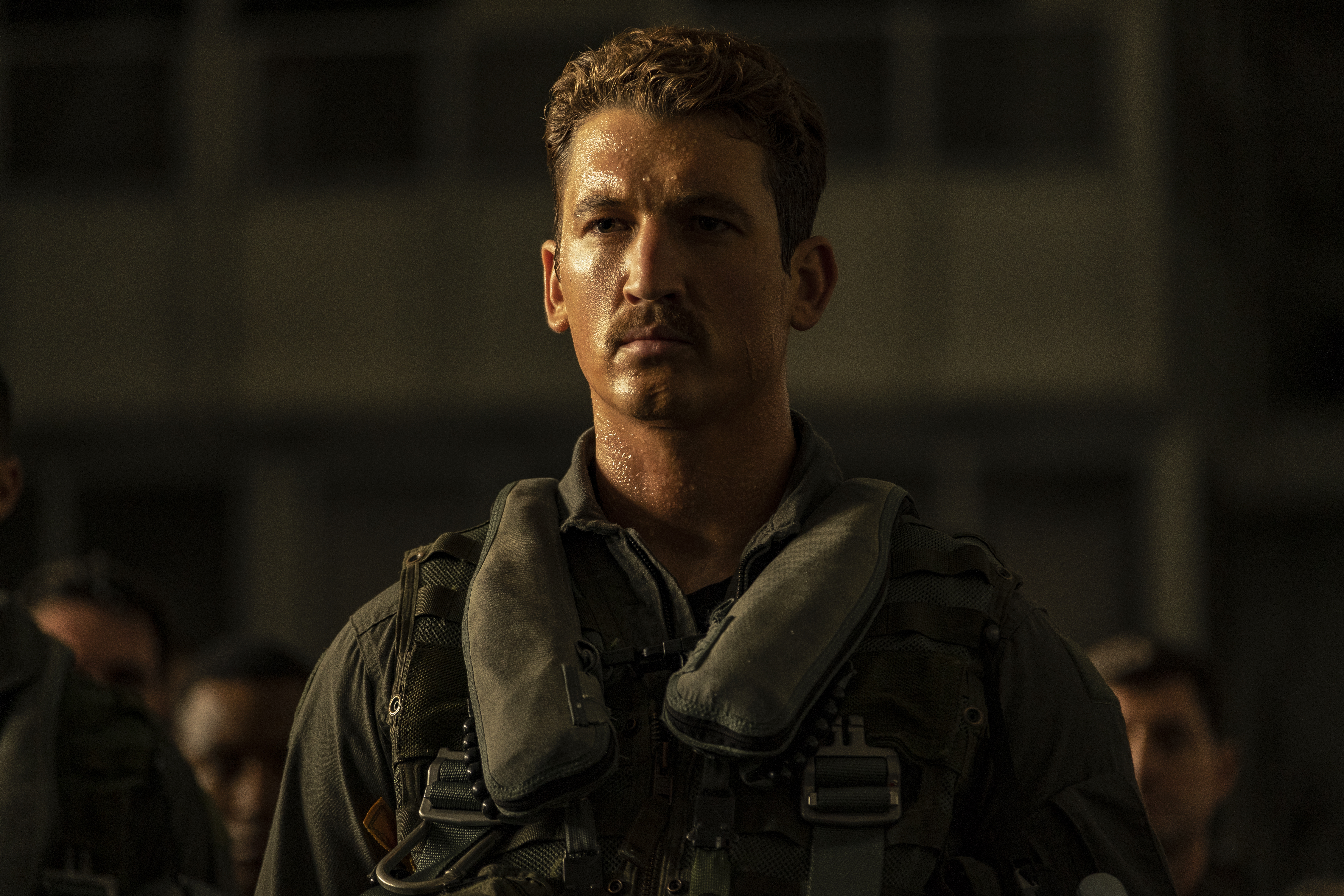
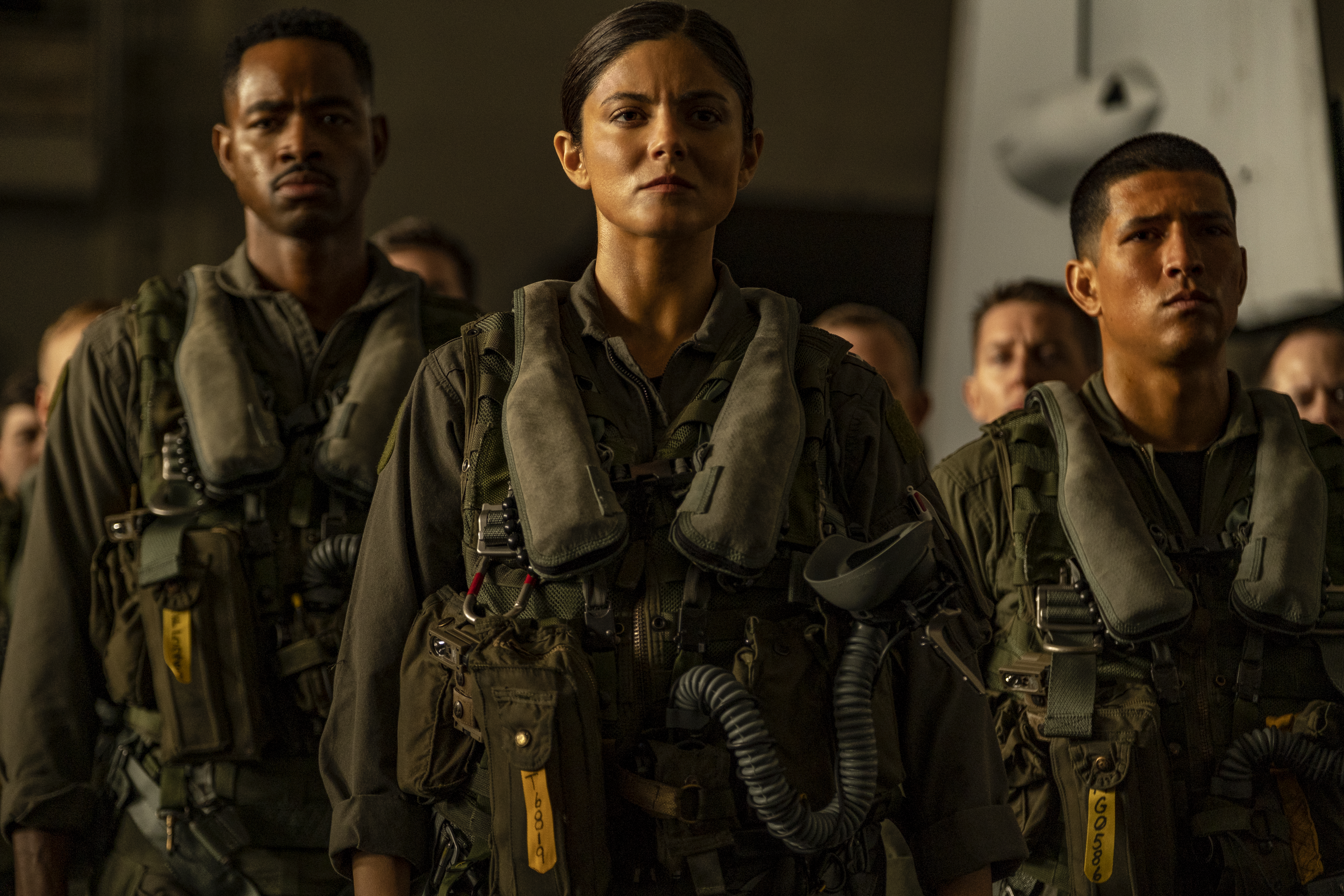
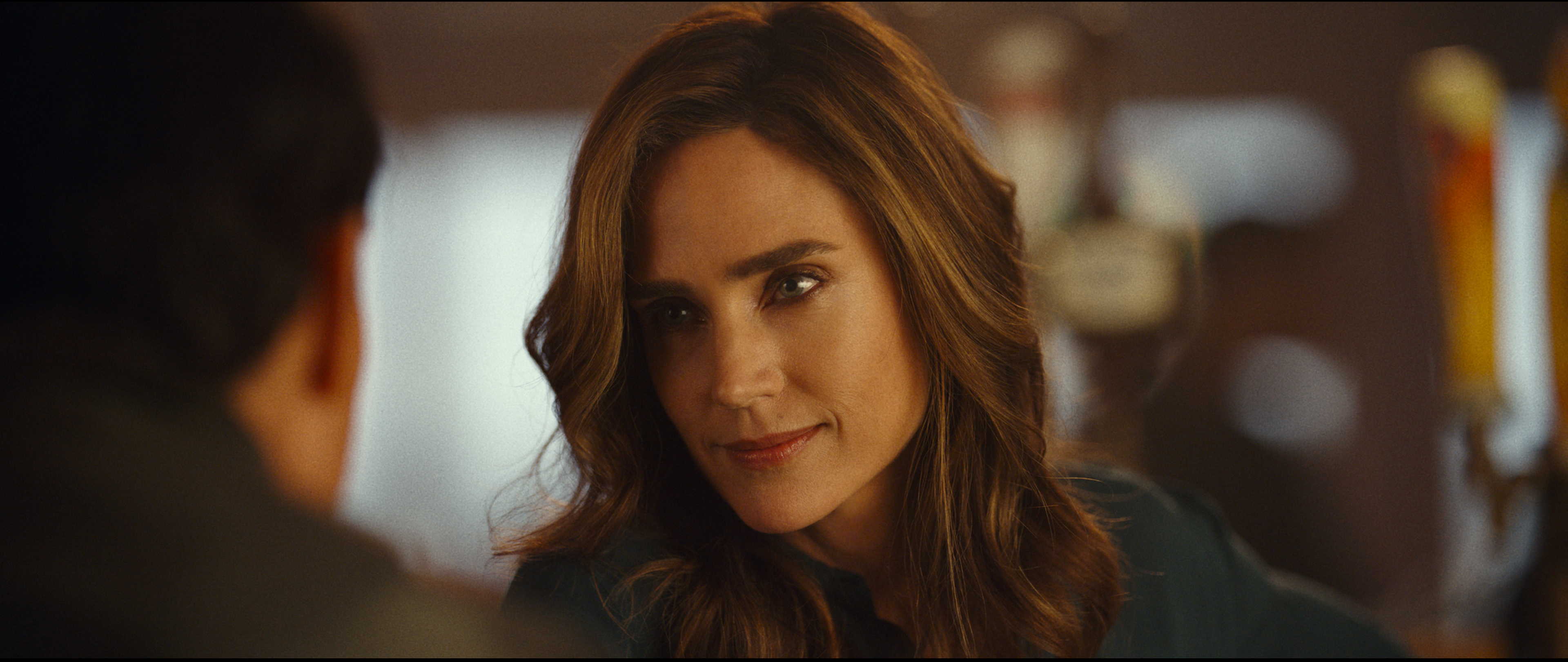

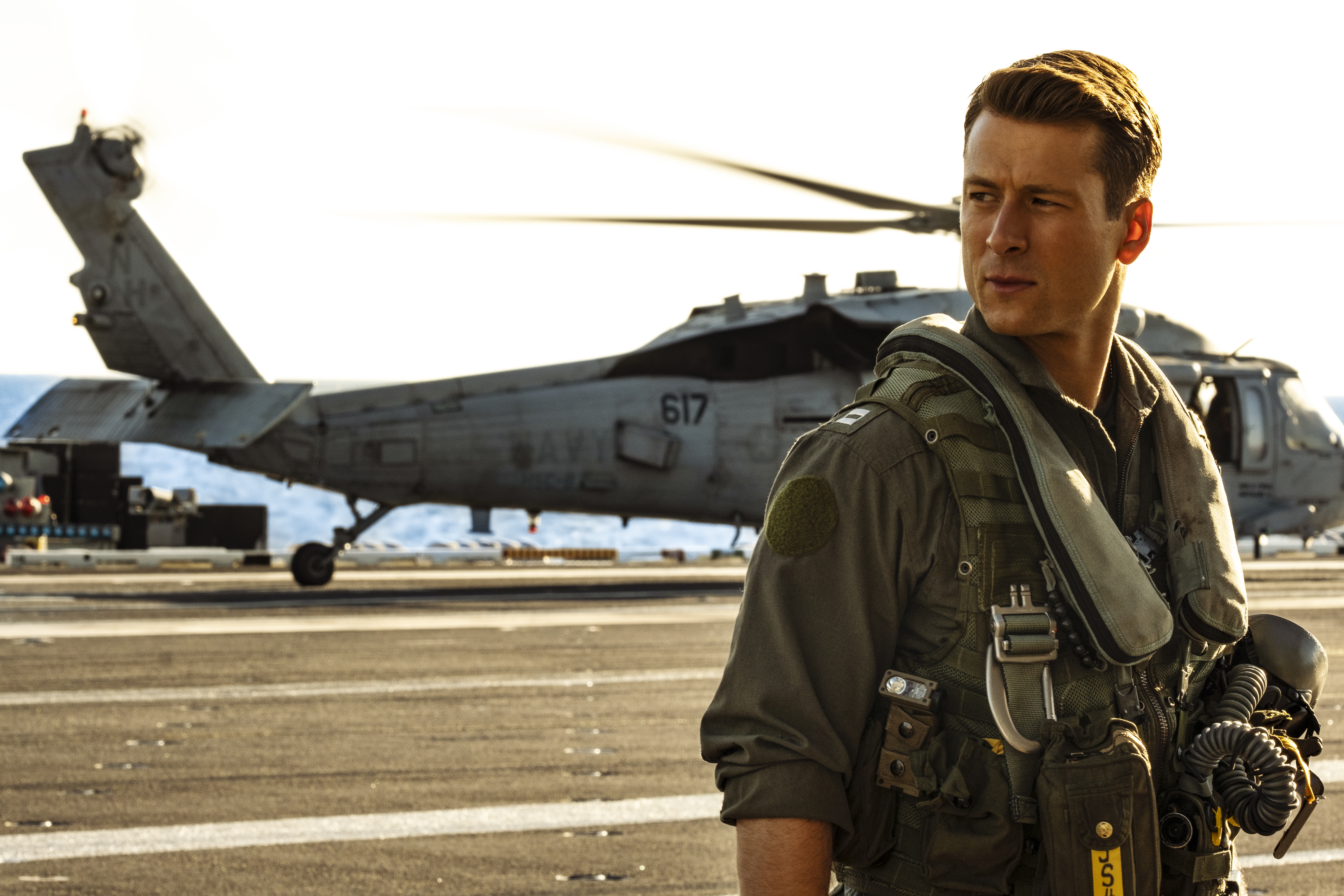
The rest of the cast provides depth and texture to create a more realized, contemporary Top Gun world. For example, the addition of “Phoenix” Trace (Monica Barbaro) in the roster reflects real-world developments – female pilots were only allowed combat flight in the mid-90s long after the original film. Overall, it’s a familiar teacher-students drama: Dead Poets Society, Mr. Holland’s Opus, Mona Lisa Smile. What makes the sequel different from the original is the sequel’s emphasis on teamwork – the wingman. Where the original played on student rivalry, the sequel worked on teams getting things done together. After all, the mission required two teams of two, and a backup of two teams of two to accomplish what the film describes as two miracles.
What is emerging from this franchise (for sure it is now) is that the mission involves never-before-seen fighter jet acrobatics that will spellbind audiences. Why else should a mission require flipping the fighter jets at low speed? So Tom Cruise can do the stunt himself, duh.
In the sequel, the mission involves stealth bombing an underground bunker of uranium in a nondescript valley hidden by towering European mountains at the end of a long, twisting gulley – all under a few minutes. If that sounds like the trench run in Star Wars: A New Hope, it’s because their maneuver IS a Star Wars trench run, but done TWICE. The mission involves two teams of two fighter jets – the first team to destroy the structure over the bunker above ground, the second to bomb the bunker itself. No misses, no second pass. Adding to that challenge is the thrill of being immersed in the cockpit yourself, thanks to clever camera work and gutsy actors who took the pilot training – the experience could only be enjoyed in a cinema. I don’t think a large screen at home can replicate it.
The original film boasted of an Academy nomination in Editing, perhaps in part because it successfully gave the illusion that its actors piloted their fighter jets – including Cruise, who did. Bruckheimer recalls the flight footage of the original castmates was unusable because they didn’t have enough experience in training.
Maverick can snag a repeat recognition in this category again. The sequel accomplishes edge-of-your-seat editing by being authentic – the opposite of what the original tried to hide. Perhaps a product of the vlogging era, perhaps of reality shows, perhaps just plain Tom Cruise physicality: real actors inside real cockpits flying actual fighter jets was a key selling point in the making of the sequel.
Cruise says people have asked him to make a sequel to the iconic film for decades. But he would only entertain the thought, he told the studio, if the studio would shoot everything practically. “I’m in that F/A-18, period. So, we’re going to have to develop camera rigs. There’s going to be wind tunnels and engineering. It’s going to take a long, long time for me to figure it out,” Cruise says in the production notes. What about CGI? Cruise would often reply, “No, that’s not the experience.” That immersion of seeing the actors flying fighter jets themselves enhanced the palpable excitement tenfold. That also likely drove the insurers nuts.
Back in 1986, Gene Siskel called the movie the greatest advertisement for the US Navy, ever. Thirty-six years later, it still is. Top Gun: Maverick revels in the days of bomber jackets, motorcycles, and Aviator shades, as much as it sends off a new generation of mavericks to fly their own dogfights. It’s great PR for the United States war machine. We Filipinos should be waving our hellos from Benham to the West Philippine Sea.
In her classic 2001 cultural study The Future of Nostalgia, Svetlana Boym describes two kinds of nostalgia pervaded by pop culture: restorative and reflective. Top Gun: Maverick seems to be a good mix of both. The restorative part is too obvious – just one tap and a soundtrack playlist immediately restores the Maverick fantasy. But by way of stunt casting and flashbacks and making the dynamic between Maverick and Rooster the core emotional conflict of the film, TGM constantly reminds audiences that some good things will never be back again. That’s the reflective part cutting onions for Iceman. In fact, those flashbacks were cleverly used as backstory, the sequel could almost stand on its own. As Admiral Cain (Ed Harris) tells Maverick early on, “The future is coming. And you’re not in it.” While I doubt that Maverick will never be back in some shape or form in future installments, henceforth Top Gun will never be the same again. The future could be Rooster and the rest, guest starring Maverick. If the original film felt like a lightweight Kdrama, Top Gun Maverick would be the Mr. Sunshine equivalent, Season 2 optional.
It is a blockbuster and a cultural phenom thirty-six years in the making – and it does so successfully on many levels. Top Gun: Maverick is Hollywood nostalgia cinema in top form.
Target achieved.
Top Gun: Maverick opens May 25th in Philippine cinemas.
Images and links courtesy of Paramount Pictures.
* In 2021, the Top 20 highest-grossing films worldwide all came from existing IPs, except for 20th Century’s Free Guy, Disney’s Encanto, and three titles from China.
 acid reflects
Leave a comment