(SPOILER WARNING: Slightly spoilerish review. Will avoid major spoilers.)
Somewhere out there is the GenX god constantly feeding us GenXers with nostalgia content that it seems GenX is ruling pop culture at the moment. I mean, the recently-concluded Stranger Things may have been created by elder Millennials, but the mega-popular show was definitely a love letter to GenX. While 28 Years Later: The Bone Temple is not a show about GenX, music from ’80s English pop rock band Duran Duran figure prominently in a few moments that express the soul of the film and that of its main character, Dr Kelson (Ralph Fiennes.)
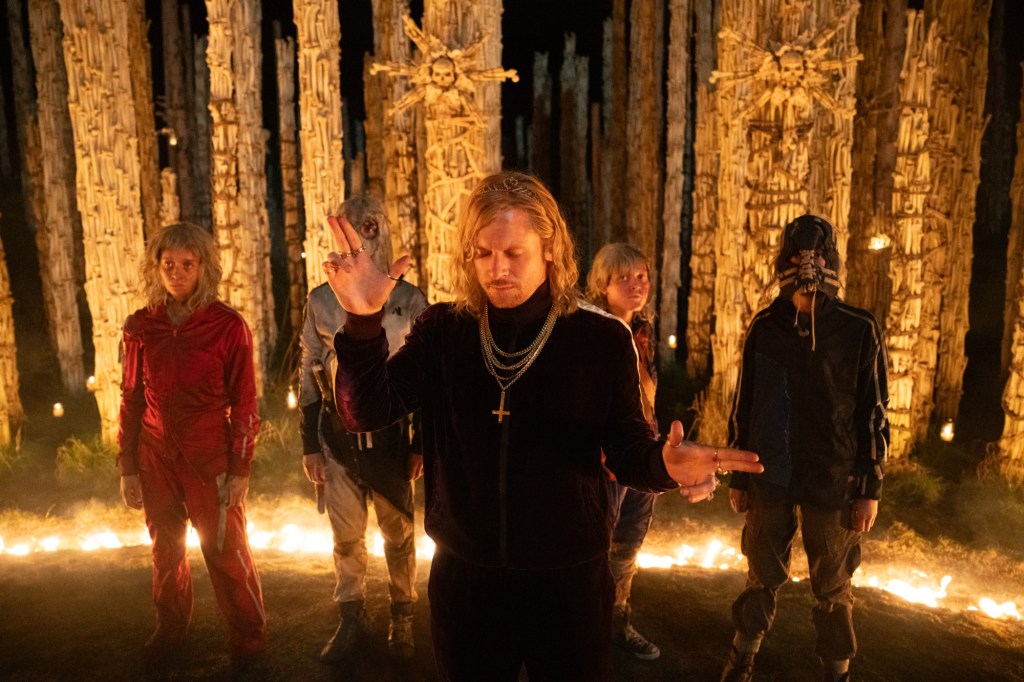
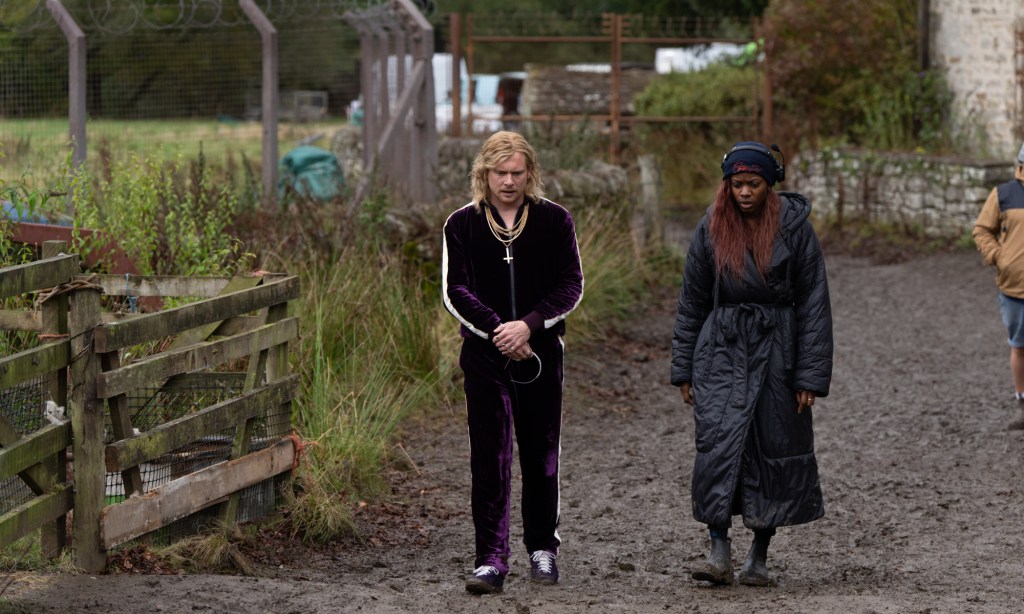
In the next chapter of Alex Garland’s post-zombiepocalypse series, Spike (Alfie Williams) has inadvertently joined the Jimmys, a satanist cult that believes it must cleanse the world of non-believers, violently and without mercy if they so fit. The group is led by Sir Jimmy Crystal (Jack O’Connell) who believes he is the son of the devil that must rule the world. The rest of his followers are all called Jimmy, too. In a bloody ritual soon after he is rescued by the Jimmys in the previous movie, Spike gets folded into the team whether he wants it or not.
Spike is in a bind as he obviously doesn’t want to participate in the Jimmys’ freewheeling murderous methodologies to forcibly recruit more Jimmys to the cult or else suffer some extremely brutal and lethal punishments. One Jimmy, Jimmy Ink (Erin Kellyman) seems to understand how Spike is feeling. But she is a firm believer in Jimmy Crystal’s twisted teachings that she advises Spike to just follow along.
Little does Spike know that the home the Jimmys are currently hijacking is near Dr. Kelson’s Bone Temple established in the previous film.
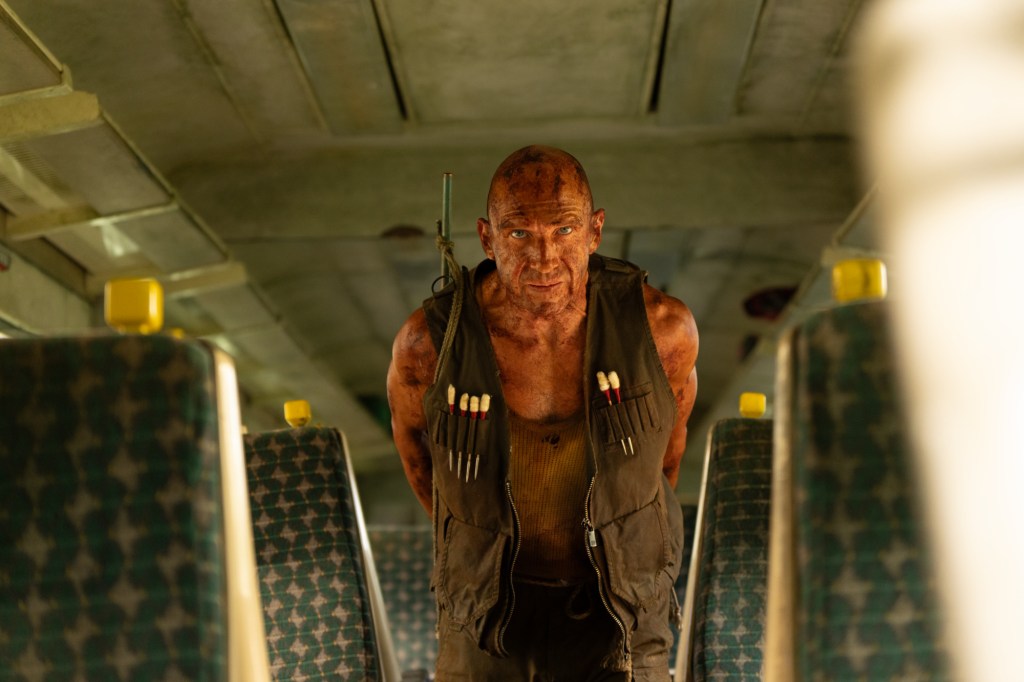
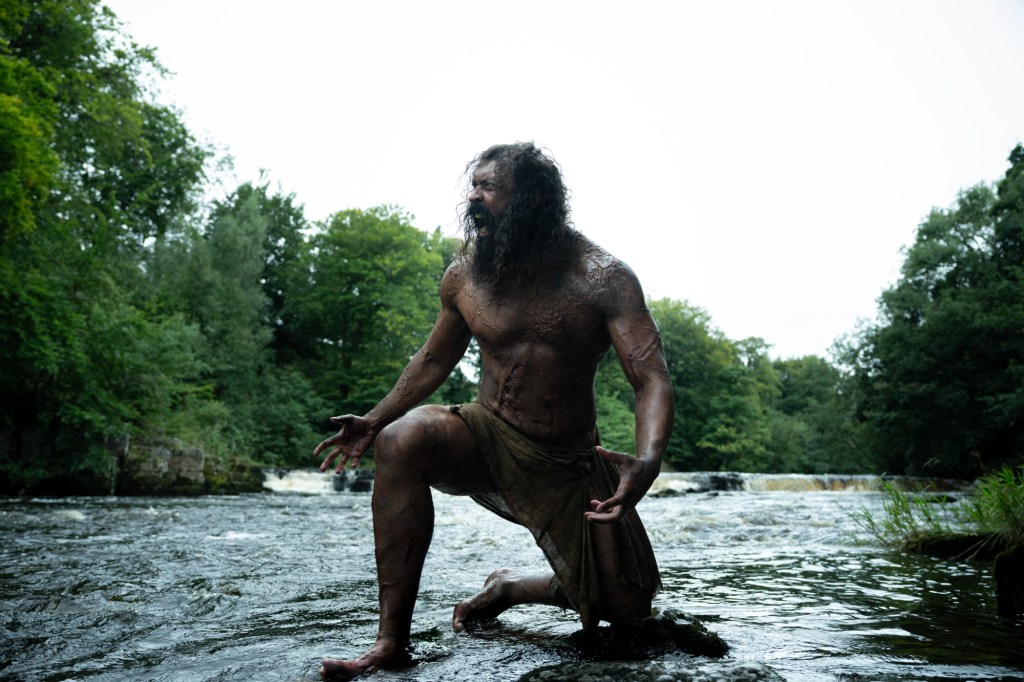
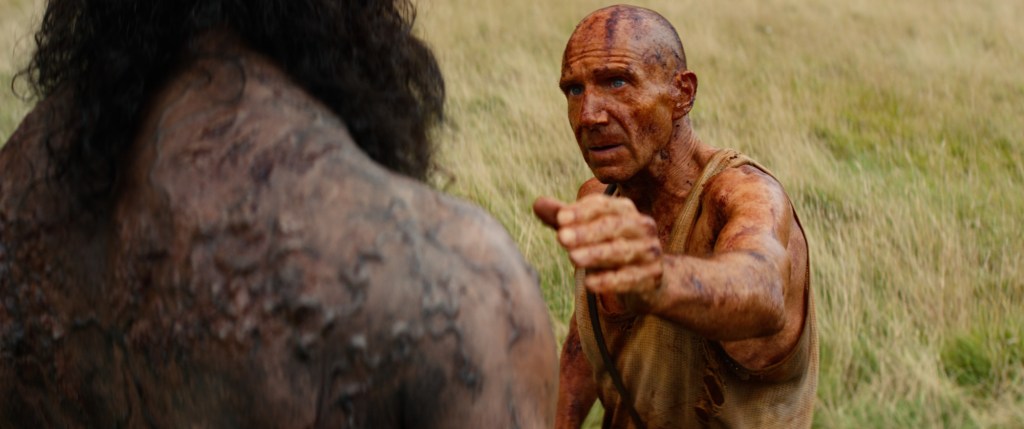
Combining whatever knowledge of chemistry and medicine he can obtain from memory or the books he has gathered throughout the years since the Rage Virus pandemic, Dr. Kelson believes that he can reverse the effects of the virus and end the infection. He spends days in his underground shelter studying for a cure, or sometimes just lies down after clearing his nearby surroundings of the dead and infected, adding bones to his temple, while listening to old records by Duran Duran. To find a cure, he would need a lab rat, an infected to test his theories on. And no better specimen than the alpha himself, Samson (Chi Lewis-Parry) who happens to come by near Kelson’s hill.
The gigantic infected alpha Samson has taken an interest in Dr. Kelson. Or more to the point: an addiction to whatever concoction Kelson put on his darts to immobilize infecteds – so potent that his darts could immobilize the powerfully built alpha, who normally rips out the heads of his victims – spine and all – with his bare hands. During these lull moments, Kelson is able to approach Samson and observe him closely. Except for that time that Kelson interacted with Spike and his mother in the previous film, Kelson has found an audience with Samson, literally and figuratively speaking.
It is during one of these interactions that Jimmy Ink catches Kelson interacting with Samson at a distance. Red skinned from convering his body with iodine to repel the virus, the doctor dances to the tune of Duran Duran’s Rio as Samson idly sits on the hillside, dazed from the drugs in Kelson’s darts. Jimmy Ink, interpreting this satanic vision as prophetic, reports the sight as well as the bone totems to Sir Jimmy. Spike, who deduces that Jimmy Ink has seen the doctor, plans to escape the next morning to warn the doctor.
A lot more happens in the film after this, but it would be spoiler to go through them all.
The choice to interject key scenes of the film with Duran duran songs is interesting at the least. It establishes that Kelson is at least a GenXer, if not a late Boomer. While the dance to the tune of Rio is a little jarring, possibly intentionally comical, the cinematic effect is profound. Kelson, sentient and fully human, sings and dances to art while a lumbering infected giant sits by seemingly with no awareness to self or surroundings.
But the scene that highlights Kelson’s thesis for a cure to the disease and a longing for the return to a civilized world was scored with the song Ordinary World. Juxtaposed with depictions of Samson’s consciousness, the sequence creates a sweeping dirge about memory that calls back to our humanity and the hunger to reconnect with other humans in those memories. It’s a very apt choice of scoring.
Apparently some people in the audience is distracted by Samson’s healthy appendage that makes full frontal appearance several times in the movie, but I was a little more distracted by Spike’s limited emotional range (not sure if this was intentional from the young Williams or a direction from the filmmakers.) From the traumatic events of the first film to the harrowing scenes in the second film, Spike looks like either he hasn’t collected his wits to adapt with speed to the violence in the mainland, or he is simply reacting WITH the audience, representing the audiences’ constant shock from all that happens. It is likely the second, but I can’t be sure. This isn’t a question on Williams’ talent, more of a question on the choices made by the filmmakers to portray Spike as such.
Apart from this, the film’s young new director Nia DaCosta looks to have a promising career, as the film carries along with equal parts plotting and character journey. Although the story is mostly plot to bridge the events in the previous film that established what happened to the world 28 years after the infection, going to the events that are to be in the final installment of 28 Years After that will surely circle back to the characters in the first film. Just enough shock and gore for the genre, just enough emotional beats for the characters to play human. This second film is more ponderous than emotional. It wonders whether a cure is possible after twenty eight years – but more importantly, it asks whether those cured can regain their humanity. This isn’t a novel idea but at least adds layers to the original story of the Rage Virus. In 2013, Warm Bodies, though a comedy, explored whether a zombie can regain humanity through love. The heavier theme of the fallout should hordes of former infected can reintegrate into society has been explored in The Cured (2017.) I wonder how the final installment intends to end the story of the Rage Virus.
I wouldn’t know what would happen to the cult in the next film. There seems to be a finality to the cult in this installment, but I have to admit it is open ended. Sir Jimmy served as that sample of humans who would watch the town burn to make himself king of the ashes. O’Connell does Sir Jimmy quite well, balancing restrained menace with some comical airheadedness and occasional charm that is wont of cult leaders. He wouldn’t have had followers if he didn’t sound convincing, would he? The talented Mr. O’Connell is also in Sinners, I almost didn’t remember.
Overall, The Bone Temple is an applause-worthy crowd pleaser despite being less emotionally-charged as the previous installments. Ralph Fiennes gives a bloody memorable performance worthy to be listed among his most iconic roles.
The final part of this trilogy has been green lit, and judging from these two installments. the finale is to be anticipated.
Oh, and stay during the credits, no spoilers please.
28 Years Later; The Bone Temple is out in Philippine cinemas now, January 14 2026 from Columbia Pictures Philippines. Images and links from Columbia Pictures.
 acid reflects
Leave a comment