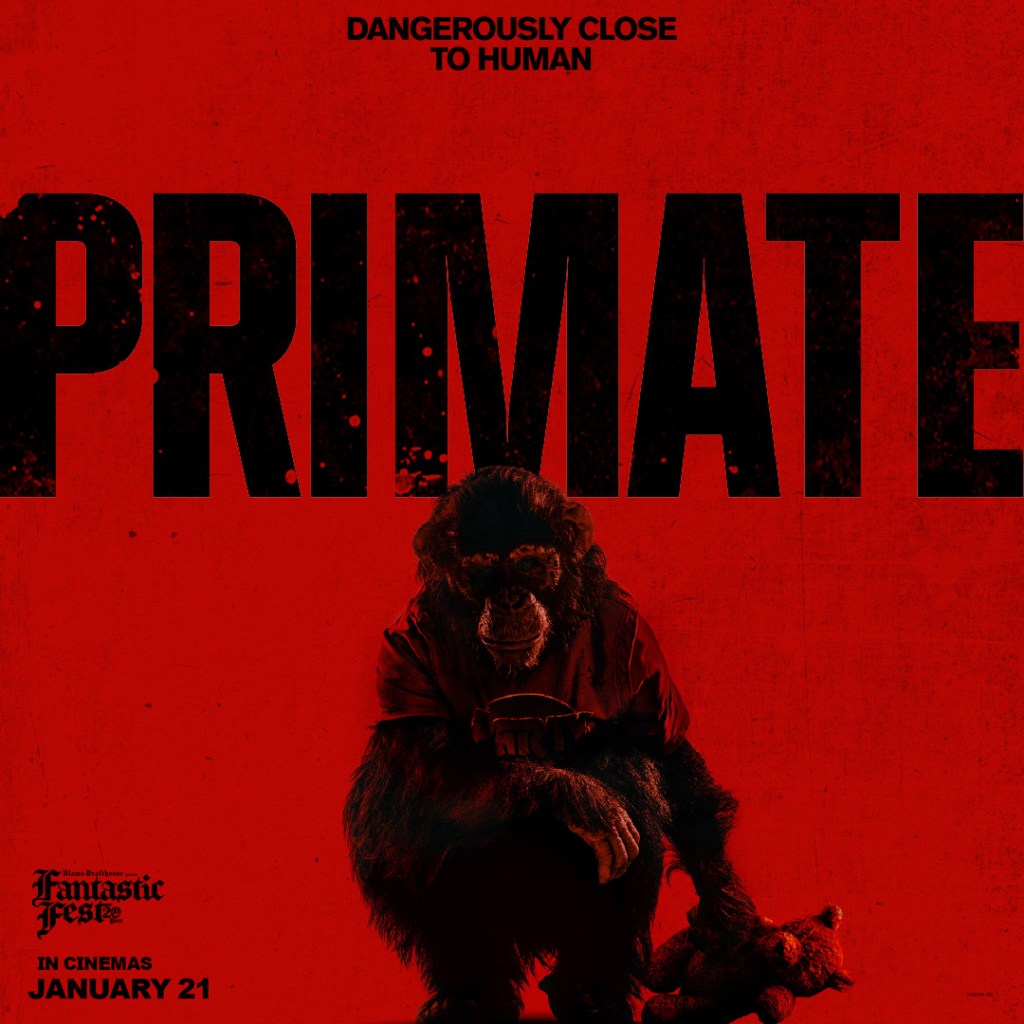
What an animal! I certainly did not expect this one coming. From the trailer, I was ready to dismiss Primate as a pre-prequel to Planet of the Apes with a teen slasher bend. I was kind of half-wrong. I’m sure a lot of people thought similarly before they saw Scream in 1996, right? B-movie slashers can be lots of fun to watch when done right. Primate qualifies for that. Bring your gang along and scream your lungs out together.
Primate refers to Ben (motion captured from Miguel Torres Umba), the pet chimpanzee of the Pimberboughs, a family of academics from Hawaii. From the credits we are told that Mrs. Pimberbough who trained Ben has already passed away due to cancer, and Ben is left in the tender care of Adam (Troy Kotsur) and his daughters. The movie opens with information about hydrophobia, aka rabies, and after a gruesome first scene with Ben and a vet, we understand that Ben has contracted rabies.
For summer break, Lucy (Johnny Sequoyah) comes home to Hawaii to her father Adam and younger sister Erin (Gia Hunter.) Lucy has brought along her best friend Kate (Victoria Wyant), Kate’s friend Hannah (Jess Alexander.) At the airport, Kate’s brother Nick (Benjamin Cheng) picks them up. For dynamics, we have Lucy who is kind of into Kate’s brother, who has nothing on Lucy but maybe something on Hannah who Lucy isn’t really close with. Sounds like a teen movie, barks like a teen movie. Nothing wrong so far.
Pretty soon, Ben is displaying the symptoms of his infection: distress, aversion towards water, and more than the usual dislike to strangers. Hannah in particular isn’t comfortable with Ben. Adam is the first to discover this unusual behavior, but dismisses it. He says he’ll call the vet to look at Ben’s wound. Things don’t go well when the vet does arrive, circling back to the film’s opening scene. And it’s alsmost non-stop thrill from here onwards.
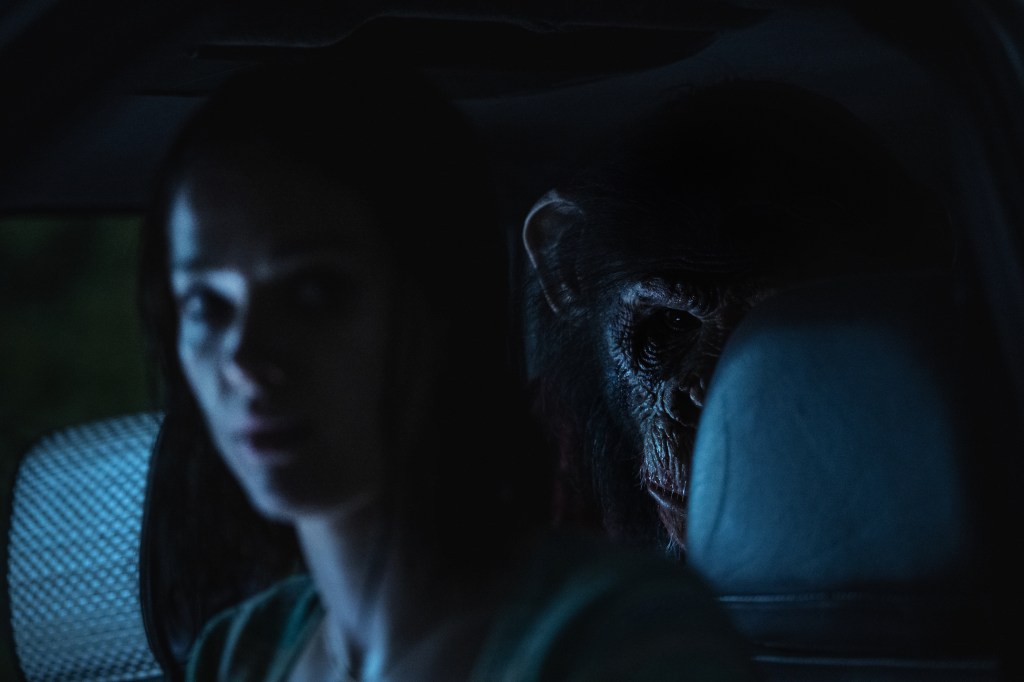
Jessica Alexander as “Hannah” and Miguel Torres Umba as “Ben” in Primate from Paramount Pictures. 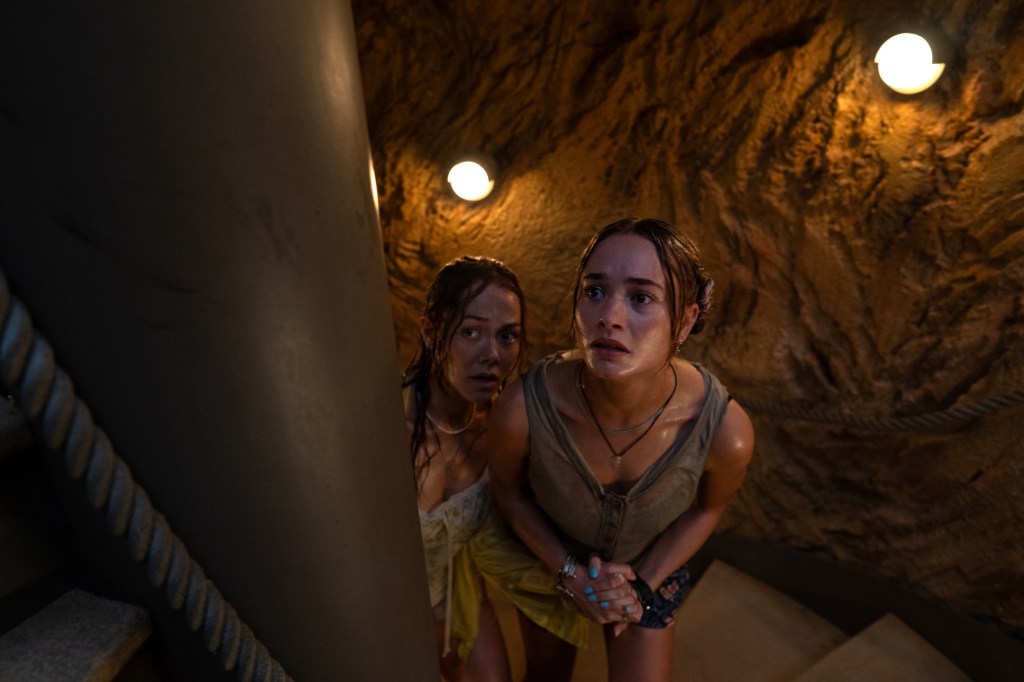
Victoria Wyant as “Kate” and Johnny Sequoyah as “Lucy” in Primate from Paramount Pictures. 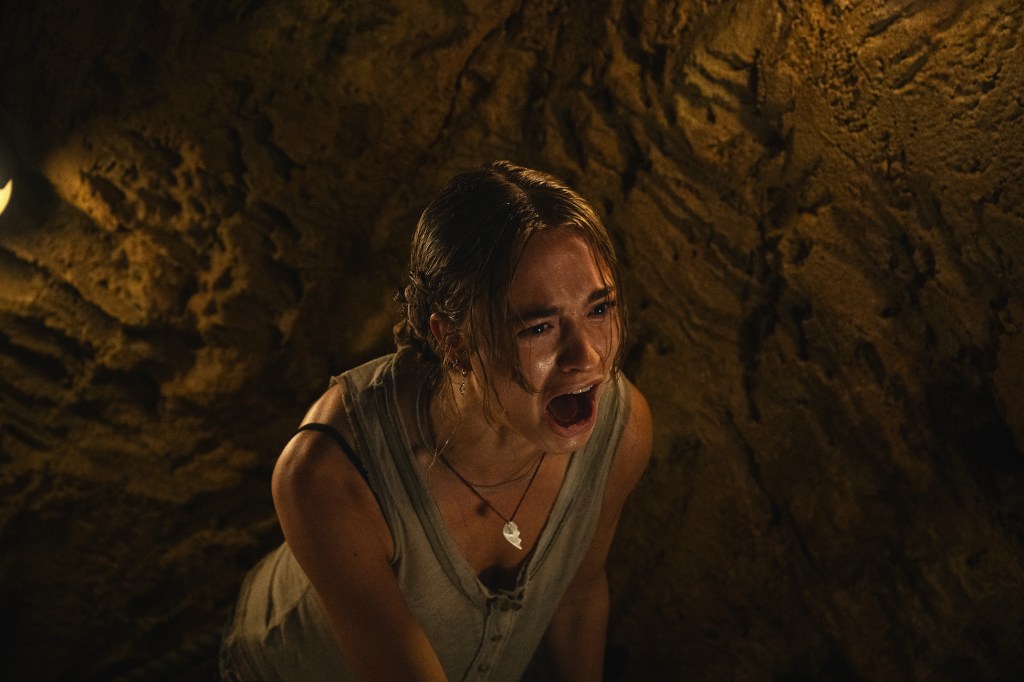
Johnny Sequoyah as “Lucy” in Primate from Paramount Pictures. 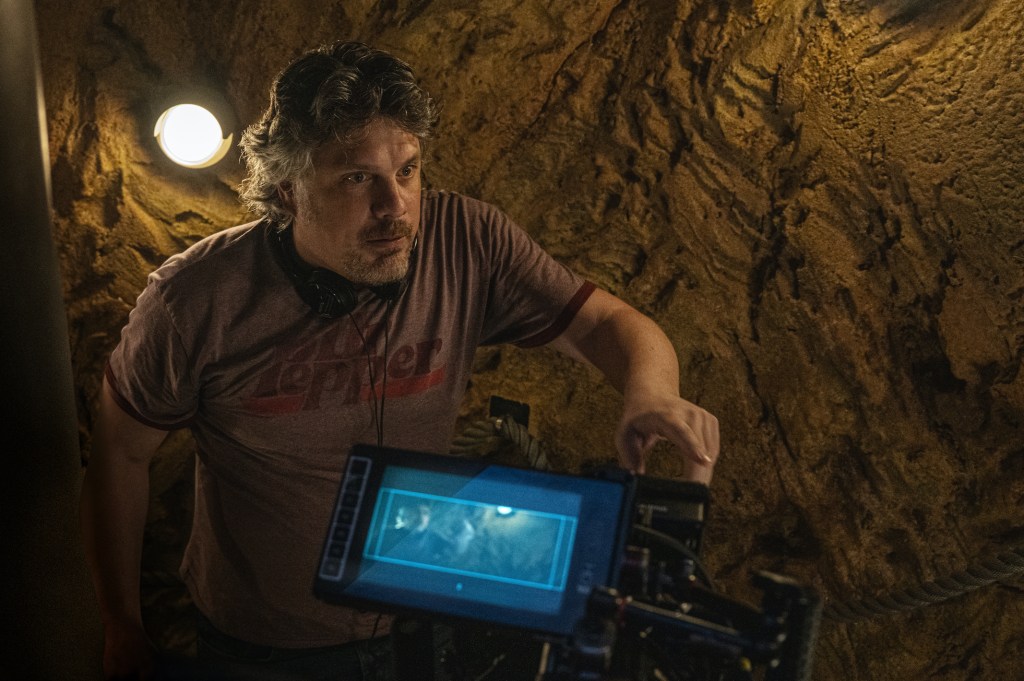
Director Johannes Roberts in Primate from Paramount Pictures. 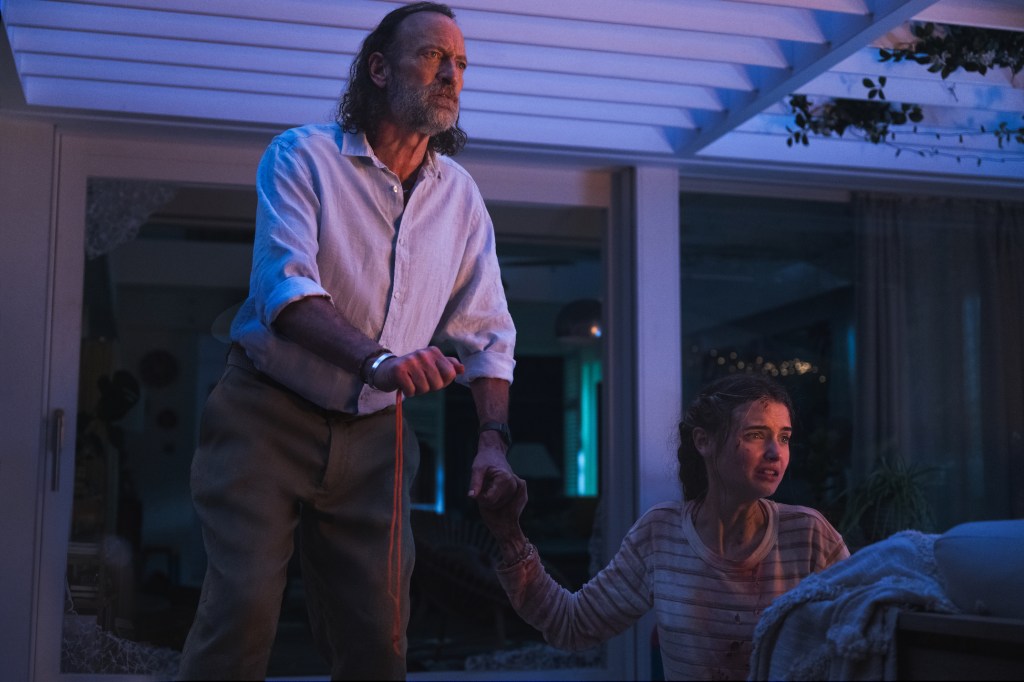
Troy Kotsur as “Adam” and Gia Hunter as “Erin” in Primate from Paramount Pictures. 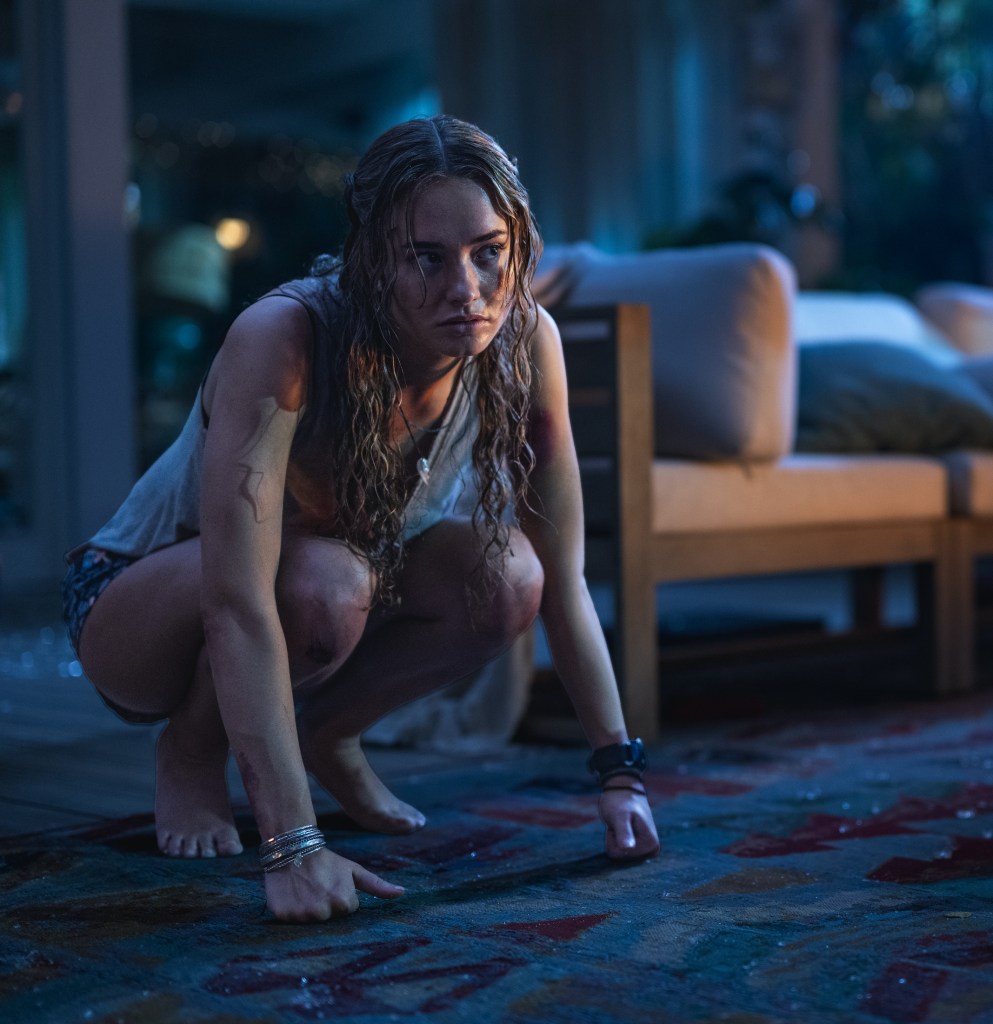
Johnny Sequoyah as “Lucy” in Primate from Paramount Pictures. 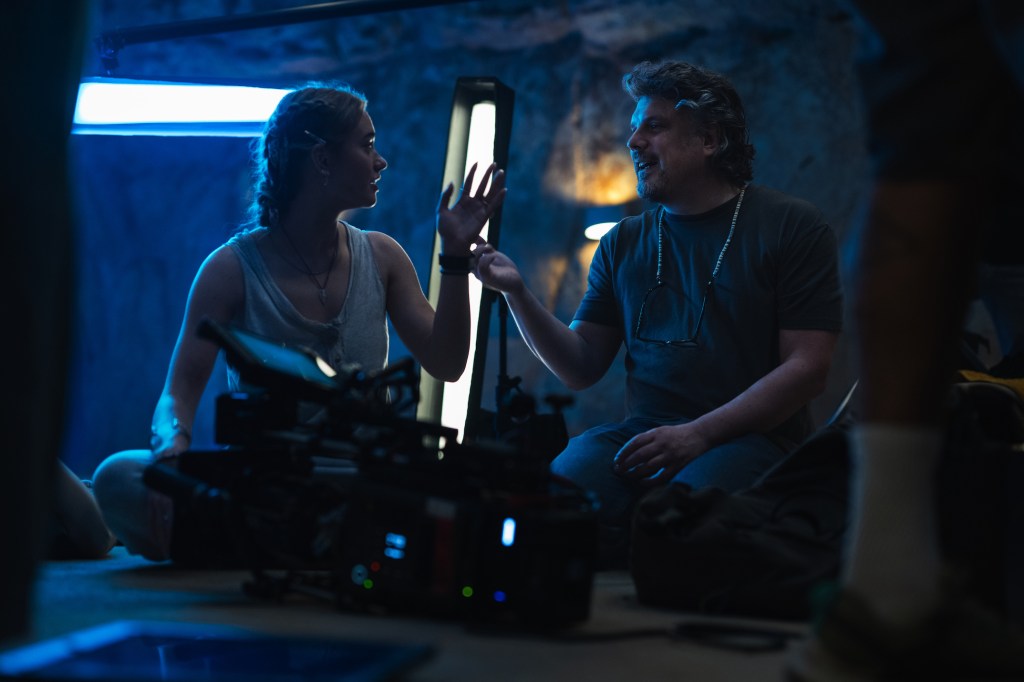
Johnny Sequoyah as “Lucy” and Director Johannes Roberts in Primate from Paramount Pictures. 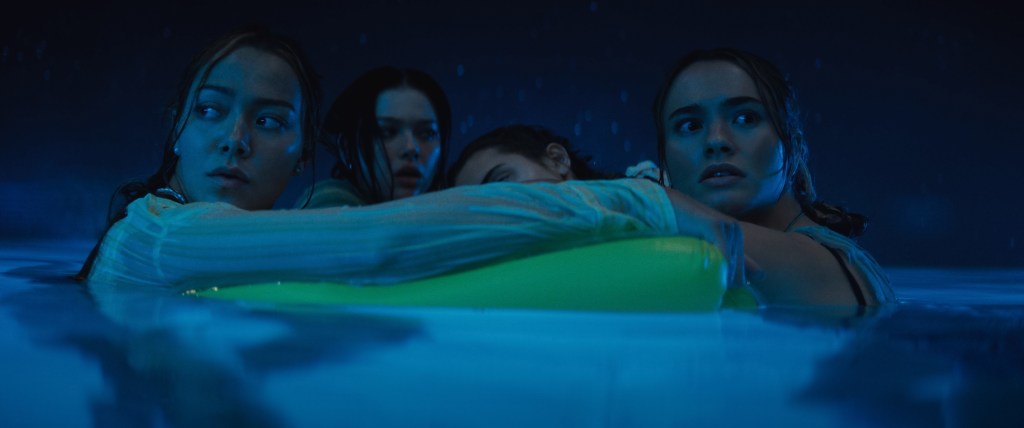
Victoria Wyant as “Kate”, Jessica Alexander as “Hannah”, Gia Hunter as “Erin”, and Johnny Sequoyah as “Lucy” in Primate from Paramount Pictures.
Can’t blame me for thinking Planet of the Apes, since Ben’s facial expressions have some similarities with Cesar. Thanks to the Andy Serkis school of ape motion capture plus really good CGI at this point, Ben looks truly immersed in his scenes, interacting with the human actors.
The story about an animal infected with rabies going feral against its humans is smack reminiscent of the Stephen King thriller Cujo, about a pet dog that goes rabid, adapted into film back in 1983. I didn’t get the Cujo vibes from the trailer since there was no mention of rabies in it. While this may suggest a lack of originality from its premise, Primate feels fresh because it’s been that long since such a story was told. Maybe because, as the movie says, rabies has been eliminated (in Hawaii, but definitely not yet in places like the Philippines.) Plus Ben uses a gadget to talk back to his humans, which he uses with dreadful effect later on in the movie.
Primate calls back to several other past thrillers in the course of the story. Its impressive use of practical effects harken to John Carpenter body-horror effects – twisted, bloody, bone-crunched mounds of flesh and organs that the rabid chimp seem to easily tear away from his hapless victims. One scene called back to “Here’s Johnny!” in Stanley Kubrick’s The Shining, when Ben looked through the cracks of a broken closet door as he hunted for his next victim. The call backs are there if you remember them, but they never take you away from watching every scene. Mindful filmmaking.
Speaking of mindful, I’m much pleased that the filmmakers included within the story a Deaf character, played perfectly by Kotsur. We normies take for granted that movies are a visual medium, almost completely shutting off people with visual impairments or in a spectrum (have you ever experienced watching in a theater and a person behind you was narrating the movie blow-by-blow like a boxing match? I have. More often than not, it was because the narrator was trying to share the movie experience with a person with a disability who probably wanted to experience what we normies experience through narration and sound.) My point here is that the filmmakers of Primate, whether early in the scripting stage or by a stroke of genius when they casted Kotsur, decided to make a deaf person an integral part of the story. Not perfunctory ASL from the normie cast because Ben the trained chimp communicates through ASL, but because a family member actually communicates through ASL and therefore a good portion of the film uses ASL. I hope that makes sense. Let’s not forget that film started without sound, and talkies only came after?
In this instance, too, that the film is also cleverly built up for a soundless climax that hits the high notes of thrill perfectly – also a slight nod to a similar tense sequence from David Fincher’s Panic Room (2002.) Because of this clever use of (no) sound design, I’m confident to recommend Primate to people who are D/HH (deaf and hard of hearing).
Who tf is Johannes Roberts and where did this director come from? (His previous credits are 47 Meters Down (2017) and Resident Evil: Welcome to Racoon City (2021.) So he’s no stranger to horror and thriller films) Such meticulously-constructed scenes from the previously-mentioned sound design, to cinematography, to the pervasive use of body-horror practical effects, carefully- and intentionally- framed and choreographed shots that seem to say this was a work of passion, that the filmmakers – the entire cast and crew – brought their vision to a thrilling success, regardless of boxoffice outcome. Seriously loads of horror fun. Top marks in all aspects of filmmaking. Best enjoyed screaming in a theater full of other screaming people.
Primate is out in Philippine cinemas January 21st from Paramount Pictures.
(Trailer link from Paramount Pictures Philippines. Images courtesy of Paramount Pictures International.)
 acid reflects
Leave a comment