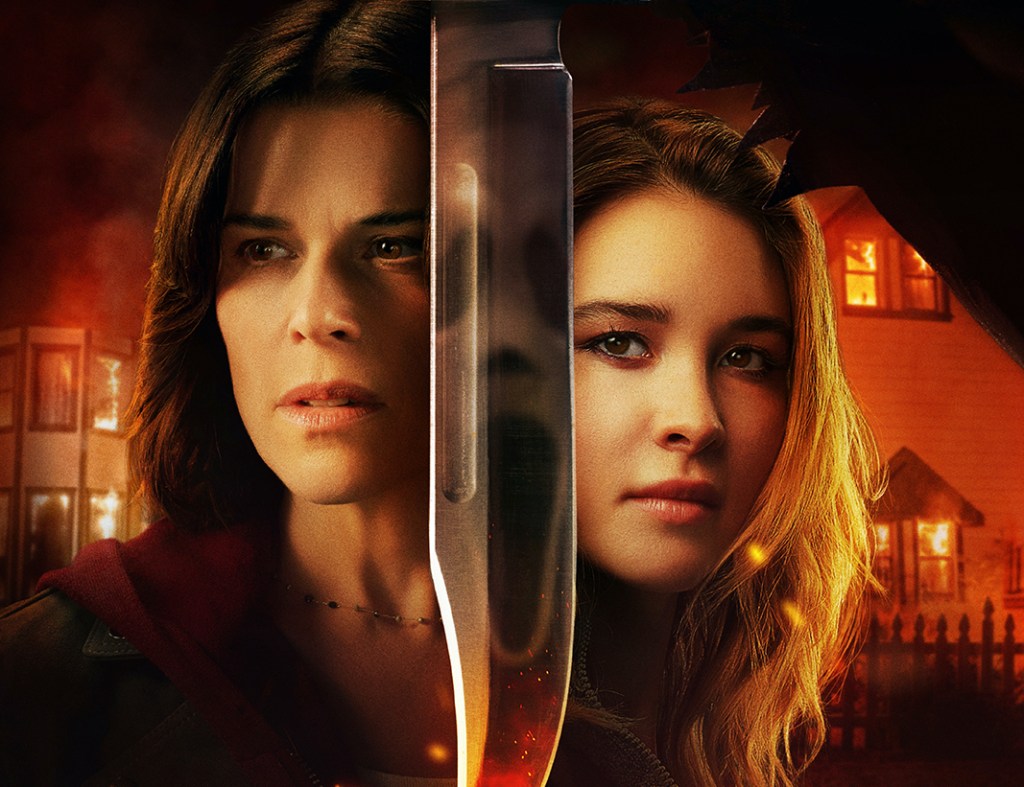
It’s par for course for the seventh installment of this teen slasher series, and a worthy return for the original queen of the series, Neve Campbell.
However it is impossible not to mention the calls to boycott this film, which in the current world climate of fuckeroo, actually have some basis. Let me explain.
Filmdom has been rocked recently from Berlinale to the BAFTAs refusing to make categorical political statements on what has been happening in the real world. From a large group of artists such as Tilda Swinton and Javier Bardem calling for the Berlinale to end its institutional silence on the genocide in Gaza, to Paul Thomas Anderson’s refusal to talk politics after his film which has racial politics written all over it won the top prize at the British awards.
The ongoing campaign to boycott Scream 7 comes from the sacking of its lead after her posts on social media, resulting in a $500k rewrite of the screenplay, and the $7M price to bring back the original queen of Scream, Neve Campbell who skipped Scream VI due to a pay dispute.
If we just go by the film on its own, here’s the deal. SPOILERS AHEAD.
In the seventh installment of the anti-teen slasher teen slasher, Ghostface goes on a killing spree once again, this time targeting Sidney’s daughter Tatum (Isabel May).
Sidney has been peacefully living her new life in Pine Grove, Indiana for some time with her husband Mark Evans (Joel McHale) and her children (mentioned, but only Tatum appears – leaving room for further spinoffs related to Sidney.) Sidney owns a coffee shop, Mark is the chief of police, while Tatum is in high school. News of a double murder in the original Macher house in Woodsboro reaches Pine Grove, alerting Sidney. Sidney is almost overprotective of Tatum, and this dynamic strains their mother and daughter relationship – so goes this treatment of the story.
Sidney receives a chilling call from someone who appeared to be Stu Macher (Matthew Lillard) threatening Tatum. She rushes to her daughter’s school, only to find Ghostface looming under the body of one of Tatum’s high school friends, Hannah (Mckenna Grace). Sidney and the police lose Ghostface in the chase.
Deciding to make a run for safety, the Evans prepare to leave when Ghostface attacks them in their home. Mark is injured, and Sidney and Tatum barely escape if not for the accidental arrival of Gale. Ghostface is unmasked to be a former psychiatric patient who seemed too random for Gale and Sidney. While the two investigate, the teens – Tatum and her friends, now joined by Gale’s enterprising young interns, try to solve the murders together themselves. But they get attacked by Ghostface too. Towards the end, it is up to mother and daughter cooperating together to put an to end this cycle of murders. Kevin Williamson, writer and producer of previous Scream installments, takes the helm to direct.
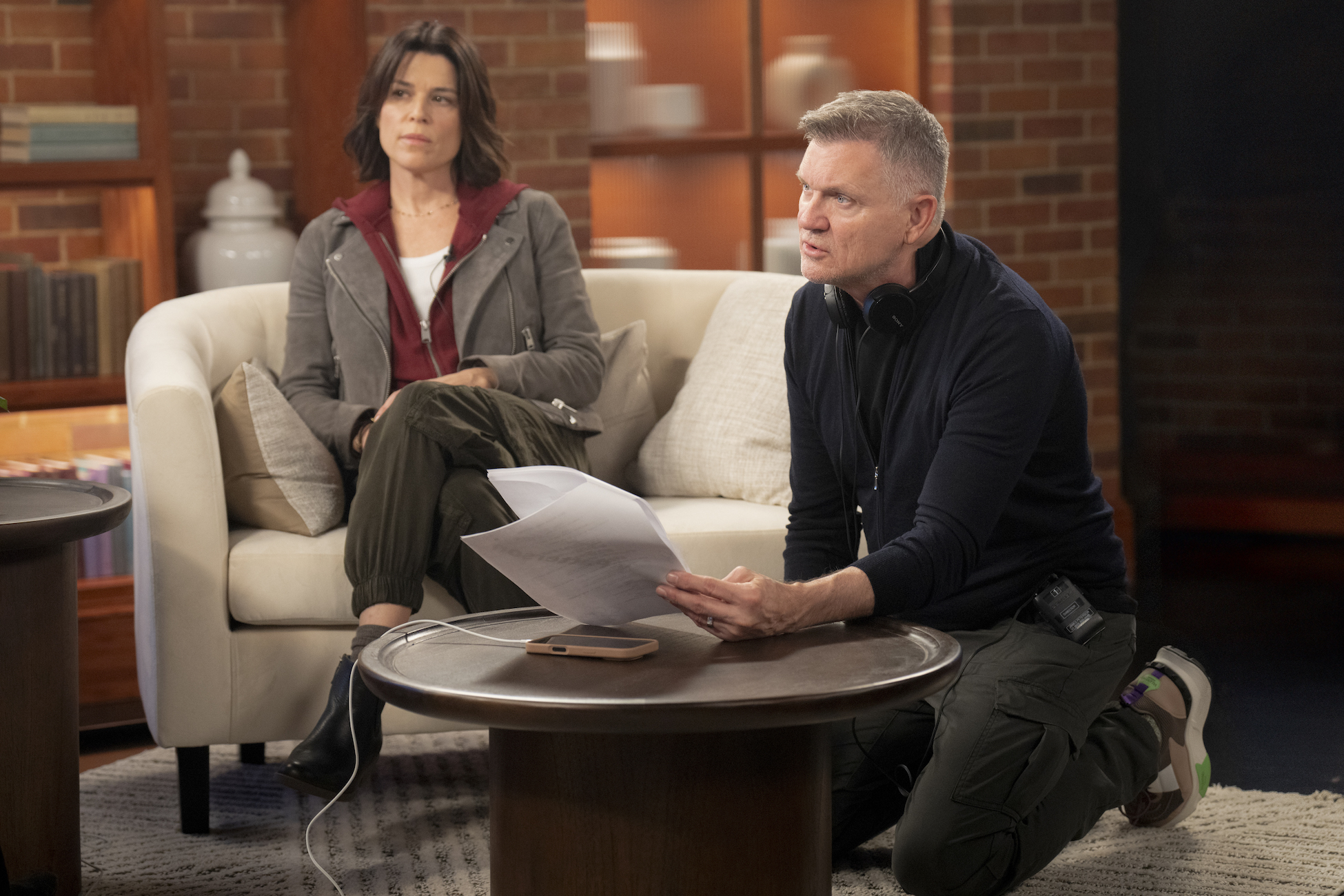
Neve Campbell, left, and Director Kevin Williamson on the set of Paramount Pictures and Spyglass Media Group’s “Scream 7.” 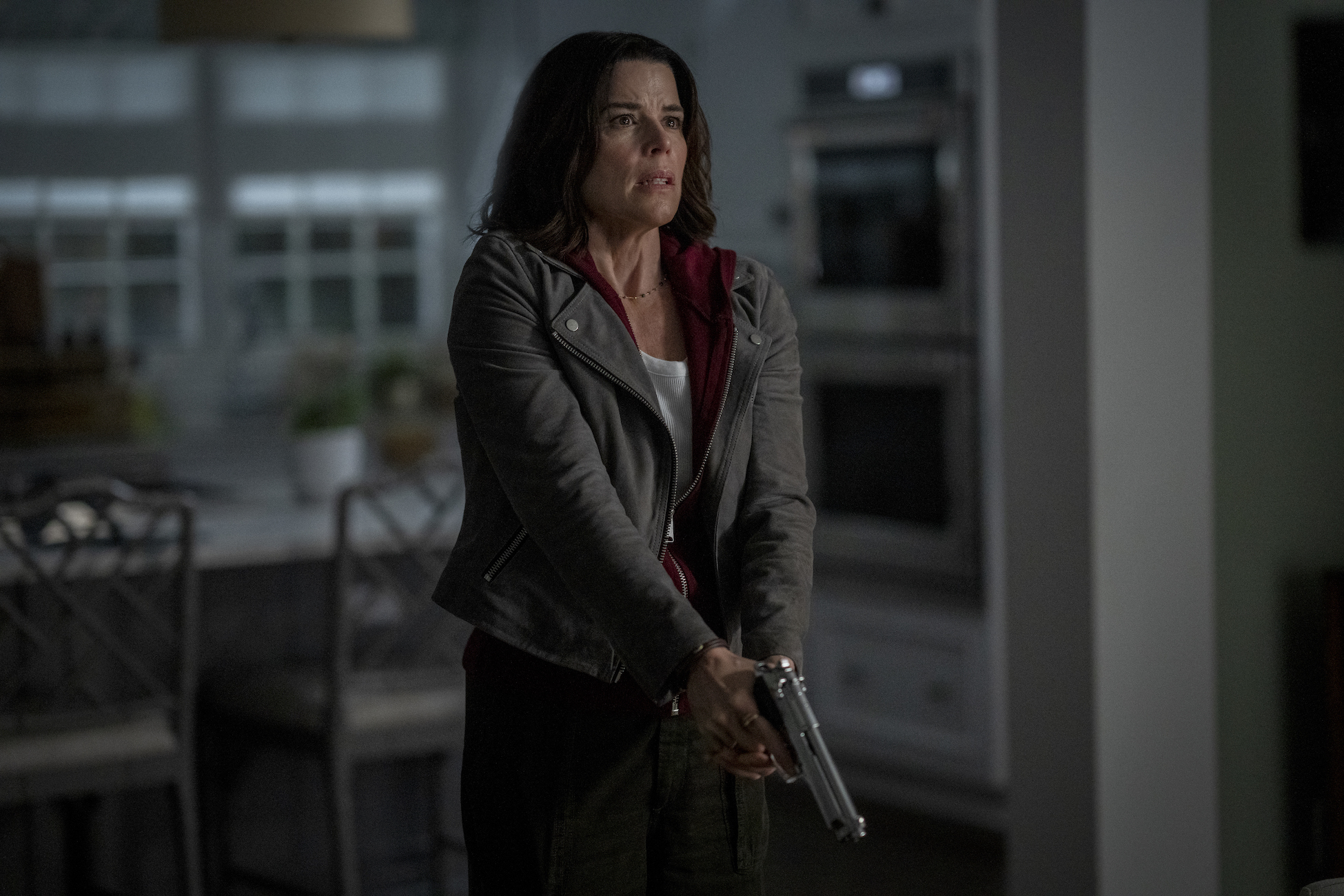
Neve Campbell stars in Paramount Pictures and Spyglass Media Group’s “Scream 7.” 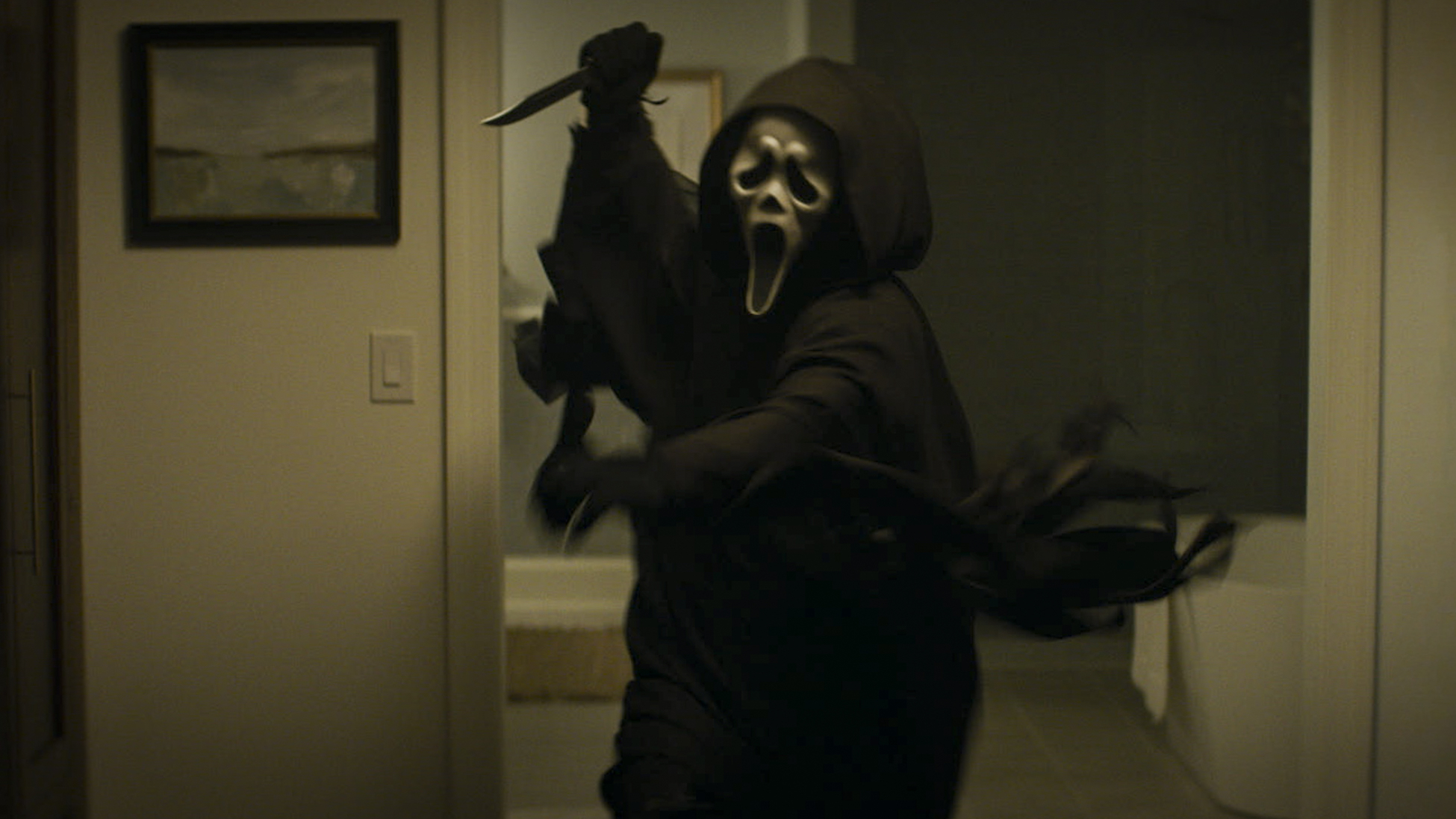
Ghostface in Paramount Pictures and Spyglass Media Group’s “Scream 7.” © 2025 Paramount Pictures. Ghost Face is a Registered Trademark of Fun World Div., Easter Unlimited, Inc. ©1999. All Rights Reserved.”. 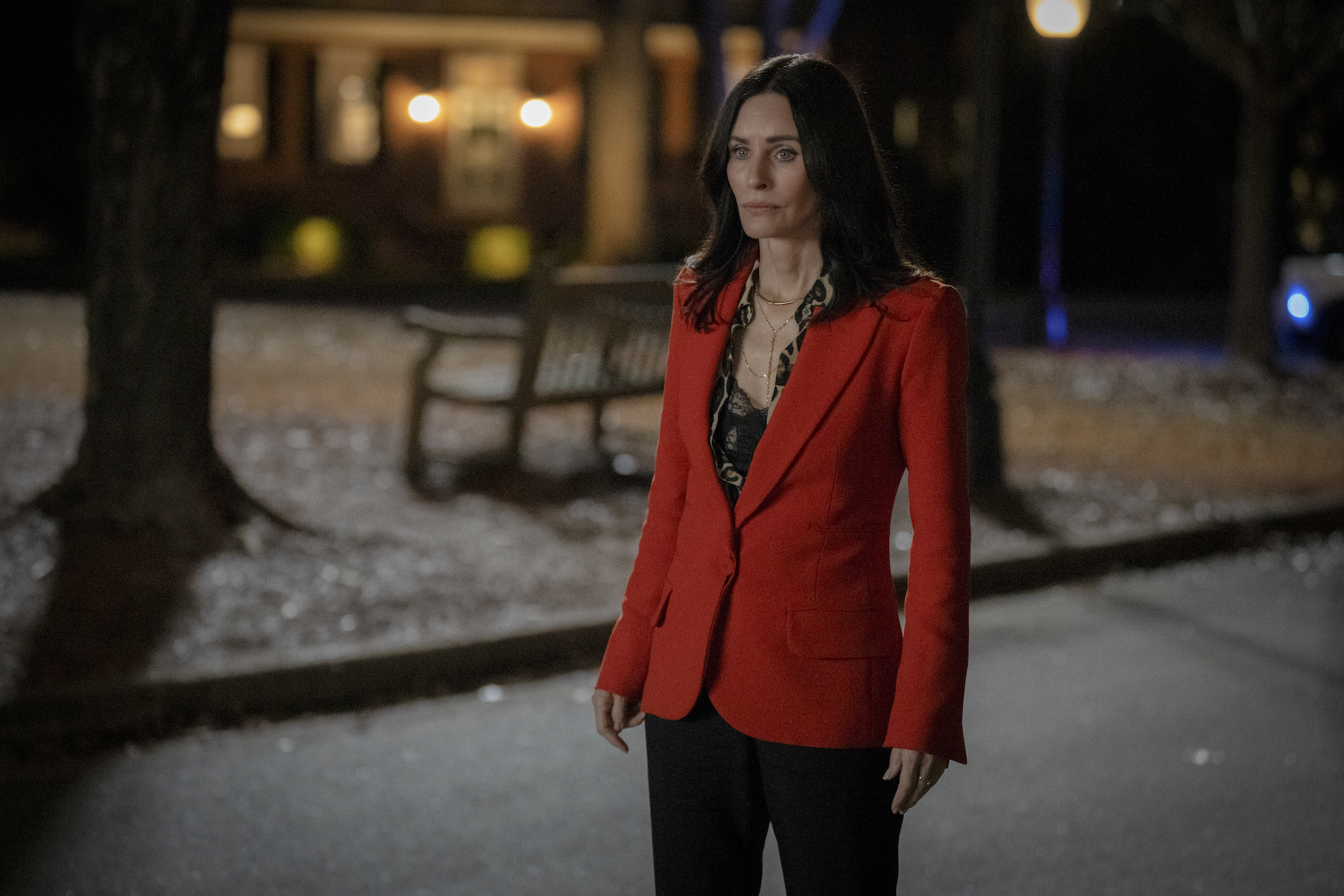
Courteney Cox stars in Paramount Pictures and Spyglass Media Group’s “Scream 7.” 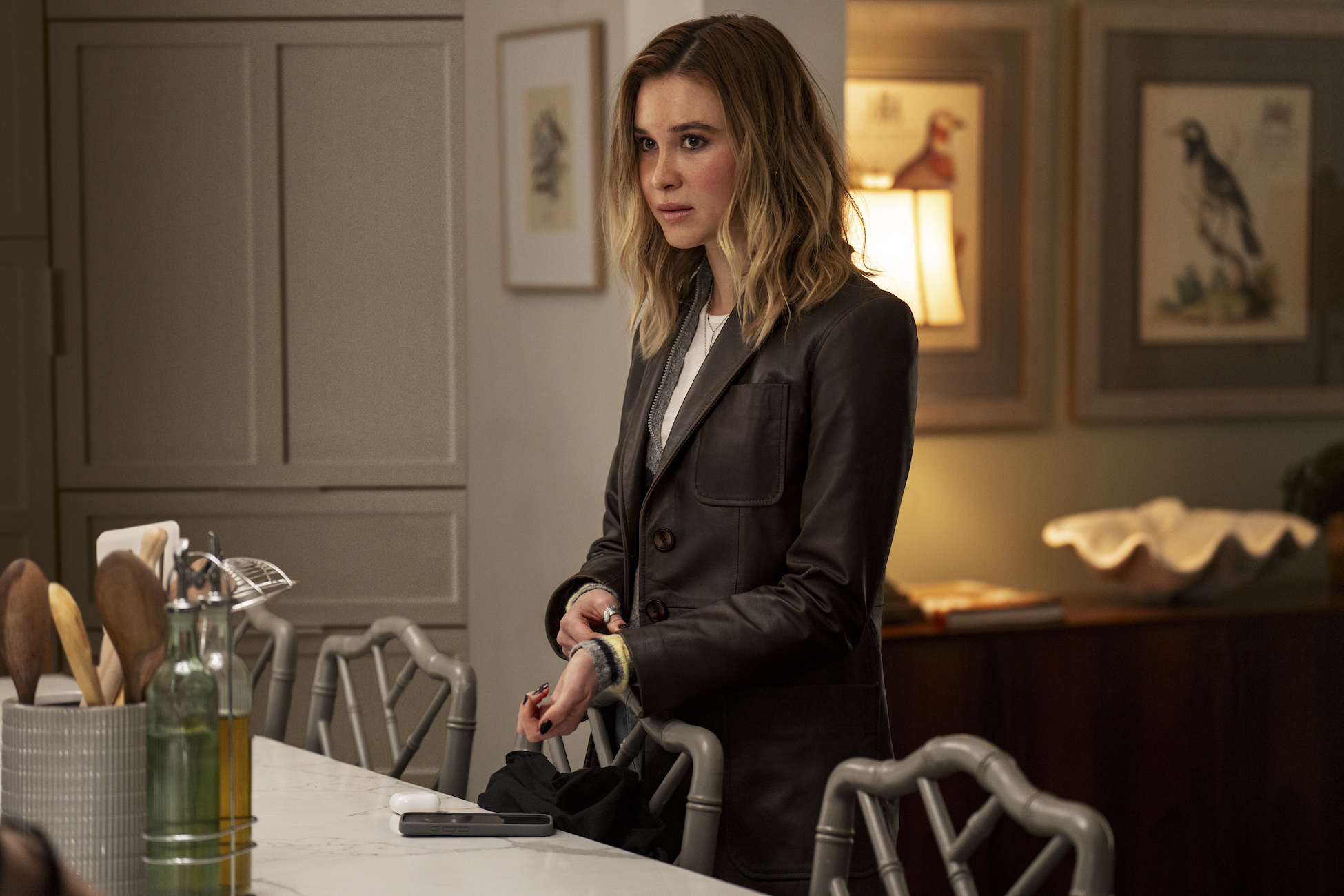
Isabel May stars in Paramount Pictures and Spyglass Media Group’s “Scream 7.” 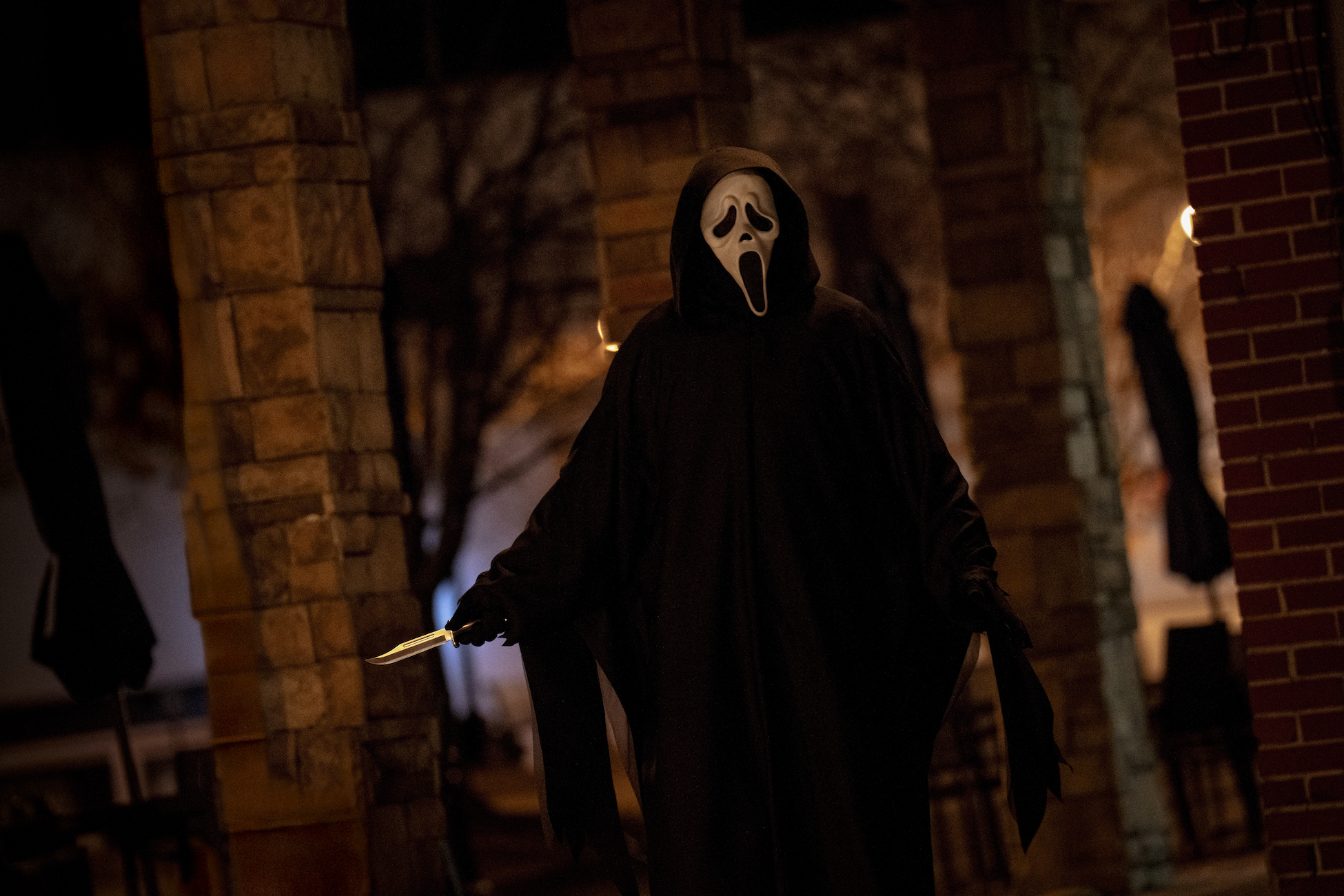
Ghostface in Paramount Pictures and Spyglass Media Group’s “Scream 7.” © 2025 Paramount Pictures. Ghost Face is a Registered Trademark of Fun World Div., Easter Unlimited, Inc. ©1999. All Rights Reserved.”.
As Scream installments go, this edition isn’t short on showing gore and violence in the murders of Ghostface’s victims. It manages to elicit just enough tension to make a few scenes suspenseful. The chase sequence around Pine Grove’s commercial district was interesting in the sense that the streets were completely empty at night (well there was a curfew in effect) but I was thinking maybe this is true in rural America. The school theater stage is once again used as set piece in Scream 7, previously explored in Scream 2. Even though a final girl is expected in the mechanics of this franchise, the audience is not given any clue whether mother or daughter or both would be the last woman standing.
I wish it were wittier, through, that’s one ingredient that didn’t come back from the original. For further nostalgic effect, characters from the previous installments make cameo appearances to haunt Sidney. It was easy to guess who Ghostface was early in the proceedings, but of course there’s always a surprise that gets dumped towards the end.
As Scream installments go, this whodunit falls short on the inventiveness of plot. Maybe because the makers have either run out of ideas, or those ideas were in the story that was scrapped along with Melissa Barrera and Jenna Ortega’s exit.
Even removing the politics involved in the removal of Barrera and Ortega, Scream 7 is not without scrutiny, with one POC in the cast practically serving the white characters food. Because that just is? Or how the murders are still a circus conducted by news media? Speaking of media, ne minor observation: Gale’s apprentice Mindy (Jasmin Savoy Brown) is supposed to be this rookie who is very eager to outgrow Gale’s shoes and become a star reporter herself but is depicted as fumbling in front of the camera when given the chance. This doesn’t track in real life, as Mindy belongs to the Tiktok age – she would have been at ease and natural in front of the camera (in fact she would not have been apprenticing for Gale at all but instead do things on her own) as someone who belongs to the generation that is constantly online.
But horror is political by its very nature. It is a presentation of that thing which social norm rejects or refuses. From the madman who decided to play god in Mary Shelley’s Frankenstein (1818), to the horrors of the atomic bomb in the original 1954 Godzilla by Ishiro Honda, to race relations and the commentary against mindless consumerism in George Romero’s Night of the Living Dead (1968.) The first Scream commented on slasher films that came before it, juxtaposing media that presented massacre as entertainment. 12
“To riff on a George Orwell quote: no literary, film, or artistic mode or genre is free from political bias. That said, the political baggage of horror is considerable, and oftentimes problematic. Many a smart person has argued, and convincingly so, that the horror genre is a conservative/reactionary one, too often with the ugliest political shades on display: misogyny, homophobia, xenophobia, ruling-class reimaginings of the other as invading monsters. From Freud’s uncanny to the gender politics of the final girl, perhaps no other genre is as fraught with such political anxiety.” – Paul Tremblay, “The H Word: The Politics of Horror”3
Scream 7 while riding on the coattails of its history tones down all of these, seemingly running out of any new idea to permute its dissection of the slasher film – having done so in the last six installments. It’s like Wiliamson gave up on adding layers to the mythos within the franchise and just opted for the neighbor because, as one Gale Weathers groupie says in the film, “it has to be someone from Woodsboro.” OR, that the production did have an idea to add to this installment, but had to abandon it because the star chose to speak up for Palestine, and the studio didn’t want any of that.
So for those calling for or opting to boycott Scream 7 for political reasons are completely justified to bring politics back into the discussion despite efforts by the studio to steer away from discourse (worse, firing its actor just becasue she voiced her opinion.)
If you do choose to see it, think of it as a worthy return for Sidney and the long history the audience has had with Ms. Campbell and this franchise. Seven screams for Neve.
But the real screams continue in Gaza. Free Palestine.
- Is Horror Political? Glad You Asked…; Catherine Corcoran, Fangoria. ↩︎
- Romero, Carpenter & Craven: Why Horror Has Always Been Political; Pedro Pires, BuffedFilmBuffs. ↩︎
- The H Word: The Politics of Horror; Paul Tremblay, Nightmare Magazine. ↩︎
 acid reflects
Leave a comment