Just came from the Philippine premiere of #Joker and all I can say for now is.. Wow.
Review up very soon.
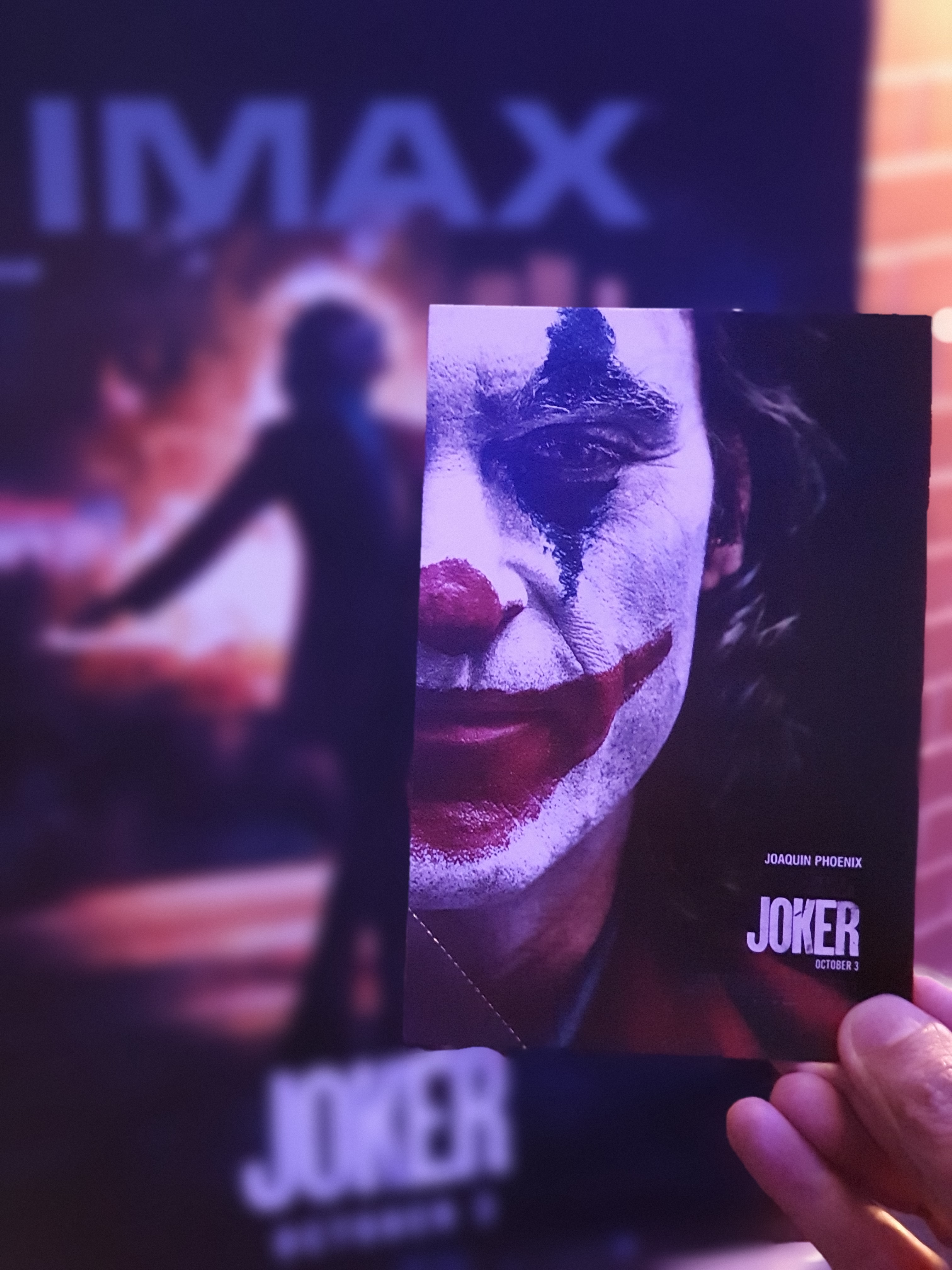

Just came from the Philippine premiere of #Joker and all I can say for now is.. Wow.
Review up very soon.
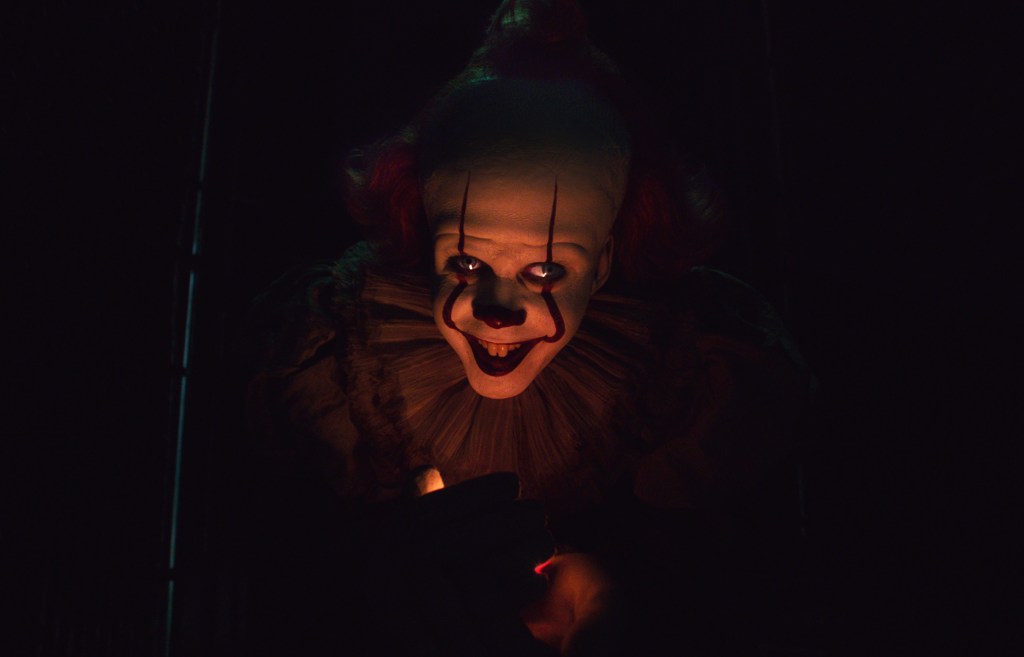
Traumatizing, but ultimately a satisfying end to the horror in Derry.
The Losers Club return to Derry, Maine 27 years after the encounter with Pennywise (Bill Skarsgård) to put an end to the horror.


The good: the wonky narrative is held spectacularly tight by sympathetic performances by both grown-up and young Losers Club actors – comedian Bill Hader in particular, who handles the swing from nervous humor to heartfelt drama with proper weight. The kids? We only wish they could stay like that, always.
Also, at best, the film ruminates on how children deal with terror in different ways (to a lesser extent than the spirit-shattering evil of the book) – but the film’s clever transitions between past and present create a heartbreaking (almost bittersweet) afterthought on how these children managed to survive the trauma.
Also, nightmare-inducing grotesque creature designs that’s a mashup of the best of The Thing with the best of Jeepers Creepers. However, this can also count in The Bad, because The Thing and Jeepers Creepers.
The bad: jump scares as jump scares. The most horrific scene actually doesn’t involve Pennywise, but a hate crime that opens the movie. The sound and score. Because in 2019, too much scoring can literally give earaches. The fact that this film can’t have its full effect and story without the first film.
And that traumatizing running time just to make time for big set pieces that don’t necessarily pay off in equal measure could use at least ten minutes off. You’ll be really glad it ends.
Rated R16.
Trailer here: https://youtu.be/50A8q7Im9bQ
Photos and trailer link from Warner Bros. Pictures
Based on the novel by Stephen King
Director: Andy Muschietti

I haven’t read the book, but the gorgeous yet unwieldy adaptation of #TheGoldfinch has managed to make me less interested in reading the Pulitzer Prize-winning novel. That’s not how it should go.


Thirteen-year old Theo Decker (Oakes Fegley) is taken in by the wealthy New York family of Mrs. Barbour (Nicole Kidman) after Theo’s mother is killed in a bombing at the Metropolitan Museum of Art. In the debris he finds the prized Dutch painting The Goldfinch, which he then keeps in secret, probably as a memorial to his beloved mother.
In New York, Theo meets Hobie (Jeffrey Wright,) an antiques dealer whose business partner was among the people in the museum when it was bombed. Theo meets young Pippa (Aimée Lawrence) who also survived the bombing, albeit with a bad head injury.
Not long after, Theo’s (supposedly) sobered-up father Larry (Luke Wilson) appears to pick him up to move to literally the deserted parts of Las Vegas. He befriends young Boris (played by Finn Wolfhard of Stranger Things,) troubled son of a Ukrainian immigrant. Larry and Boris, for almost the same reasons, expose Theo to the world of drugs and alcohol.
(SLIGHTLY SPOILERISH) The scamming Larry dies from a car crash, presumably in an attempt to escape. Theo leaves for New York, to Hobie’s shop.
From there, Theo grows up (Ansel Egort) as Hobie’s antiques salesman, still keeping The Goldfinch hidden, still pining for Pippa, until Boris (Aneurin Barnard) reappears and the two descend into a world of crime and drugs.
That’s a long summary to include all the important characters because it’s just right to commend what the actors have done in this sprawling coming of age film. They all do a good job bringing forth longing, despair, pain, restraint – things swept under the rug to hide behind (the illusion of) strength. You can also say this is Fegley’s movie more than Egort’s, since the bigger emotional journey happens during Theo’s youth. Kidman is lowkey intense here, it’s almost no acting.
The film is gorgeously photographed by the legendary Roger Deakins – almost enough reason to see the film.
Its biggest hurdle was to cover so many plot points as economically as it can to arrive at the dramatic climax. At two and a half hours, the drama seemed that it needed at least an hour more to make its emotions connect. Nothing stays emotionally, beats feel truncated – very much like Larry coming and going just to truncate Theo’s world with the Barbours.
It’s also underscored – simultaneously welcoming and depressive – the film is one long sad tone, even during light moments. In the end, one can’t feel the triumph of Theo’s spirit, just the relief to see the credits rolling. I really wanted to like this film, I just can’t.
Trailer here: https://youtu.be/I8-0QsJ4GG8
Rated PG
Images courtesy of Warner Bros. Pictures
Based on the novel by Donna Tartt
Directed by John Crowley
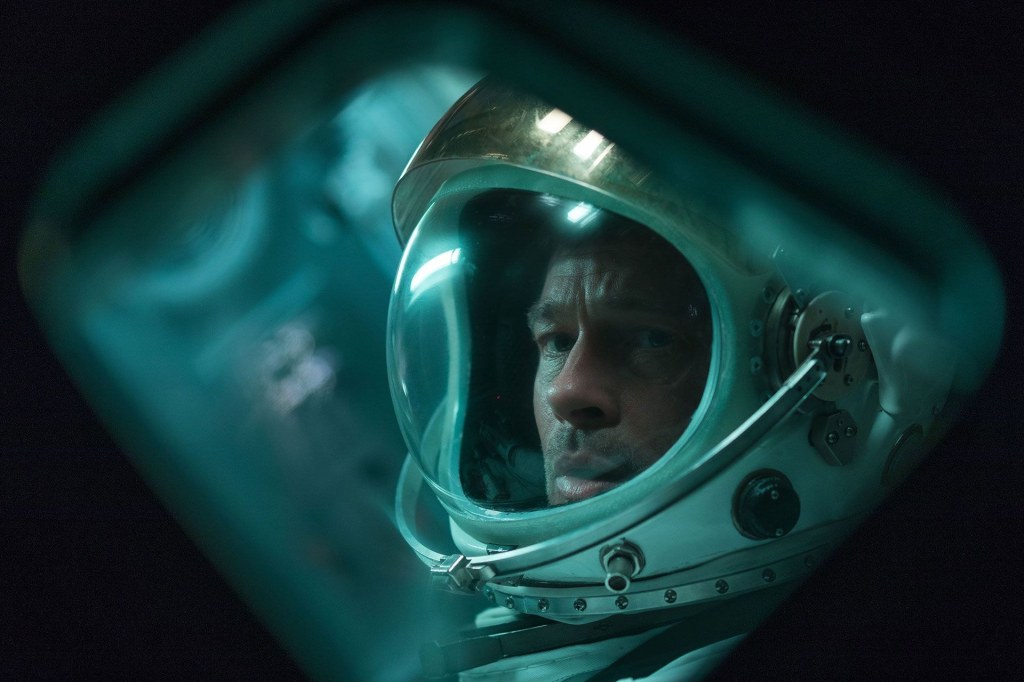
A rumination on familial bonds that spans the solar system. A mood piece, the what-are-we-doing-now kind.
Set in the near future when the moon is colonized but with territorial disputes, asteroids are mined and laser tech allows for instantaneous cosmic communication, Brad Pitt plays US astronaut Roy McBride (namesake!) who launches into space to save his rogue-scientist/astronaut of a father, Clifford (Tommy Lee Jones.)

Surprised that it felt personal. Introspective. It forces the viewer to ask what Roy’s voiceover is asking (sometimes the hard sci-fi questions, sometimes the deeply personal daddy issues.)
The film is a personal and spiritual journey for Roy, who, much like the expression Per aspera ad astra (Latin for through hardships, to the stars – attributed to the Roman philosopher Seneca) has to go through a wringer physically and mentally to endure the demands of extended space travel, and emotionally to wrestle with unprocessed daddy issues before peace can settle in him.
The film may also be a struggle to watch for its viewers, who may have been misled by clever marketing for an action-packed space adventure, but instead find two hours of a person processing his things. It didn’t really feel that long, but at times it did feel that it had a few minutes too many.
This isn’t First Man nor Event Horizon. Its science is shady – Gravity will laugh at its physics.
Thematically, if Tarkovski said Solaris was his answer to Kubrick’s 2001: A Space Odyssey, Ad Astra is six degrees their common relative, the kind that neither would own (but hey, it’s there.) Then again, I’m willing to watch this over and over together with those two. Interstellar also comes into mind, but the first two are the film’s obvious aspirations.
Contemplative. As in, Brad Pitt contemplates, and contemplates well. The acting is sparse and muted, like the cinematography and music. Just enough to be beautiful, never calling attention to themselves. And I contemplate if Pitt’s acting is enough for awards nomination/s. Maybe not, but it’s worth the try.
Ad Astra is soars gloriously most of the time, except the final moments when it needed cross threshold of denouement the way Hollywood tends to finish films that breach a certain production level.
Ad Astra aspires for the heavens which it reaches almost, but not quite.
Trailer here: https://youtu.be/nxi6rtBtBM0
Ad Astra
Directed by James Gray
Rated PG
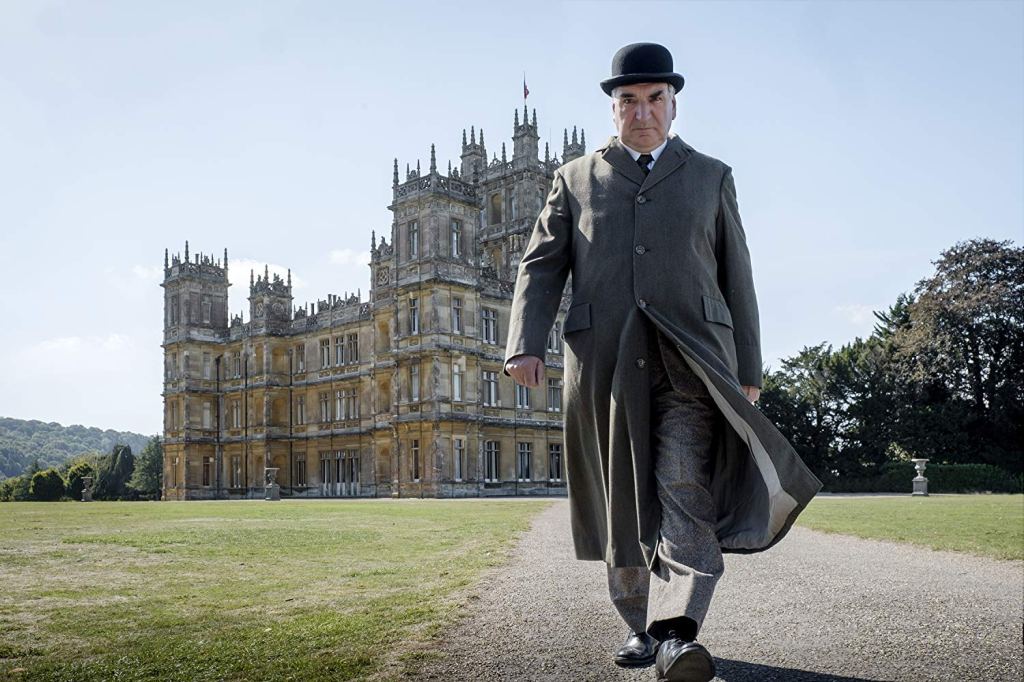
The upstairs and downstairs people of hit British period drama #DowntonAbbey are back – four years since the show ended – in a postcard-perfect, delightful and immensely comforting homecoming, this time on the big screen.
The year is 1927, about 18 months since the events at the end of the show, and a state visit from King George V (Simon Jones) and Queen Mary (Geraldine James) is throwing everyone on the Crawley’s country estate up and about. Even the aristocrats are feeling the economic pinch of the times, and it is up to Lady Mary (Michelle Dockery) to run the show impeccably since she inherited the responsibility from her father, Robert Crawley, the Earl of Grantham (High Bonneville.)


As such, the sitch pits the Royal staff against the very loyal staff of Downton to serve their highnesses – to much hilarity. But the contest doesn’t end there: Violet the Dowager Countess (Dame Maggie Smith) has unfinished family business with her cousin, Lady Bagshaw (Imelda Staunton) who is the Queen’s Lady-in-Waiting. Everyone who has followed the show would know that Violet doesn’t know what losing means. Juicy, juicy bits.
For those who followed the series religiously like myself, the film serves fan service to an impeccable T as only Carson (Jim Carter,) Mrs. Hughes (Phyllis Logan,) cook Mrs. Patmore (Lesley Nicol) and Daisy (Sophie McShera) and the rest of the beloved staff can deliver. The honor to serve their highnesses is of such import that Mr. Mosely (Kevin Doyle) couldn’t literally contain himself – in a scene that deserves either applause or facepalm. Indeed there is plenty of bits and pieces for every character, as is the hallmark of creator and Oscar-winning writer Julian Fellowes’ amazing ability to subtly add layers to characters that are both intricate and easy to adore but never overwhelming, just like the castle itself.
There’s also some bits about Tom (Allen Leech) and his Irish side in the context of the Royal visit, as well as the most redeemed character in the show, on-again-off-again butler, Thomas (Robert James-Collier) as a gay man at the time when it was still outlawed. Mary’s younger sister Lady Edith (Laura Carmichael) is on the sidelines. Least written-in are the Lord and Lady Grantham (Bonneville and Elizabeth McGovern) themselves, the movie is a bit more skewed towards the staff.
At two hours, the movie feels like it’s just another episode of the show. Which is a good thing, because the makers pretty much declared that the movie was an answer to the clamor from fans. But the story isn’t too convoluted as to alienate those who have not seen a minute of the show.
Yes it’s PG but I doubt children would be interested in a movie wherein people are fussing about a formal dinner.
One can also say that Downton is the flipside to Parasite – where Bong Joon-ho made the lower class raise a finger at their employers, Downton is the fantasy of benevolent symbiosis. The Crawleys would be the kind and giving but oh-so-posh neighbors we wish we had (but they’d have to have a real castle for a home first.)
For fans this is all a welcome sight, for newbies, a lush, entertaining indulgence. After all, as Lady Mary said, God must be a monarchist.
Trailer here: https://youtu.be/l-y2xUi3VPs
Images courtesy of United International Pictures.
Directed by Michael Engler
Written by Julian Fellowes
MRTCB rating: PG.
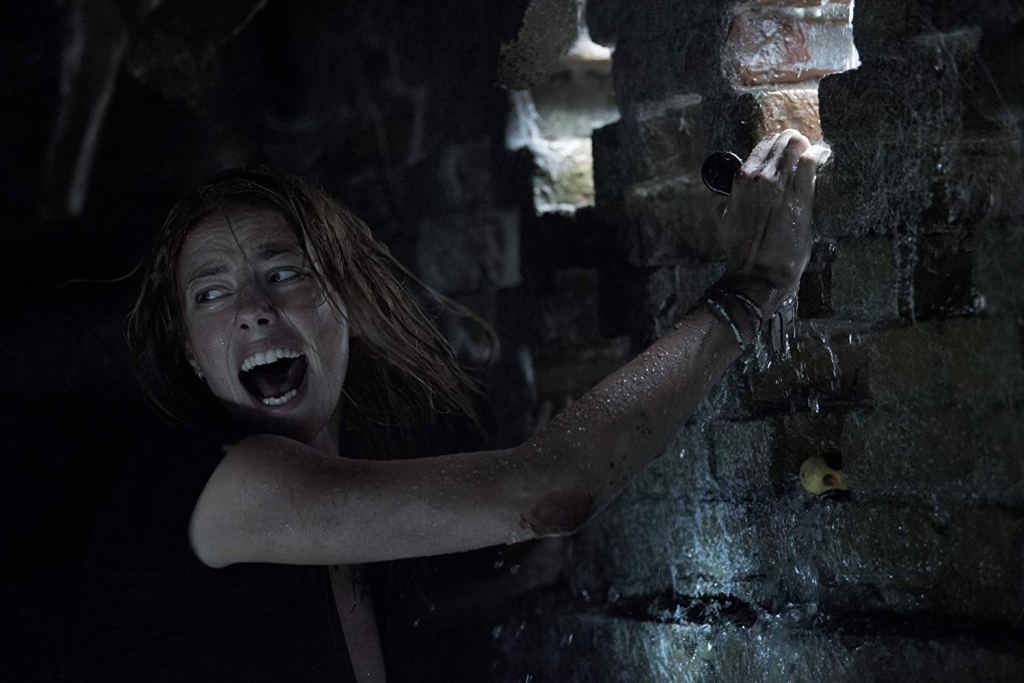
#Crawl is good, old-fashioned, stressful fun. The bone-crunching actioner also works as a Survival 101 during a Supertyphoon complexed by dozens of hungry alligators.
Haley (Kaya Scodelario) drives back to her hometown in Florida in the middle of a Category 5 hurricane to save her father Dave (Barry Pepper) when she and her father get trapped in the house amid rising, alligator-infested floodwaters.


What works: taut, efficient storytelling; believable deadly stakes, those darned alligators and the convincing storm; and dedicated performances from Scodelario and Pepper.
It reminded me of Jurassic Park – NOT in the same inventiveness and intensity – but the Murphy’s Law situation when everything that should go bad does, but the leads manage to do what must be done. If you’re joined in the audience by jumpy people, the experience can get a little loud by a few screams.
What doesn’t: story isn’t exactly unique. But hey, It didn’t say it was so.
If you’re stuck out in the rain this weekend, you can try crawling into a theater to see this and be happy there aren’t alligators swimming in our baha.
Crawl is Rated R-13.
Trailer here: https://youtu.be/H6MLJG0RdDE
© Images supplied by United International Pictures UIP Movies PH
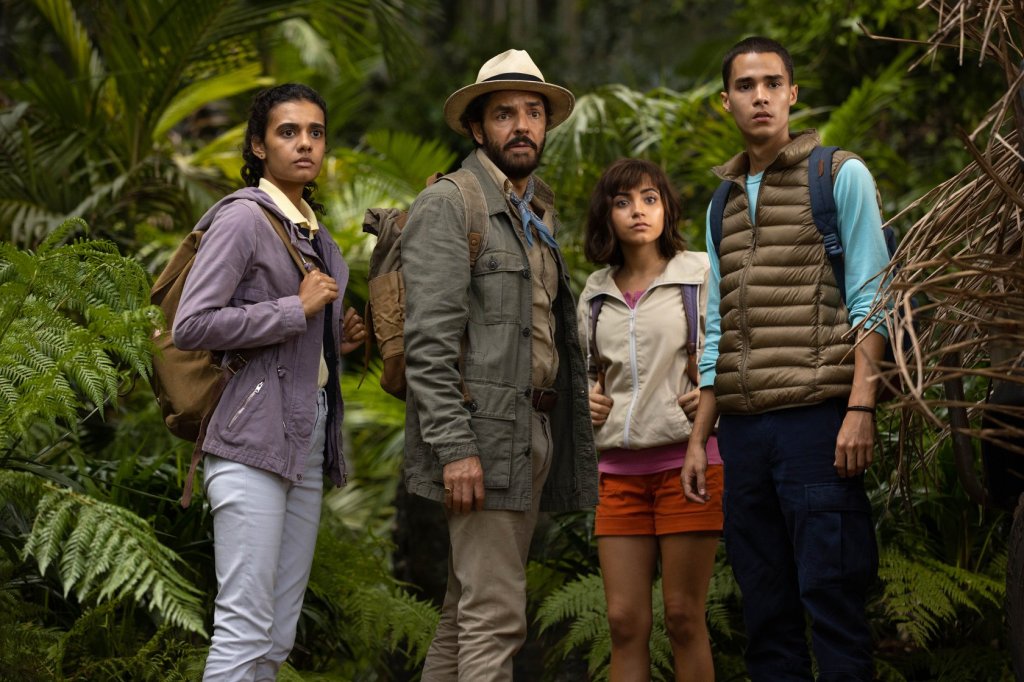
#Dora and the Lost City of Gold:
Unexpectedly hilarious, irresistibly charming, pleasantly wholesome.
Was expecting a dry, safe, by-the-numbers low-budget live-action adaptation of the Nickelodeon cartoon – but the cynical, self-aware adult humor swooped in from the left without warning like a zubat (fine, zubats are bats from Pokemon, but you get the point) beginning with the live-action version of the show’s opening credits. D-D-D-D-Dora!


Buoyed by a very charming Isabela Moner as the teenage explorer who’s zest for adventure is only matched by her winning outlook. Such a breath of dorky freshness in this age of smarmy sarcasm even in children’s shows. The best parts are when she’s a fish out of the water (or a monkey out of the jungle?) in the city high school. The film slows down again when it gets to finishing the treasure hunt, but manages to finish without being a drag.
Speaking of drag, the surprise in the middle is quite trippy – good luck explaining hallucinogens to your children, parents. All in good fun.
The rest of the LatinX cast were also fun to watch together, no different from watching a campy Mexican telenovela. Tacos recommended while watching. Trump definitely won’t like this.
Maravillosa, Dora!
Images from © Paramount Pictures
Trailer here: https://youtu.be/ShrWjYKIcIc from Columbia Pictures PH Columbia Pictures Philippines
#DoraMoviePH is Rated PG

Annabelle Comes Home
Directed by Gary Dauberman
Part of The Conjuring series
The Warrens are still battling the demons of the world and this time, it is up to their young daughter Judy (McKenna Grace) to contend with the evil that surrounds the cursed doll, Annabelle.


Judy is left to the care of her teen sitter, Mary (Madison Iseman) while parents Ed and Lorraine Warren (Patrick Wilson and Vera Farmiga, respectively) are away for the night. Evil gets unleashed when Mary’s curious friend Daniela (Katie Sarife) opens the locked artifact museum and unintentionally unleashes a Pandora’s Box of demons. It’s up to the girls to deal with the consequences.
While not necessarily adding anything substantial to the mythos of Annabelle and the Conjuring Universe in general, the film builds and builds on lots of suspense and then pulls you under the rug. You’ll be hearing your heart racing in no time. I would say it’s scary AND fun, but that’s because I enjoy hearing others in the audience scream.
The story is just meh, but direction has a strong command of the filmic language of suspense that doesn’t rely heavily on jump scares. The filmmakers pay lots of respect to the audience’s anticipation, which greatly helps the build-up of scenes. There’s also a few smart nods and twists to slasher film tropes involving the apple of Mary’s eyes, Bob (Michael Cimino.) For its modest budget, the film looks good and appropriately lit, with minimal use of CGI that would otherwise cheapen the thrill. This may also be the reason why the film has an old-school vibe.
This is a strong debut for writer-director Gary Dauberman, who wrote the Annabelle series as well as The Nun. Unlike those two previous films, Comes Home feels more confident as a horror film in terms of how everything is set up from the page to the screen.
Before the show starts, you get treated to a slew of horror film trailers in succession (It 2, the sequel to The Shining, Doctor Sleep and a horror to a certain extent, Joker) which def sets you in the mood.
Trailer here: https://youtu.be/MFqZGCLtxzo
Links and images courtesy of Warner Bros. Pictures
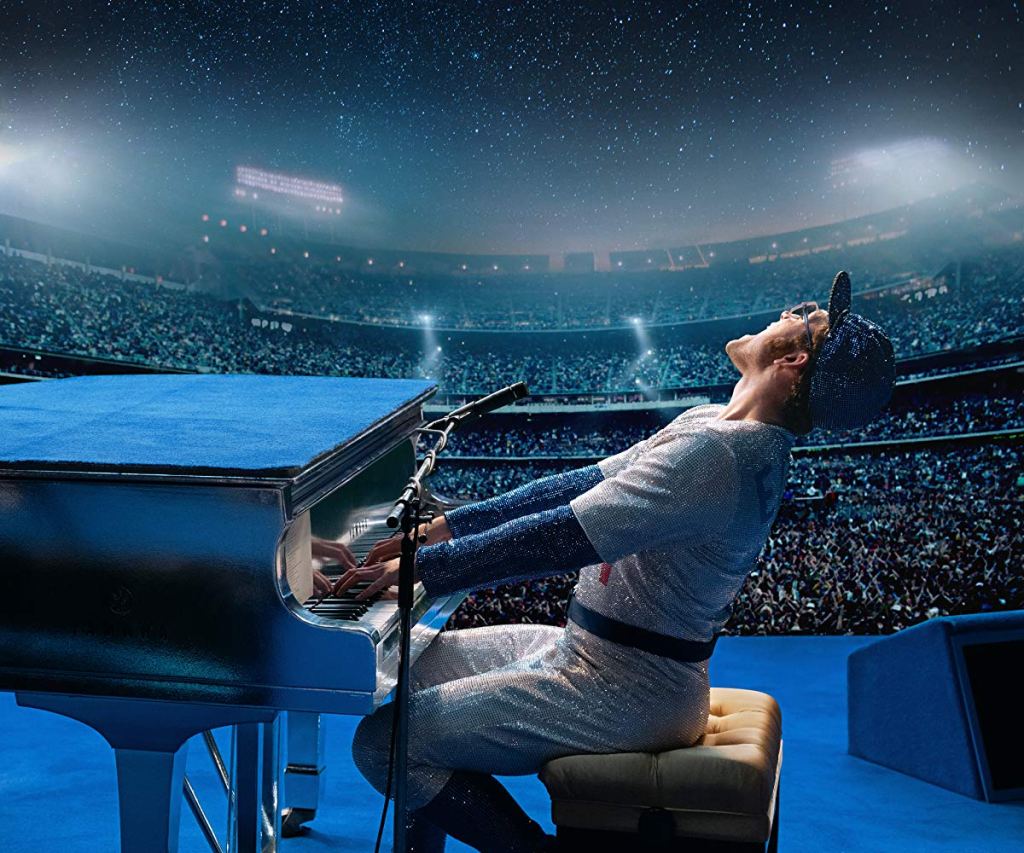
Rocketman
Directed by Dexter Fletcher
Based on the life of Elton John
Rated R13
Equal parts sparkling, campy and moving, Rocketman is sex, drugs and rock n roll all over queer colorful rainbow.
Director Dexter Fletcher jumbles the genre a bit to present a not-so rock biopic nor a full-on jukebox musical that is enjoyably colorful to watch but not thoroughly within sing-along territory. The magic happens with Taron Egerton’s Elton John and Jamie Bell who plays songwriter and BFF Bernie Taupin.
The first image is an indication of how crazy the film gets. Egerton dressed as a sequinned demon – horns, wings and all – barrels towards camera to the symphonic instruments of Goodbye Yellow Brick Road before announcing himself in a room with a small group huddled in a circle. It’s a therapy meeting of sorts, and the film lays out Elton’s life as he narrates his life in a series of flashbacks from his unloved childhood as a piano prodigy Reggie Dwight (played by Matthew Illesley) rejected by parents (Bryce Dallas Howard and Steven Mackintosh) but encouraged by the grandmother his grandmother (Gemma Jones), to his introduction to Elvis Presley music in his teens and performing with a band called Bluesology in small London pubs.


The turning point happens when the budding performer changes his name to Elton John and is told by a record producer that, as much as he is a terrific musician, he would need much better lyrics. This prompts a meeting with a budding young songwriter Bernie Taupin (“Billy Elliot” Jamie Bell) who would later become the most meaningful professional and personal partnership Elton would ever have.
From here onwards, the film tackles Elton’s stratospheric rise to superstardom through conventional rock biopic tropes – rave reviews from a stint in the Troubadour in Los Angeles lands him new record deals, requiring more songs and more tours in America with Bernie at his side. Then there’s the heated romance with a music manager John Reid (Richard Madden) with the much-ballyhooed (but truthfully just adequate) sex scene. Reid would later on exploit Elton through their contracts – something that happens to almost every known music artist. Generic Sex, Drugs and Rock N’ Roll, were it not for the fact that the sexuality depicted here is Elton’s homosexuality. That layer in the story is not front and center of the conflict, but it is a significant part of it. In between these events, Elton would remove portions of his devilish costume layer by layer, figuratively baring his life to the anonymous therapy group. Cheeky English humor masking the drama underneath.
It’s an interesting device that does the job of framing the story, but it goes nothing deeper than that. Songs from the singer’s decades-long career are woven in to push the narrative forward the way jukebox musicals throw in songs to fit the emotion or the situation in the scenes but never exactly in chronological order (for how could a child Reggie/Elton sing and dance to “The Bitch is Back”?) Speaking of which, choreographed scenes can get a little tacky, such as in the aforementioned first musical number involving young Reggie {“The Bitch is Back”) and likewise in the “interpretative” sequence for the titular “Rocketman” ironically at the lowest point of Elton’s personal life. One can almost say that were it not for his unique music (and maybe the flamboyant costumes), Elton’s journey is about as typical as most musicians’ paths, regardless of sexuality.
Like I said, the magic is how the film portrays the platonic relationship between Elton and Bernie, with their scenes as the most meaningfully done and emotionally moving. I must admit that I teared up slightly at how “Your Song” became a tribute to true, enduring friendship, and also in “Tiny Dancer” – my favorite Elton song – as a bittersweet farewell to youth and the union that was Elton and Bernie. After that, the songs fit perfunctorily fine within the fantastical narrative.
Unfortunately, this bond is underdeveloped on Bernie’s side.
Egerton does a fine job handling the singing and the impersonation of the Elton. He may not have the vocals and the piano skills down to pat, but that’s him when he’s singing. He seems to not have problems with depictions of Elton’s sexuality, even kissing as many as three guys onscreen. This is the same Egerton whom we saw as an unassuming English lad in his Hollywood debut in Matthew Vaughn’s Kingsman: The Secret Service back in 2014. That wasn’t a long time ago.
As a counterpoint to Egerton’s challenges performance-wise, Bell takes his Bernie Taupin to a relaxed, confident stride – not having any burden of going under the audiences’ scrutiny whether or not he looks or acts like the real Bernie. The result is great chemistry between the two actors in the scenes together. It’s just sad that there isn’t much written on Bernie’s persona other than being the supportive, understanding and brilliant lyricist behind every Elton hit.
Lastly, we can’t ignore the comparison with a rock biopic also helmed (at the last minute) by Fletcher. Rocketman does not have the fireworks and intensity of Bohemian Rhapsody’s productions befitting Queen’s songs, nor does Rocketman’s portrayal of Elton equal that of the verve in Rami Malek’s Freddie Mercury. But Rocketman doesn’t deny Elton’s homosexuality the way Bohemian demonized Mercury’s (though the film calculatedly depicts this sexuality sufficiently. While the film suggests that Elton has had, er, more than enough, they’re not explicitly depicted.) And we hear Egerton’s voice – imperfect as it is – singing without the added layer of a ghost.
In a way, the movie depicts a picture of the great, the talented Elton John’s genesis from childhood to reformed superstar, as Elton John the producer may have wanted his story to be told in memoriam – not necessarily in historically accurate terms, but through a fantasy that speaks his own ridiculous terms. Maybe that’s the same voice that Elton has been delivering through his songs all these years.
Images and trailer links from United International Pictures.

Godzilla: King of the Monsters
Directed by Michael Dougherty
Based on Toho characters and series of films
**SPOILERS AHEAD**
Legendary and Warner Brothers’ third instalment into their Monsterverse franchise and sequel to the 2014 Hollywood reboot of #Godzilla is pure kaiju fan service through and through – overblown, thunderous fun.
Someone over reddit asked me if the movie’s story is anything silly. Considering the source and history that includes alien invaders, UFOs and an Ultraman knockoff robot that high-fived the Big G in 1973’s Godzilla vs Megalon, one can say the same for 2019 King of the Monsters. More on this later.


Five years after the events of Godzilla 2014, Monarch paleobiologist Emma Russel (Vera Farmiga) has developed a device that is able to determine the communication frequencies of the kaiju “titans” in the hopes of better anticipating their destructive behavior. The machine is of particular interest to a group of eco-terrorists led by former military man Alan Jonah (Charles Dance) who believe that releasing the titans is the best way to reboot the planet from human abuse. The group takes the machine – called ORCA because it mimics the way whales communicate – and abduct Emma and her daughter Madison (Millie Bobbie Brown) from the Monarch facility in China.
Alerted during a senate hearing on the roles of Monarch, Dr. Serizawa (Ken Watanabe) and Dr. Graham (Sally Hawkins) track down to seek the help of Emma’s ex husband and ex-Monarch scientist Mark Russel (Kyle Chandler) in finding Emma, their daughter and the machine.
First the eco-terrorists use the ORCA to wake up “monster Zero” the three-headed dragon Ghidorah in Antarctica. Next, the group wakes up the fiery pteranodon Rodan over Mexico. On both occasions, Godzilla appears to seemingly stop the rampage of Ghidorah. On both times, no success.
Monarch hatches a crazy plan to save Emma and Madison, stop the terrorists and enlist Godzilla in ending Ghidorah’s world-wide destruction.
It sounds like a wild ride, for sure. KOTM is an amalgam of many things Godzilla from the past, best played for fans of the king through the years.
KOTM is decidedly an action spectacle with a heavy emphasis on cheesy entertainment that’s not far from the Showa era Godzilla films after the serious 1954 original. We’re talking about those films that involved aliens controlling the kaijus, kaijus from space, mechanical versions of kaijus, and that version of Ultraman, Jet Jaguar, tag-teaming with Godzilla to defeat giant alien bugs. While there are no outright alien invaders in UFOs here, the human drama (and lame dialogue) are not far from what we’ve seen from all the Toho films, with the exception of the original. Seen on IMAX, the large-than-life kaijus are truly a sight to behold.
The bit about the eco-terrorists isn’t far-fetched in my opinion, if there’d be kaijus on the planet. Human-made climate crisis is just around the corner. Depicting Godzilla as a force of nature (here and in a few past versions,) the film retains Godzilla as a recurring reminder of how human technology and power have laid waste to the world.
Juxtaposed with the almost non-stop monster action is the Russels’ struggle to reform their family – a dramatic chapter that has no resonance with the subplots. Godzilla films usually throws in some family drama (sometimes with completely random characters) to humanize the narrative. But it is always Godzilla who’s the existential reminder for the humans. In a way, this drama with the Russels is weakly developed, but serves its perfunctory purpose just barely.
Bradley Whitford’s character – a Monarch scientist with a mouthful – drops inert nerd-level comebacks for the heck of it. The actor does a proper job delivering them, but these are superfluous since we already have giant monsters with radioactive beams from their mouths.
What human drama the film gets right is (to the actor’s credit) through Ken Watanabe’s Ishiro Serizawa, who threads the current plot and the events in 2014 with a sense of gravitas that the film almost does not deserve. Then again I’d watch Watanabe in anything – he even did the same thing to Detective Pikachu. But with Watanabe, the film pays tribute to the original 1954 Serizawa with some proper human drama.
Toho already made a serious version “grounded” in today’s realities with its 2016 reboot Shin Godzilla (2016) – the second time Toho rebooted Godzilla with a serious tone. That film became the highest-grossing Godzilla film from Japan and earned Best Picture and Best Direction from the Japanese Academy Awards.
Through breakneck pacing, that film spoke about human flaws (disrespect of the environment, the absurdity of bureaucracy and government, and its most-famous quote, “man is the true monster”) and retained many of the original film’s characteristics while presenting the monster in fantastic special effects blended from practical, miniature and CGI.
The 1954 original #Gojira (re-edited and repackaged as Godzilla: King of the Monsters for American audiences in 1956) had the destructive monster onscreen for nearly 9 minutes, and yes the movie was about the humans. Specifically, a reminder of the horrors of nuclear war that the Japanese went through just a decade before Gojira, with the monster representing American aggression. Godzilla teaming up with US military in 2019 against a greater threat isn’t entirely from the left field.
In that sense, 2019 KOTM exists within franchise legacy and its main fault is cramming a wave of references to its colorful past into this version. Definitely lots of monster fight action (probably an answer to the main criticism of the 2014 film.) That would be great for fans, but definitely befuddling to those who don’t know their Mothras from their Rodans.
Speaking of which, personal favorites in the film are the production’s reverence to Ghidorah’s design and (seeming) unstoppable might, Mothra’s majestic, breathtaking and pulse-pounding reappearance, and – despite having Ghidorah as main villain – Rodan’s emergence and action piece in Mexico as a jaw-dropping sequence. VFX catogory, don’t forget. There’s also the music by Bear McCreary that pays proper homage to the original themes by Akira Ifukube.
Stay after the credits.
Trailer here https://youtu.be/wvMLRwY2O-I
Images courtesy of Warner Bros. Pictures
 acid reflects