acid reflects

mostly a review site.

  • Beast of burdens

    SO MANY REVELATIONS.
    Newt Scamander carries around a heavy baggage of so many secrets and subplots, but it is still wondrous when they burst out of the bag.

    As much as I would like to #protectthesecrets, there are a few here mentioned that can actually be derived from the trailers. So, SOME SPOILERS in the review.

    Fantastic Beasts: The Crimes of Grindelwald
    Directed by David Yates
    Based on the books by J.K. Rowling

    It’s like Eddie Redmayne as Newt Scamander the magician, performing decent magic tricks with superb production value – pulling out surprise after surprise from inside his magical bottomless luggage – in the Grand Opera House. It’s a big show, but you come out of it unsure whether the surprises required that much aplomb.

    Working best as a byzantine lexicon to the expanding Potterverse for the already-initiated – the second installment to the planned five-part prequel to the events involving Harry Potter at Hogwarts – The Crimes of Grindelwald takes place a few years after the events of Fantastic Beasts and Where To Find Them.

    After a long period of incarceration by the Magical Congress of the United States of America (MACUSA,) the dark wizard Grindelwald (Johnny Depp) is to be transferred to the custody of the UK Ministry of Magic when he escapes.

    Back in London, Newt (Redmayne) turns down the offer for him to work alongside his brother Theseus (Callum Turner) at the Ministry of Magic. Theseus is married to Leta Lestrange (Zoë Kravitz) who was Newt’s former classmate at Hogwarts. The job then goes to the Ministry’s bounty hunter Grimmson (Ingvar Eggert Sigurðsson) who turns out to be in Grindelwald’s employ in search of Credence Barebone (Ezra Miller) – the Obscurial who went into hiding after the MACUSA seemingly defeated the powerful Obscurus attack in New York.

    Credence has been hiding in Paris anonymously as part of a wizarding circus where he met and befriended the Maledictus Nagini (Claudia Kim.) Tina (Katherine Waterson,) reinstated as an auror, manages to track down Credence, but Credence flees, in search of his true parents.

    Anticipating Grindelwald’s sinister plan for wizards to take control of the world, Albus Dumbledore (Jude Law) sends former student Newt on a mission to find Credence before Grindelwald does. Former sidekick Jacob (Dan Fogler) appears just in time to join Newt on his mission, but not after Newt lifts a love spell on Jacob cast by Queenie (Allison Sudol.)

    The good guys and the bad guys are in a race to find Credence, whose importance grows each day Grindelwald gathers more supporters, and somehow Yusuf Kama (William Nadylam) knows why.

    So many characters in a seemingly endless train of exposition to lay the ground for the action in the next installments in the coming years. It can be tiring if you’re not invested enough in the mythology. The movie is not the type for initiating toddlers to Rowling’s Wizariding World. In the Disney sense,

    The film juggles several seemingly romantic subplots to varying success – that of between Newt and Tina, between Newt and Leta, some Leta and Theseus, Jacob and Queenie, some Credence and Nagini and, well (SURPRISE?) Dumbledore and Grindelwald. Jacob’s and Queenie’s is the funniest but also predictable. There’s a minor Dubledore-Newt master-and-padawan thing going on but it’s not a subplot at this point. There are Newt and Leta flashbacks in Hogwarts that have similarities with the flashbacks of young Snape in Deathly Hallows 2 (2011) in dramatic and romantic intent – but doesn’t get close to the impact of “Always.”

    I keep wondering what the actual whack were Grindelwald’s list of crimes were in this movie. I mean, yes, he was plotting to rule the world by magical force. And yes he actually killed aurors but that was in the last movie.

    With the beasts relegated to the narrative’s background (save maybe for the niffler and the Zouwu – which resembles a furry Chinese New Year lion/dragon) and some personal confusion about Grindelwald’s crimes, these made me think about the film’s title a few times. Where was Rowling taking this story to?

    There is nothing to latch onto here emotionally speaking, because the film is constantly exposing plot information for future installments and to pigeonhole quite a few details unanswered in all eight Potter films. Like which classes did Dumbledore teach (and why) or, the elephant in the room is, what has Grindelwald got to do to He-Who-Must-Not-Be-Named (if at all.) Exposition trouncing excitement from beginning to the last few minutes. And since this is just preparation for bigger skirmishes down the line, the climax doesn’t have much payoff after all the build-up, save for making Grindelwald’s plans equal with Hitler’s. If Grindelwald had a limited vocabulary and the temper of a six-year old, he’d be after the Mexican no-majs, if you get what I mean. It sure felt like Rowling was heading in that direction.

    Period France (late 1920s, early 30s?) looks great and non-creature-related effects looked great as well, especially as seen in 3D IMAX. The music by James Newton Howard adds to the grandiose scale of the narrative, but no specific theme makes a lasting impression.

    The film clearly belongs to Ezra Miller whose conflicted Credence is suddenly thrust into the center of the battle and is the subject of the all-too-jawdropping ending that singlehandedly makes the many plot details worth noting. Two hours of WTF, and a final two minutes of W.T.F.H.M.O.G.*

    If your wand is ready, you have no choice but to see this. It is a fact of Potter life.

    Images and links:
    © 2018 Warner Bros. Ent. All Rights Reserved.
    Wizarding WorldTM Publishing Rights © J.K. Rowling
    WIZARDING WORLD and all related characters and elements are trademarks of and © Warner Bros. Entertainment Inc.

    *What The F, Holy Mother of G.

  • Shooting stars

    A Star Is Born
    Directed by Bradley Cooper
    Based on the 1937 and 1976 films of the same name

    Powerful stuff from Bradley Cooper, on and off-screen. A good update of the tale, including great new songs. Sam Elliott deserves praise.

    Tale as old as time, or as in this case, a tale re-told for the fourth (fifth?) time.

    Jackson Maine (Bradley Cooper) is a country rock superstar who meets Ally (Lady Gaga,) a part time waitress and performer, at a drag queen bar. Jack is immediately smitten, and a whirlwind romance brings Ally onstage with Jack. Her unscripted performance skyrockets her to fame. As she shoots for the stars, Jack’s glitter suffers with a worsening dependence on alcohol and deteriorating hearing impairment. As depression sets in on Jack, the couple struggles to stay together even as they try to keep both of their careers on track. There is a price to pay for it all, as we know.

    This is an interesting take on the trite story, transported into the “now” by making Jack a country rock star, and Ally a pop star product in the post-American Idol vein. There’s a significant shift towards telling the husband’s side of the story, something that was practically plot device in the previous editions. Kris Kristofferson’s version of the carefree rockstar John Norman Howard in 1976 is the closer comparison – but even that character was a support to the female lead’s.

    The bearded Cooper speaks with a soft, whiskey-aged timbre that makes his Maine distinct from Kris Kristofferson’s edition. Even more striking is the tone of his singing voice, as if, appropriately, he has been a country rock star for so long. Cooper also handles the job behind the camera quite well, keen on making closeups to better capture what goes on with the characters intimately. There’s also an air of sentimentality to his portrayal of Jack as well as in the composition of his concert images – as if they were vestiges to a time gone by from the heydays of rock and roll. Hello cinematographer Matthew Libatique and designer Karen Murphy.

    Cooper’s ASIB pays respect to previous versions a few times, Gaga says at some point that her Ally was born in a trunk – a reference to the Judy Garland medley in the 1954 version by George Cukor.

    I’m not too keen on Gaga’s Ally, whose character isn’t fleshed out so much as to require some truth from Gaga – the only times that she felt authentic to her Ally was in the scene where Jack tries to fetch her at her rehearsals after he botches a gig, and the scene where she goes to Jack’s rehab center. Those and in all her scenes with singing. The rest just didn’t feel completely “there.”

    But Sam Eliott’s portrayal of Jack’s brother Bobby is something to take notice of. The way Eliott portrays Bobby’s conflicted relations with Jack, and his restrained empathy towards Jack are quite affecting and memorable.

    By comparison, I didn’t enjoy Damien Chazelle’s La La Land for representing white privilege. However, I do recognize that some of the songs from that musical were enjoyable. City of Stars is a memorable heartbreaker. Cooper’s ASIB consciously (or incidentally) avoids overlooking representation by introducing Ally in an LGBTQ environment that’s not far from Gaga’s fanbase.

    But I am not a fan of the lyrics of most of the songs. Yes, they convey what the narrative requires, accompanied by reverberant music. To that extent they are adequate. None come quite close to the emotions of “Evergreen”.

    Maybe it’s Time – Bradley Cooper

    Maybe it’s time to let the old ways die
    Maybe it’s time to let the old ways die
    It takes a lot to change your plans
    And a train to change your mind
    Maybe it’s time to let the old ways die
    Oh, maybe it’s time to let the old ways die

    Jack’s song has probably the best lyrics of the lot, and is my favorite as a better choice for nominating an original song at awards season than the main love song, The Shallow.

    The Shallow – Bradley Cooper, Lady Gaga

    I’m off the deep end
    Watch as I dive in
    I’ll never meet the ground
    Crash through the surface
    Where they can’t hurt us
    We’re far from the shallow now

    “The Shallow” builds into an intense ballad that’s hard to ignore. Gaga’s vocals assert their strength in this song that screams of assertion, hope and promise. But it is hardly a romantic song in the vein of “Evergreen,” and in the age of “Who run the world?,” Beyonce’s lyrics sound more loaded than the literal words on “The Shallow.” “Always Remember Us This Way” is another slow love song – again, as the title suggests, the words don’t go far down deep. Another song that showcases Gaga’s vocals is “Look What I Found” – a catchy upbeat R&B ditty about a down and out worker who found her luck and heart. Again, no magic in the lyrics.

    I did mention the songs being reverberant – sound mixing in the movie is an aural luxury.

    There’s also this bit about romanticizing suicide that I’m uncomfortable with, arguably the weakness in all of the versions of the story. The 1976 version with Kristofferson does not make the cause of his death clear, and somewhat avoids this moral dilemma. In fairness, had things gone logically, this story won’t be romantic at all.

    The problem is the material itself. In its core, the story of ASIB examines “what price, fame” presented in similar structure across all versions from Cukor’s 1932 film, “What Price, Hollywood?.” We’ve seen this story told countless times. Familiarity isn’t the problem. It’s just that this is no longer Ally’s journey. By shifting focus towards Jack, Cooper’s version becomes less Emerging Star and more Falling Star. It doesn’t change the core examination of “what price, fame” – it only becomes less of the title. As a consequence, Gaga’s victory lap sounds less triumphant than Streisand’s.

    With One More Look At You – Barbara Streisand

    With one more look at you
    I’d learn to change the stars
    And change our fortunes too
    I’d have the constellations paint your portrait too
    So all the world might share this wondrous sight
    The world could end each night
    With one more look at you
    With one more look at you
    I want one more look at you

    I’ll Never Love Again – Lady Gaga

    I don’t wanna know this feeling
    Unless it’s you and me
    I don’t wanna waste a moment, ooh
    And I don’t wanna give somebody else the better part of me
    I would rather wait for you, ooh

    This point is even punctuated by the cutaway to the scene when jack was composing the song – while it is a story about the two, it is mostly about Jack.

    A Star Is Born is an impressive display of Cooper’s varied talents, some recognizable performances, and a few worthy songs. But the entirety of the film to me, just doesn’t soar as it seems it should.

  • Fur vs fiction

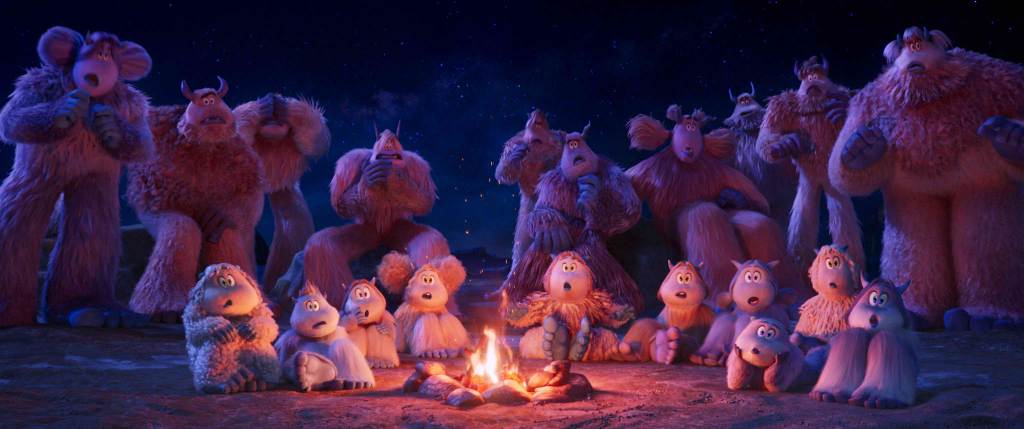
    Did not expect this to be a smart, funny and entertaining parable for our fake news times. And the songs deserve to be performed in a Broadway musical. Don’t be fooled by the trailer’s lack of personality – this is worthy enough to plod through light snow on the way to the cinemas.

    Smallfoot
    Directed by Karey Kirkpatrick, Jason Reisig
    Based on the book Yeti Tracks by Sergio Pablos

    When I first saw the trailer, I wondered why the Yeti myth was being explored by this animation. Of the many creatures that can be made into cuddly plush toys, I wondered why yeti was chosen. Of course it made sense after seeing the film.

    If anything stands out from Smallfoot, they are the songs and the timely message.

    Images from Warner Brothers Pictures

    Migo (Chaning Tatum) is your average happy yeti living contentedly in happy yeti village isolated from the rest of the world somewhere above the Himalayas. But the town’s keeper of tradition and wisdom, Stonekeeper (Common) banishes Migo from the village after the young yeti insists that he saw the mythical smallfoot (human) outside the village.

    A group of Migo’s peers who believe in the existence of smallfeet, led by Stonekeeper’s daughter Meechee (Zendaya,) hatches a covert plan for Migo to venture below the clouds to find conclusive proof of the smallfoot.

    Migo lands near a human town where he sights Percy (James Corden,) an opportunistic ex-reporter out to record a fake yeti sighting. The duo develops an unusual bond after untangling themselves from an accident, and Percy agrees to be taken to yeti town.

    Fact and fiction collide when Migo and friends present Percy to the rest of the yeti community, and Stonekeeper convinces the villagers that Percy is a small form of a yak. Taking Migo into a secret chamber, Stonekeeper reveals the true reason why the smallfeet are hidden from the villagers. Meanwhile. the high altitude makes it difficult for Percy to breathe. Meechee surreptitiously takes Percy down the mountain, but also obviously because she wants to see the smallfeet world herself. East is East and West is West, as the saying goes.

    Migo and Percy’s characters are interesting contrasts who both undergo a transformative arch after seeing each other’s worlds. The audience follows Migo’s journey from devout follower of the yeti’s beliefs to one who accepts change after he is exposed to realities beyond the village’s walls. The film repeats this message of questioning public conventions like superstition when these are refuted by factual evidence. In non-specific and sometimes amusing ways, the animation makes a (light) case for speaking truth to power in the face of blatant lies.

    This truth vs fiction struggle is also woven into the lyrics of the songs that are played in the film. “Perfection” by Channing Tatum and “Wonderful Life” by Zendaya are equally joyous and effervescent – the first being a full orchestral opening “Bon Jour” that wakes up to the reveal of the yeti village, while Zendaya’s song is a motivational pop arrangement. Common’s rap preacher song “Let It Lie” should be performed live on a stage with a gospel choir and full production. Written by the Kirkpatrick brothers, its lyrics speak of the horrors of truth and the bliss of ignorance. While it may not be as sharp as Tim Rice’s words in “Be Prepared” from The Lion King, Common’s delivery magnified by the music by Heitor Pereira elevates “Let It Lie” almost to that iconic level that makes a song a part of the film’s identity. Almost no surprise since Karey Kirkpatrick and his brother Wayne have background in musicals, having earned Tony, Drama Desk and Outer Critics Circle nominations for their collaboration in the hit Broadway musical comedy “Something Rotten!” in 2015.

    It also makes sense that the film’s truth message is within cryptozoological milieu. Percy is a great character to explore the weight of half-truths (short of making this a boy-who-cries-wolf disaster film.) I can only imagine the uproar the setting may have caused had the story taken place in a remote island off the Pacific featuring an isolated superstitious tribe. Fortunately, Smallfoot never crosses over to the dark side and keeps everything zippy. I also like how the movie gives its characters some room to shift (or grow, or arch – however you may want to put it) that there are no set caricatures of good and bad/ hero vs villain cliches.

    However, as much as I liked its timely message and the show-stopping songs, the movie stops there. Stripped of its timely message, the plot is not exactly exciting even if the double fish-out-of-water scenarios are a goldmine of opportunities to drop punchlines – which the movie accomplishes satisfactorily.

    Fur, hair and water appear often in CG animation because they are among the most difficult to render realistically. They look okay in the film, but maybe my blurry sight failed to see anything groundbreaking (or at least attempted to) to generate an indelible image that usually stands between a memorable versus run-of-the-mill animation. While the movie musically opens in spectacular fashion, it goes predictably downhill from the chase scene onwards and ends on a mild note (the Pacman shot was amusing, though.)

    Ultimately, Smallfoot is an audibly pleasant surprise, despite the middling animation. While it does not accomplish anything artistic in leaps and bounds, it does try treading lightly on its own confident path with catchy tunes a relevant message for all – big person or small.

  • Like it a lot

    Twisty mystery that makes you sit through a simulated screen showing all manner of social media sounds like a recent sub-genre gimmick, but John Cho makes it emotionally engaging as a distraught father at wit’s end in search of his missing daughter. You’ll also start to wonder how pervasive the Internet is in our lives. Searching deserves a lot of “Likes.”

    Searching
    Written and Directed by Aneesh Chaganty

    Since the recent death of David Kim’s (John Cho) wife to illness, he and his teen daughter Margot (newcomer Michelle La) have steadily become distant to one another, even though he tries to communicate with her often.

    Margot doesn’t come home from group study the previous night, and she’s not at her piano lessons the next morning. Nor is she at school. David reports her missing, and Detective Rosemary Vick (Debra Messing) comes in to investigate. Upon Vick’s advise, David breaks into Margot’s laptop to look for clues. However, it seems that the more he delves into Margot’s life on social media, the less he learns about his daughter. With no leads even after a search crew and media attention, David decides to conduct the investigation himself before things could get even worse.

    We have to acknowledge Cho for singlehandedly keeping the film emotionally engaging for an otherwise impersonal screen technique. Cho keeps the Asian American flag in Hollywood flying high, just a few weeks after Crazy Rich Asians put Asian representation in the spotlight. Props too, for Messing who’s cast against type, playing a serious role. The suspense paces well that it picks up steadily from a slightly slow expositional start – just enough to keep you guessing where the story (or the clues) are heading towards.

    The supernatural thriller Unfriended (2014) was probably one of the first (if not the first) to use this approach to lay the narrative via a supposed live screencast among friends, but the presentation was lazily put and the characters unengaging that one would care little what happened to whom.

    Searching makes use of this device logically, and sometimes breaks the “screen-as-screen” perspective by zooming in on supposed live news coverage. Instead of making the audience passive lurkers (as in the case of Unfriended,) Searching (and Cho) puts the audience in David’s position, as if the audience, too, was doing the same search as David is.

    Images from Columbia Pictures

    Years ago, an ad that asked if parents knew where their children are became popular. This is like a spinoff of that commercial, this time asking if parents truly knew who their children are. Cho’s performance drives home this point, especially in the manner how David logically searched for his daughter’s whereabouts and presumed networks through social media. In today’s world, that’s pretty much how one should go about it, and the film presents this in a sequence of events that not only made sense but used to further exposition and tension.

    The movie then becomes a demonstration on how to profile a (not necessarily missing) person that begins from the person’s email or Facebook to the more obscure crumbs left in the trail of online posts. And so the film works as a cautionary tale for parents, as well as a reminder for everyone uploading their entire identities (and finances) online.

    Indeed, the film focuses on a paradox of our digital times: the more we get connected online, the less we become connected in real life.

  • Short Cuts, again

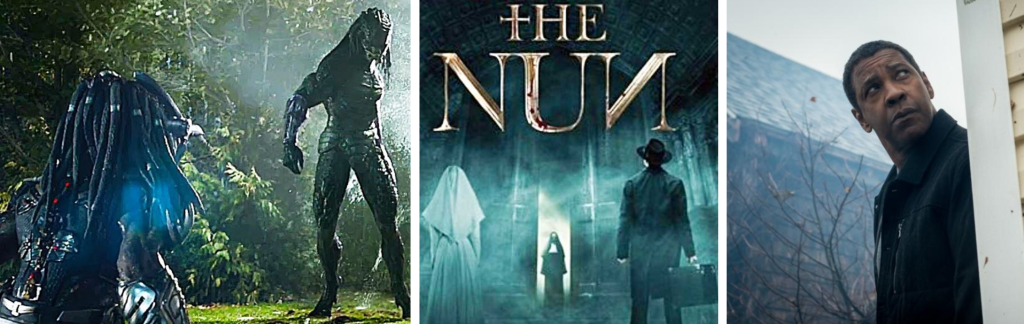
    I’m still catching up on reviews of the many recent releases. Here are a few short ones. In a strange way, these three feel like they deserve a mashup wherein The Equalizer goes toe-to-toe with The Predator, but both are eliminated by The Nun. Sounds like the next horror parody.

    The Predator
    Written and directed by Shane Black
    Based on The Predator film series

    Sometimes we get one of those leave-your-brains-at-the-door type of films that don’t promise much and require just the minimum of spending some time in the cinema.

    Army Ranger sniper McKenna (Boyd Holbrook) gets entangled in an alien crash investigation and is thrown together with a motley crew of ex-military captives who happen to be in the vicinity of the military laboratory where the alien was taken. Bilogist Bracket (Olivia Munn) was just about to study the being when it is accidentally woken by a device in McKenna’s son’s keeping. And then another, more menacing Predator arrives in pursuit of the first alien. Action ensues.

    The Predator is reasonably funny and action-packed in the Shane Black cops-and-robbers type of action-comedy – how else to explain a biologist who can suddenly chase down a high-tech alien hunter with a tranq gun? The fourth film in the Predator series (sixth including the two Alien vs Predator films) looks old, too. If it sounds like it’s an average B-movie, it’s because it probably is. Just don’t take it too seriously.

    The Nun
    Directed by Corin Hardy
    Based on The Conjuring films

    In the continuing expansion of The Conjuring universe of stories, The Nun offers little to add to the story – let alone the origin of the demon itself (maybe for future installments) – but has tons of jump scares consistent with the franchise.

    The Vatican sends a priest (Demián Bichir) and a novice (Taissa Farmiga) to investigate the strange death of a nun in a remote convent in Romania. They encounter the demon Valak (Bonnie Aarons) instead.

    It escaped me why the Vatican sent a novice with the priest (something about her having this gift or whatever) but regardless, her decision to take the vow at the climax seemed inconsequential (something about only a pure nun could wield the relic of the blood of Christ? What a lame excuse for a narrative.) Old-school jump scares deliver adequately. The cinematography looks great – establishes the mood quite well. The story, though, is not engaging enough. However, when a horror movie does give the scares, that’s already an accomplishment.

    The Equalizer 2
    Directed by Antoine Fuqua
    Second in the series based on the TV show of the same name.

    The second installment to the vigilante actioner isn’t as bad as the first. Comparatively speaking, it’s better. That’s not to say it isn’t terribly flawed. It’s just more tolerable.

    Ex-spy McCall (Denzel Washington) is peacefully living as a Lyft driver in Massachusets when he is called to investigate the death of his friend and former superior Plummer (Melissa Leo) in Brussels. McCall determines that her death is related to the investigation she was conducting on an apparent murder-suicide of a fellow agent. McCall doesn’t like what he uncovers.

    We’ve seen better similar revenge actioners and better Washingtons than this one. The only reason I liked this better than the first is that it portrays gun violence less glamorously as the first, and it cares to slow down to explore its side characters a little more even if it has little consequence to the plot. The scenes with McCall’s passengers are very welcome. Even actioners should care about characters and people. It feels more human than a mindless shoot-em-up.

  • Can’t move on with karma

    So I was recently asked to review Along With The Gods: The Last 49 Days for Philippine Daily Inquirer’s hallyu* -related section, Super K (link here.)

    Mirroring the article that came out today, Sunday, September 9.

    Along With The Gods: The Last 49 Days
    Korean title: 신과함께-죄와
    [Singwa Hamkke – Ingwa yeon]
    Directed by Kim Yong-hwa
    Based on a webtoon by Joo Ho-min
    Rated R-13

    Karma is a bitch, especially if you have skeletons in the closet that you want to keep hidden. Or, as in the story of Along With The Gods, the buried remains of a soldier whose spirit can’t move on and reincarnate without undergoing trial in the afterlife.

    Possible spoilers if you haven’t seen the first film.

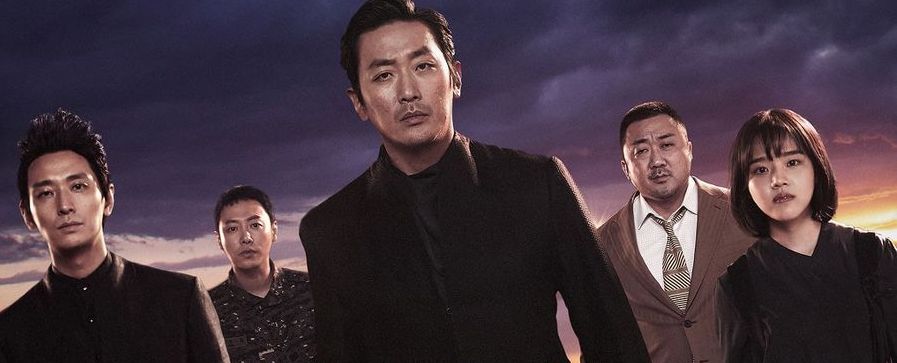
    Along With the Gods: The Last 49 Days begins where the first film ends: grim reapers Gang-lim (Ha Jung-woo) and Haewonmak (Ju Ji-hoon) are attacking the soldiers of the god of the afterlife, Yeomra (Lee Jung-jae) whom they seek to present their 49th paragon spirit, the soldier Soo-hong (Kim Dong-wook.) It’s not the usual way to do things, but to successfully reincarnate their 49th honorable spirit would be their only chance at being reincarnated, too.

    However, Yeomra thinks that the vengeful spirit of Soo-hong is already condemned to be destroyed, but Gang-lim is convinced that the soldier is the victim of circumstances and deserves to undergo the trials.

    Yeomra accepts on the condition that Gang-lim defends Soo-hong successfully within the allotted 49 days with a second condition that Gang-lim and his subordinate grim reapers Haewonmak and Deok-choon (Kim Hyang-gi) must travel to the living world and ascend an overstaying elderly man (Choon-sam, played by Nam Il-woo.)

    In the living world, Haewonmak and Deok-choon are surprised by the appearance of house god Seongju (Ma Dong-seok) protecting the elderly Choon-sam and his grandson Hyun-dong (Jung Ji-hoon.) While dealing with Seongju, the grim reapers learn about their ancient past.

    Back in the underworld, it seems that Soo-hong’s trials are meant for another purpose aside from releasing him from hell: the more details on Soo-hong’s past life are revealed, the more it appears that Gang-lim’s past is the one being judged.

    And so Part Two becomes the story of the three grim reapers. I didn’t really expect this twist, since I assumed that the sequel will only deal with the story of Soo-hong, since Soo-hung’s story already began in the first film.

    But first, a brief recap of Part One and how the grim reapers came upon Soo-hong:

    In Along With The Gods: The Two Worlds, ordinary fireman Ja-hong (Cha Tae-hyun) dies from an accident while saving a fire victim. The three grim reapers accompany him across the underworld, in order to successfully pass the trials in each realm of hell: Murder, Indolence, Deceit, Injustice, Betrayal, Violence and Filial Impiety. Ja-hong’s spirit is of a special kind, a rare paragon who led an honorable and just life that his spirit is expected to pass through the trials with ease and reincarnate immediately.

    An attack by hell hounds at Blade Forest indicate that a spirit related to Ja-hong has become vengeful. Gang-lim leaves the underworld to investigate, leaving the two grim reapers with Ja-hong.

    Gang-lim discovers that the vengeful spirit is that of Soo-hong, Ja-hong’s underachieving brother. In the process of apprehending the violent spirit, Gang-lim learns about Soo-hong’s life as a soldier, as a brother to Ja-hong and as a son to their mute mother (played by Ye Soo-Jung.)

    Each of Ja-hong’s sins is examined through the Mirror of Karma and in each instance, it would seem that Ja-hong was not an honorable person. But each time, the grim reapers successfully defend Ja-hong, whose only crime was to love the people he cared for. Ja-hong is immediately reincarnated. Afterwards, we find the three grim reapers and Soo-hong in the desert facing Yeaomra’s army.

    Obviously, both The Two Worlds and The Last 49 Days have lengthy, twisty, choppy narratives that could easily confuse anyone. Lucky for us Filipinos, we’ve become accustomed to K-drama tropes dealing with destiny, grim reapers, and magic swords that AWTG’s narrative is relatively easy to deal with.

    The second film shares many themes with the first – family relations, cause and effect, fate and karma, motivations and the consequences of all actions while still alive.

    The first film progressed towards the next realm of hell in order to establish the root of Ja-hong’s story beginning from Murder and ending in Filial Impiety.

    The second film runs almost in reverse, beginning at the trial for Filial Impiety and ending in Murder – but not strictly about the life of Soo-hong. In the course of dealing with Soo-hong as a vengeful spirit in the living world and as a spirit that must stand trial in the afterlife, Gang-lim violated a number of rules in the spirit world. By the time Gang-lim stands accused of violations, it has become obvious that Su-hong’s death is connected to the past life of Gang-lim, and that the past lives of the three guardians are intertwined.

    Both films are populated by an incredibly talented ensemble of character actors, their performances helping to sell what could easily have been a corny fantasy film in amateur hands. The addition of Ma Dong-seok as the endearing house god Seongju is just icing on the cake.

    Two characters linked to the story of Soo-hong that are in both films are worth mentioning just a bit, because too much might spoil the story. Private Won Dong-yeon is ably played by EXO boyband member Do Kyung-soo, while TV character actor Lee Joon-hyuk plays dong-yeon and Soo-hong’s superior First Lieutenant Park Moo-shin. I’m aware that D.O. has appeared in several TV dramas, but he plays the disturbed rookie soldier here quite well.

    Ju Ji-hoon is pitch-perfect as the filter-less assistant grim reaper Haewonmak, throwing more funny punchlines here in the second installment. In the same sense, one can say that the second film – by turning the story towards Gang-lim and the other grim reapers – has less melodramatic tendencies compared to the first. Lead actor Ha Jung-woo’s character may be a focus in this story, but doesn’t require to show much externally. So much of what Gang-lim goes through is internal, and Ha performs this really well.

    But the real mention here is Kim Dong-wook as the spirit-on-trial Soo-hong. His character arch stretches long from the first film as a jealous brother to a dear best friend to a vengeful spirit, to the second film where he goes from cocky ingrate to restored human. Impressive display of versatility in these two films.

    The director’s effects company Dexter Studios – responsible for the film’s fantastic creatures and sweeping aerial vistas of reminiscent of Peter Jackson’s The Lord of the Rings – may not be equal to Hollywood’s best, but it seems that they’re getting there. Both films are CGI visual-effects heavy. While the first film showcased the various landscapes of the different regions of hell, the second film sometimes would add things that seem unnecessary, like the dinosaurs in the desert of fear. The scene is mildly funny, but the dinosaurs seem to be there just for the sake of it. I do like all the ancient Korea scenes.

    You’ll either like Part Two better because it has more character backstories, but you can also like the first one more because it speaks more about the immediate family – particularly devotion to parents – culturally pervasive in Asia.

    Along With The Gods is the director’s affirmation of what is common to all religions: the dignity of the human soul. That no human is inherently evil, and sins are either paid for or forgiven in this life or the next. The film’s mythology might be a mix of Chinese, Korean and South Asian influences, but penance and the idea of supreme judgment are shared with Christians as well.

    Along With The Gods: The Last 49 Days is a fitting companion to the first film – a crowd-pleasing spectacle of visuals and epic story-telling, peppered with humor and punctuated by emotional moments that explore the light and dark sides to our humanity.

    As in the first film, the second ends with a teaser for the possible next chapters of the AWTG saga – the way the filmmakers twisted the narrative this time, who knows what we’ll see in the next installment.

    —-
    *hallyu = Korean Wave

    Side bar:

    Ju Ji-hoon, best remembered in his breakout role as Crown Prince Lee Shin in the 2007 TV series Princess Hours, will next be seen in Netflix’s upcoming period drama, Kingdom.

    Previous to AWTG, the last time we saw character actor Ma Dong-seok was as a passenger fending off zombies in the ill-fated Train to Busan (2016.)

    Young Jung Ji-hoon, who plays the elderly man’s grandson and Seongju’s favorite Hyun-dong, was Kim Shin’s little boy-servant in the hit TV series Goblin (2016-2017.)

    The film’s director, Kim Yong-hwa is best known for writing and directing blockbuster comedies with bits of social commentary such as in Oh! Brothers (2003,) 200 Pounds Beauty (2006) and Take Off (2009.)

  • Ni Hao-llywood

    Crazy Rich Asians
    Directed by John M. Chu
    Based on the novel by Kevin Kwan
    Rated PG

    *SLIGHT SPOILERS AHEAD*

    I’d be lying if I didn’t say that the film is flawed. It’s choppy, it’s predictable, many characters are thinly portrayed and the lead guy could use some more acting workshops (granted, he is new and this is his first film.)

    Having said that, Crazy Rich Asians is a scrumptious helping of extravagance, gorgeous (and charming) actors, Asian family values and that glorious virture of standing up for one’s self. It’s quite satisfying to watch an all-Asian cast in a Hollywood movie. So c’mon, ‘Merica, make more of these cuz we (Asians) are gonna watch them.

    Let’s make things clear: this is a Hollywood romantic comedy starring mostly Asians and Asian-Americans, about an Asian-American woman who finds herself not Asian enough when she meets her boyfriend’s family in Singapore. It’s not an Asian movie about all Asians. And it’s fictional. A fantasy.

    In the film, a New York economics professor flies to Singapore to meet her boyfriend’s family and friends who turn out to be the titular crazy rich Asians.

    Images from Warner Brothers Pictures

    Rachel (Fresh Off The Boat’s Constance Wu) is an Asian-American game-theorist NYU economics professor who reluctantly agrees to attend the wedding of her boyfriend Nick’s (Henry Golding) best friend Colin (Chris Pang) in Singapore and also meet Nick’s friends and family while there. Nick never talked about his family with Rachel, so it comes to Rachel’s surprise that Nick is heir to a grand family fortune, and her landing in Singapore would stir the proverbial hornet’s nest and its queen, Nick’s regal mother Eleanor (the legendary Michelle Yeoh.)

    Fortunately for Rachel to successfully walk over Asian eggshells, she finds support from her college pal Peik Lin (Awkwafina, for the Globes!) Nick’s close cousin Astrid (gorgeous Gemma Chan) and other cousin Oliver (Nico Santos, Pinoy reprazent.) But it would take more than guts for Rachel to survive the crazy trip without her getting stung.

    The story is a familiar Cinderella fairy tale, but instead of just three evil stepsisters and a stepmother, Rachel receives the sneers of an entire island-nation. Characters are a little under-developed, falling into a few genre tropes to facilitate the narrative. This is particularly obvious with Nick, whom we are all expected to accept as the dashing, down to earth prince charming without much thought into how or why or wherefore he is like that. Golding provides an adequate portrayal of Nick with some support from editing: the few scenes where he delivers some crucial lines (“I met a girl, fell in love, and I want to marry her,” “I made a mistake,” plus that climactic confrontation between him, the grandmother and Eleanor) all cut away to frames of whomever he is talking to – maybe because those emotions were not there yet. To be fair to Mr. Golding, he does have the charm and screen presence to be a bonafide leading man – a few more workshops and screen exposures will help him a lot.

    The narrative is also choppy – but for good reason. Every now and then, Rachel and Nick’s romance is interrupted by that other narrative involving Astrid and her husband Michael (Pierre Png.) That story serves as a cautionary tale for what might happen to Rachel – a “commoner” like Michael – should she end up marrying Nick. It also magnifies Eleanor’s statement that Rachel will never be enough for her son. This storyline is also there as one of the many bases that the film needs to cover should (and as of this morning’s announcement, in fact) production for the sequel takes place. The sequel novel, Crazy Rich Girlfriend has more about Astrid and Charlie Wu (Harry Shum Jr, who makes a brief appearance.)

    I’m curious how the film will be viewed by my fellow Filipinos. It’s already a huge hit at the local boxoffice, even though we see a lot of rom-coms from local studios and K-dramas. CRA at first glance looks like a big production of the same thing. Colonized “300 years in the convent, 50 years in Hollywood,” Filipinos would sometimes describe ourselves as less Asian and more Western. Quite strange, since the oldest Chinatown in the world is in Manila, and the capital was a Muslim stronghold before the Spaniards arrived. We could have easily been another Indonesia or Malaysia or Singapore. US soldiers in the Second World War called us their Little Brown brothers. In this sense, we’re kinda like “bananas” too as the movie puts it – yellow on the outside and white on the inside. But more like brown bananas. We’re well too aware of being looked down upon when we travel to China or Singapore or the Middle East. And yet we’re also partly racist: prone to stereotype Indians as loan sharks and to yellowface Chinese.

    Despite my mother’s stories of our Spanish heritage, my siblings and I were never actually taught to habla Español. On my father’s side, we called our granny ah-ma, just like in the movie. Maybe we’re part Chinese, I don’t exactly know. What I’m saying is while I identify myself as Asian, I’m also a Filipino cognizant of the stereotyping that happens across Asia’s that CRA simply glosses over.

    Even though I find the production design generally visually ravishing, there’s something oddly sinister with the gorgeous wedding that everyone is raving about. In the scene, the bride-to-be Araminta (Sonoya Mizuno) wades into an artificial rice paddy in the church on the way to the altar. Guests wave stalks with led lights at the tips to resemble fireflies. Beautiful scene. And yet these are crazy rich people sharing an emotional experience together in a place – however artificial – commonly associated with the meekest of Asians. The scene is so… Marie Antoinette.

    But these complaints run side by side with what the film accomplishes positively.

    It’s an old-school rom-com with lovable characters, charming actors, romantic settings and a story that sweeps you off of your feet.

    That people ARE talking about how the film fails to adequately represent the 99-percernter Asians especially from its own Singaporean backyard is a good thing. Because of CRA’s boxoffice success, Hollywood is now conscious that Asian is not a monolithic thing.

    Ken Jeong’s few lines are both uproariously funny and loaded words. Upon meeting Rachel in his Trumpesque home, he fakes stammering in English before admitting that he indeed speaks fluent English. He also jokes about starving American children. Peik Lin tells Rachel that she’s not an animal. Cousin Bernard’s (Jimmy O. Yang) wild bachelor party has Caucasians as the help. It’s not often that you see or hear Asians in a Hollywood film turning the tables around for the non-Asian people in the audience to see and hear.

    And Singapore! The film is practically a glorified tourism ad featuring the small nation’s renowned street food and impressive urban landscapes.

    For awards handicappers, there’s the film’s lavish design and costumes, Brian Tyler’s music and the Mando-pop soundtrack, and maybe cinematography. The Globes will be all over this film.

    Crazy Rich Asians also has a lot of heart. The film celebrates (though somewhat mostly Western-friendly) Asian traditions, particularly familial bond. Career is a family thing. Marriage is a family thing. Food is a family thing. Happiness is a family thing. Yeoh explains in an article that she accepted the role only after changes in her character were made to avoid the tiger mom stereotype. For Eleanor, family is everything. And that’s very Asian – from Laos to Kathmandu.

    In what could be a masterclass in film adaptation, nuancing and symbolism (especially if you know how to play the game as I do), the now-much talked-about mahjong scene (a departure from the book) highlights the film’s conflict between Rachel and Eleanor though a traditional Chinese card game. West versus East, personal versus familial, integrity versus pride. (For a deeper eplanation of the scene, there’s this article from Vox here.) You’d cheer for Rachel after that scene, but you will also feel for Eleanor.

    In the end, the Rachel from New York remains intact. She chooses to remain Asian-American. She chooses her self-worth. She also makes sure that Eleanor understands that she understands what family means. And that’s not a Cinderella story anymore.

    Hello, Hollywood. Asians have arrived.

  • Skirting around the subject

    I’m way behind my reviews so for now I’ll just post these short reactions here.

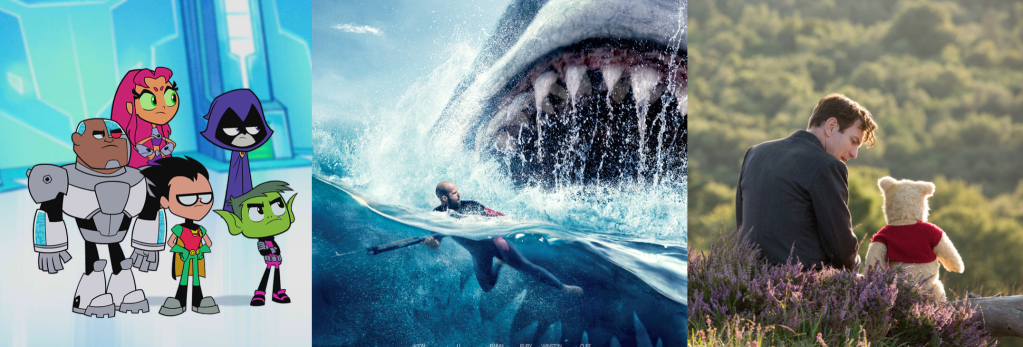
    On TEEN TITANS GO! TO THE MOVIES:
    A group of teenage superheroes tries to get a studio to make a movie about them so they can be taken seriously as superheroes. But they’ll need to find a supervillain, too.

    Hilarity ensues when a superhero movie – from a studio often derided for taking its superheroes far too seriously – pokes fun at superheroism and superheroes including those from within its ranks.

    SMART scripting actually makes this seriously entertaining for kids, teens, adults MARVEL fans and everyone in between. Give this a go, guys.

    On CHRISTOPHER ROBIN:
    Christopher Robin (Ewan McGregor) is grown up and having a mid-life career vs family crisis. Pooh shows up to help him find his mojo again.

    Wears its nostalgic heart on its sleeves way too much. If only it had a couple more scenes which the kids in the audience could have fun watching. Right now it’s an adult’s tale where Pooh shrinks for his pal who’s pining for his lost childhood. It’s a tad cheerless.

    On THE MEG:
    Deep-sea rescuer Jonas Taylor (Jason Statham) battles a prehistoric giant shark before it eats mainland China. I’m kidding.

    It took me some time to warm up to the silliness, but I was 50-50 towards the end: half of me had absolute delight at the Jaws homage scene with the monster attacking Chinese revelers at Sanya Bay, while the other half – the Filipino half – had an eyebrow raised at how the movie literally skirted around the Philippines especially if you know your geography. It does have impressive stunts in and around water, particularly the capsized fishing boat sequence. Mostly fun – but I can’t not react as a Filipino.

    It’s a curious thing to watch this Chinese-funded film would have Western sensibilities for some silliness. But I’m well aware why the Philippines is not considered a country here even if the entire story happend in waters around our archipelago.

    Watch MEG and enjoy imagining Senator Alan Peter as one of the victims.

    Images from Warner Brothers and Walt Disney Pictures.
  • Accomplished

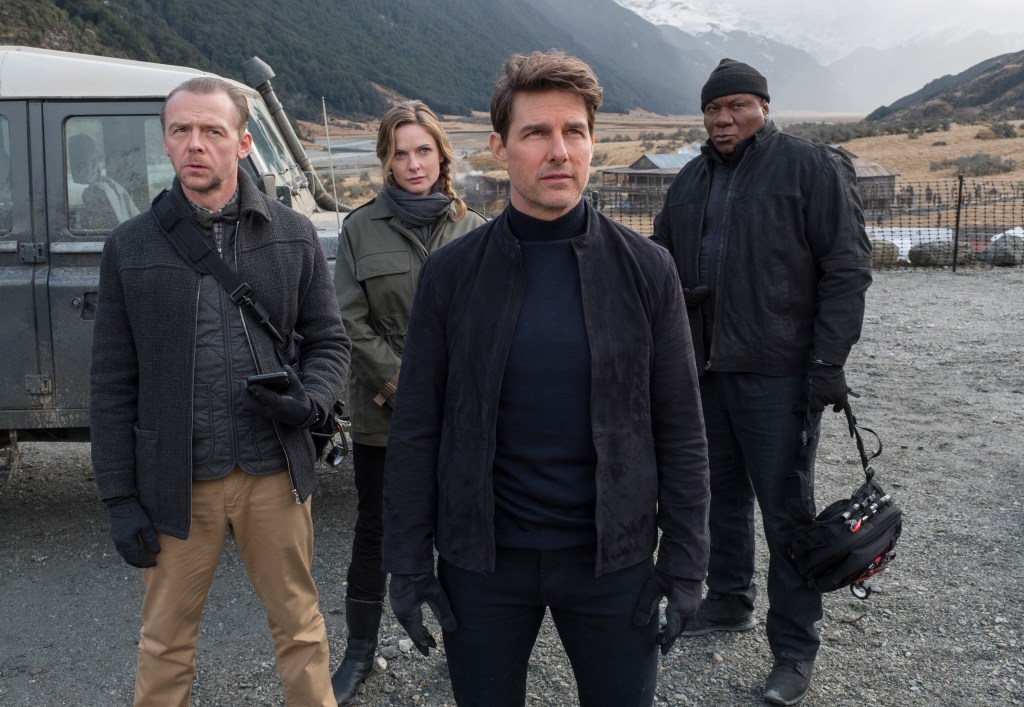
    Mission Impossible: Fallout
    Written and Directed by Christopher McQuarrie

    Granted it does not have the same narrative complexity of the series’ best Ghost Protocol (2011,) I thought the series was heading into the doldrums after the less impressive Rogue Nation (2015.)

    But lo and behold, here we have Tom Cruise running and jumping and doing stunts like it was the year 2000.

    Taking off from the events of Rogue Nation, Hunt receives a mission to intercept plutonium cores from landing into the hands of global terrorist organization The Apostles. The mission is unsuccessful after Hunt chooses to save team-member Luther Stickell (Ving Rhames) instead of securing the cores, and the plutonium is whisked away by Apostle agents.


    Photos from Paramount Pictures

    The blunder is felt in Washington, wherein alpha-boss Erika Sloane (Angela Basset) takes over the operation from IMF overseer Alan Hunley (Alec Baldwin) and installs lead CIA agent August Walker (Henry Cavill) to ensure the mission’s success.

    While in pursuit of the Apostles’ mysterious leader John Lark, Hunt’s team encounters the group of undergound powerbroker The White Lady (Vanessa Kirby,) who promises to lead Hunt – who is pretending to be Lark – to the remaining plutonium cores in exchange for Syndicate leader Solomon Lane (Sean Harris.) However, former MI6 agent Ilsa Faust (Rebecca Ferguson) shows up with a separate agenda for Lane in mind. But the plot goes ever thicker when Hunt’s former wife Julia (Michelle Monaghan) is somehow thrown into the mix.

    #MIssionImpossible: Fallout is relentlessly nail-biting AF from beginning to end, with impressive practical sets and practical stunts that CGI-inflated films could dream of.

    Rogue Nation had several action pieces set at night, including a London chase, and seeing Fallout do a souped-up version of these pieces many in daylight (and IMAX) further enhances the verite feeling of experiencing the real thing where it happens. Another thing about Fallout: (I think, or at least it feels like) it has a lot fewer scenes of people sitting and fewer high-techitysm (yeah, I’m coining that propensity to show off imagined new tech.) It definitely feels more kinetic and tactile.

    Great cast. Cavill is okay – but the rest is exceptional. I think Cavill works best with this agressive, in-the-gray-area character than his manicured gentleman versions as Napoleon Solo in The Man from UNCLE. I still feel that he has a limited range of emotions to display, though. The rest of the cast shine, including Simon Pegg as techie Benjie Dunn, who gets into more action scenes of his own.

    I also like the updated mix based on the original theme by Lalo Schifrin and the techno version by Adam Clayton and Larry Mullen Jr. Delicious photography of Paris and London, with a few how-did-they-shoot-that moments. Looks great on IMAX.

    There’s no denying that the film is a Tom Cruise showcase, but that is not to say that the film accomplishes its franchise’s usual promises of non-stop action.

    The spy action-thriller is very much alive and its name (right now) is Ethan Hunt. That Cruise could still do this in 2018 since the first Mission Impossible in 1996 is PHENOMENAL.

    This Mission is accomplished.

  • Here we go again

    Sometimes we pre-judge a film way before it is released. It could be based on a bad trailer. Or maybe based on perplexing studio studio announcements that don’t seem to make sense. Or just the idea that they’re making a seemingly unnecessary sequel to something that worked the first time around which the makers hope they can replicate. Who knows, it’s the age of franchises, peeps.

    But sometimes, the sequel actually works just as well as the first.

    Mamma Mia: Here We Go Again
    Directed by Ol Parker
    Based on the original musical by Catherine Johnson and the songs of ABBA
    (sequel)

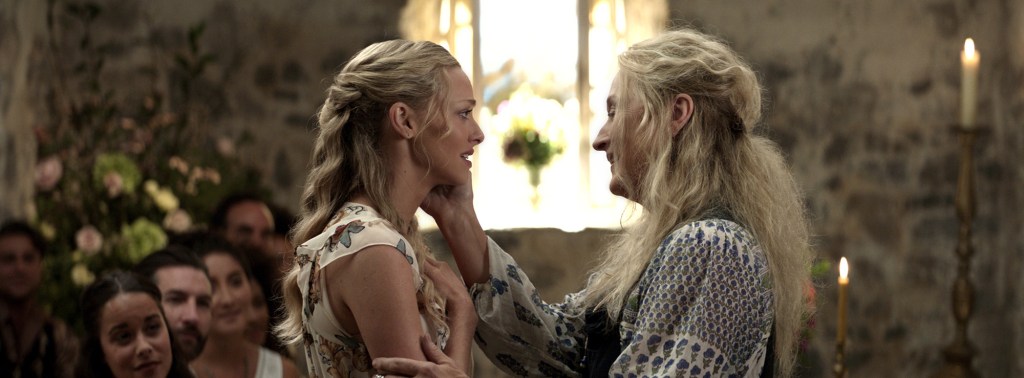
    TEN years since Meryl danced like a queen (ugh, okay that’s not good writing,) we are back on the Greek island once again to the tunes of ABBA’s (other) hit songs.

    Sophie (Amanda Seyfried) is fulfilling her promise to make her momma Donna (Meryl Streep) proud to transform their tiny island into a hotel-resort with the help of the kind people of the community and Sam (Pierce Brosnan,) one of her dads who have stayed behind.

    The movie then jumps to and fro between Sophie in the present, stressing over preparations to open the hotel, to young Donna in the past (a lively Lily James) from the time she and her BFFs Tanya (Jessica Keenan Wynn) and Rosie (Alexa Davies) graduate from college in London in 1979 to the separate times Donna meets young Harry (Hugh Skinner), young Bill (Josh Dylan) and finally young Sam (Jeremy Irvine) on her way to her dream island in Greece.

    Photos from Universal Pictures

    At first I thought everything looked so fake (the sets, the costumes, the acting) – but then Llly James appears and the screen lights up, and then everybody just naturally comes along as the story progresses. The cast makes this amazing effort to enjoy themselves onscreen that it’s impossible not to consider that they have made an actual, honest screen family.

    I mean, I dodn’t like how the thing was lit. The sets and the costumes (the wigs!) called attention to themselves. The unecessary number of background people. And in the beginning, the actors felt like they were merely fulfilling contractual obligations. But as the film went on, the annoyances took a back seat over seemingly authentic familial warmth from the entire cast.

    But personally, I can skip the Cher part. Sorry.

    I must note that I enjoyed the first film primarily because of the interactions between members of Donna and the Dynamos (Julie Walters and Christine Baranski are top-notch divas. Plus Meryl? Precious.) In the case of the sequel, the elder Dynamos are still fabulous as ever, and their young counterparts make good effort to resemble their elder versions character-wise.

    I can’t say the same, though, for the younger versions of the dads. The young Bill (Dylan) is probably the most at ease with the character as well as with performing onscreen.

    And then I thought, well, the movie has no actual conflict. It’s made up of these episodic flashbacks to Donna’s past set against Sophie’s present, I think it’s corny and it doesn’t seem to have any stakes. Opening the hotel is not the story. Sophie’s pregnancy by itself is not the story.

    But the film builds and builds on that backstory on how Donna met Sophie’s three dads until that moment in the end when you make a mad scramble for your hankie or some tissue not just because (but also because) Hail Meryl has finally made her magical appearance – but because of that final song, by god, it’s Mother’s Day again. HOW ON EARTH IS THIS NOT A MOTHER’S DAY MOVIE?

    Works best if you enjoyed the first movie.

    #MammaMia: Here We Go Again, oh how can we resist you?