Back in 2011, The Smurfs were accidentally teleported into New York from their hidden mushroom village while escaping the wizard Gargamel. Fish-out-of-water accidents happen, but a friendly human helped them find their way back.
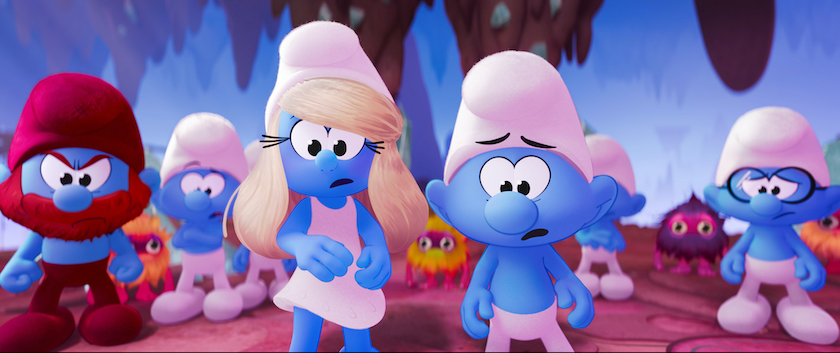
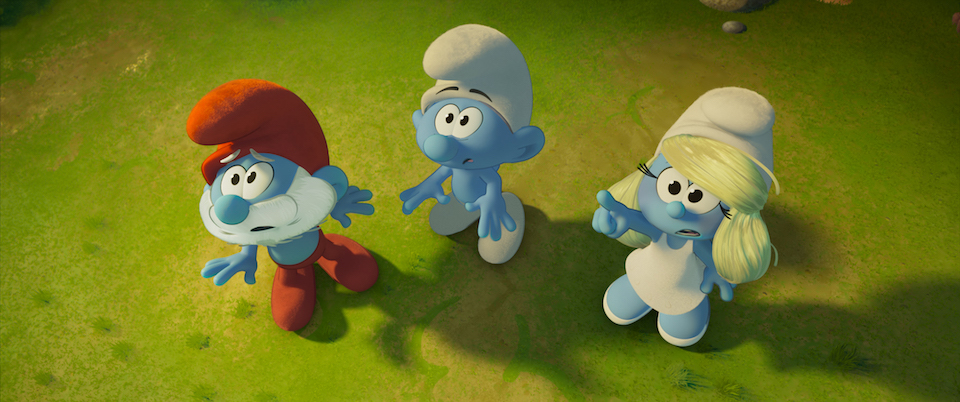
This year, the Smurfs are teleported into the real-world dimension from their hidden mushroom village to rescue Papa Smurf (John Goodman) from the clutches of the evil wizards Razamel and Gargamel (both voiced by JP Karliak.) Along the globe-hopping way, the Smurfs are befriended and aided by hairy new creatures the Snooterpoots and masked Smurfs-in-Paris wearing black leather pants.
Yes, the basic storyline sounds the same, which lends me to believe that that was all that Paramount asked for this family film. The story is scattershot, the interdimensional hoo-hoo a lame excuse for magic that sends the little blue creatures off to an adventure into our world (though I find that idea a little too quantum physics to explain to toddlers), and the songs are very typical motivational kumbaya how you-can-be-who (or what) -you-want-to-be songs about feelings and not about the plot and therefore could have come from anywhere non-specific to this storyline.
The main story revolves around No Name (James Corden,) a smurf who has yet to figure out their identity and purpose in the grand scheme of “every smurf in the village has a name and a thing.” No Name is the impetus of both Papa Smurf’s capture and eventual rescue from the wizards.
I’m not sure if this manner of labelling is good or bad for children psychologically, although I get that the film’s idea is about accepting a person’s own identity, the sooner the better.
But what Smurfs is, it’s the most colorful movie my eyes have ever been exposed to. All 32 million colors that are made possible by lighting and textural variations that the multiverse can project. It is dazzingly colorful. Which should be okay for overstimulated children. Rihanna voices and sings as Smurfette. The Smurfs are impossibly, irresistibly cute, the adventure is illogically wild, and the story is safe and positive enough even for the shyest young little movie-watcher. Babysitter movies, they’re sometimes called.
Maybe that’s all director Chris Miller and Paramount needed to accomplish. Smurfs up!
Trailer and images courtesy of Paramount Pictures. Smurfs is out in theaters now.
Hidden under every trope imaginable that celebrates this generational zeitgeist is actually a mild commentary on The System. But you barely feel it because it’s fun and colorful to watch and listen to – you can almost say it’s diabolical.
If you say that Sinners is the transcendent film of the year, that’s only half-correct. It’s actually K-pop Demon Hunters. What I mean is that if there’s any discussion about which film had an impact on audiences artistically, culturally, generationally this year, it cannot be solely Sinners.
Not a review of K-pop Demon Hunters. There’s tons of those around already. Also not an examination of all Korean references. Better actual Koreans do that too, and there’s a lot of them in Tiktok and YouTube.
I just want to point out a few things.
I say that the commentary is hidden only because the film is entertaining, first. The film is designed for a very wide audience of k-pop and non-K-pop fans, from toddlers to adults. Those who have high exposure to the Hallyu/ Korean Wave are able to pick up on the commentary immediately.
What am I blabbering about?
That underneath the colorful animation and catchy tunes is a wish by the makers for the K-pop industry to improve on.
Rumi is gay-coded. Feel is gay-coded. Those by themselves are statements. Rumi yearns for acceptance, and even with Feel’s gay-coded lyrics, the duet is a lament against forbidden love. But this one is about Korea being homophobic and remaining a patriarchal society where abuse and discrimination against gender continue. Those are real-life demons.
That one line from Celine towards the end, where she says the flaws and fears must never be seen. Kpop idols are subjected to the strictest, sometimes unrealistic standards of beauty, public decorum, physical and mental health, that fandoms have become either the most positive elements of the music industry or the most toxic.
Tiktoker @younglestiktok has a series of videos explaining K-pop Demon Hunters from the perspective of Korean history, overall validating the film’s decisions from character arc to the use of Korean symbols. In one of her videos, she explored the significance of making the lead protagonist Rumi a halfie, noting how K-pop idols of mixed heritage are often expected to deny their mixed heritage and emphasize their Korean identity to the public. Rumi’s songs are constantly about being accepted for who she is.
Speaking of who (or what) they are, the Saja Boys’ names are also a veiled commentary on this industrial pop factory. Idols are to be mysterious, romantic, hypersexualized to their fans, and often upon request, required to perform aegyo (cute) onstage. Imagine if Western bands had to do this. Imagine Destiny’s Child being asked by David Letterman to play cutesy like twelve-year-olds for one full minute on camera. It’s not an accident that these names (Mystery, Romance, Abby, and Baby) were assigned to the demon characters.
I’m not trying to make a mountain out of K-pop Demon Hunters. I’m just saying that all talk about which film transcended to the audience the most this year should definitely include it.
So if I were the Academy, we’re looking at Your Idol and Feel in the original song category, since the Academy has a limit of a maximum of two nominated songs from one film. Golden is the obvious submission here, but those first two are the best songs in the musical.
Remember The Lego Movie, Academy? Yeah, you totally didn’t get that.
“One tree, two branches,” says the new Karate Kid film that aims to fold the “wax on, wax off” of classic The Karate Kid (1984) with the “jacket on, jacket off” of the not-so-old The Karate Kid (2010) into one martial arts universe because, I dunno, Confucius says?
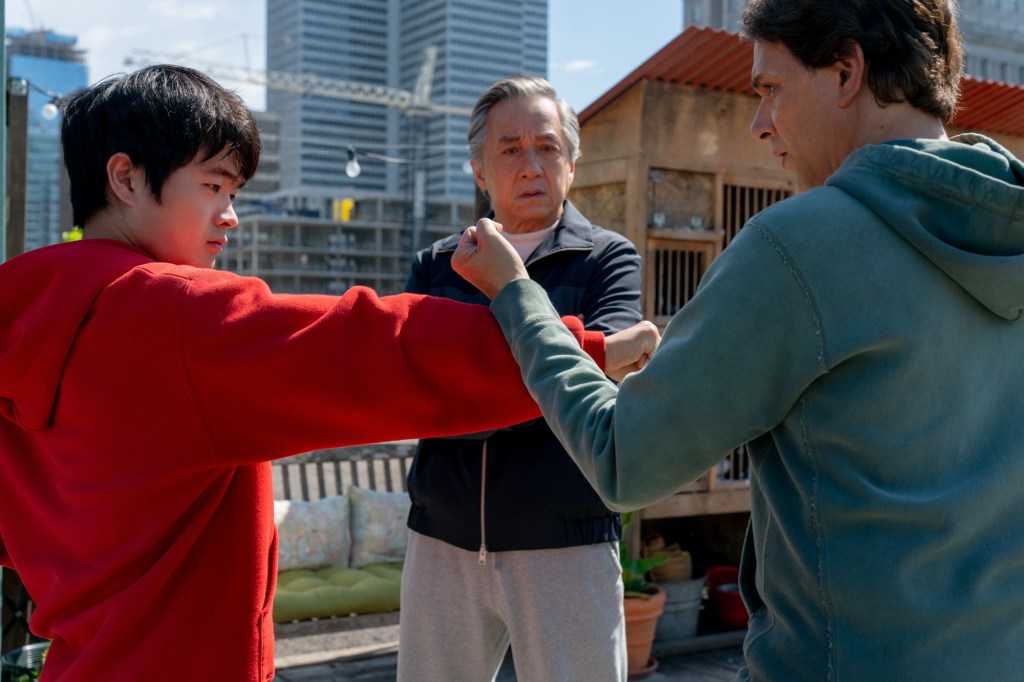
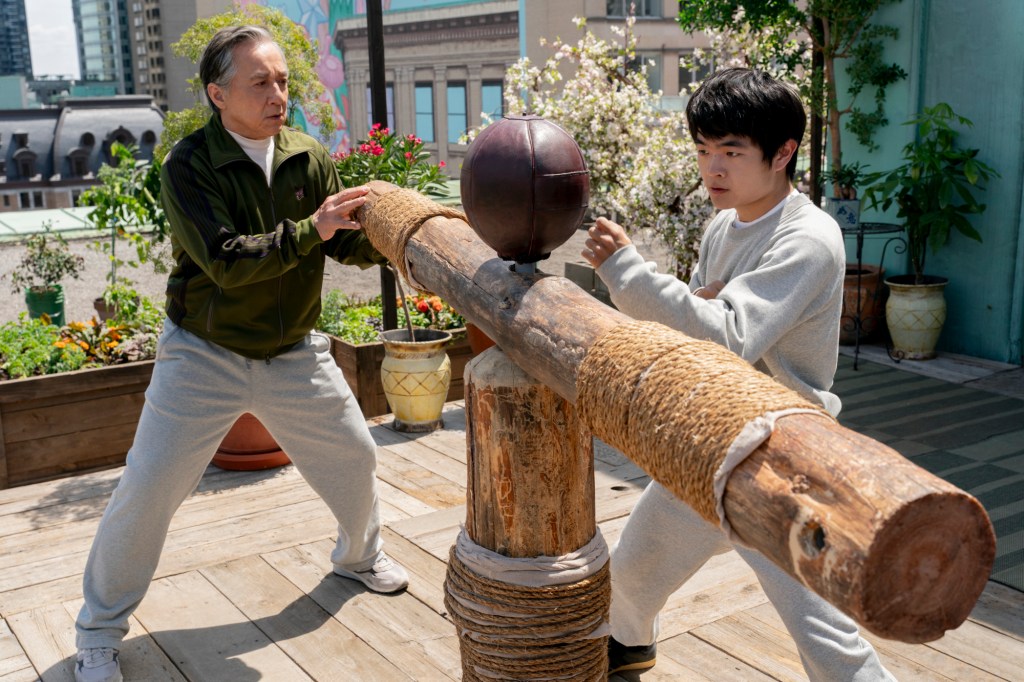
Karate Kid: Legends unites Jackie Chan of Karate Kid 2010 with Ralph Macchio of OG Karate Kid 1984 plus Ben Wang of Disney+’s American Born Chinese in the latest bid to keep this property kicking well into the 21st century, long after Daniel LaRusso crane-kicked the boxoffice in 1984.
To be fair, I was prepared not to like this before I saw it. But afterwards, I didn’t like only half of it. The other half of the story was acceptable.
“One tree, two branches” sounds like the marketing tagline for a 2-in-1 genealogy website, but Karate Kid: Legends takes this phrase seriously because karate is also kung fu. Confusion stays.
Alright. Legends is about young Li Fong (or Fong Li, if we’re truly Chinese about the name) who is plucked by his mother-with-no-first-name (Ming-Na Wen) from the Shaolin school of Han (Jackie Chan) in Beijing to relocate to New York. Mother Fong is the Asian-American archetype, successful and blended in, while Li isn’t the stereotype. He’s not even good at math. Haiyaa!
Li soon establishes rapport with schoolmate Mia (Sadie Stanley) and her father Victor (Joshua Jackson), who run a pizza place near the Fong neighborhood. But Mia’s ex Conor (Aramis Knight), who happens to be the karate champion of the Big Apple, plans to deal more than emotional damage to anyone who tries to get close to Mia.
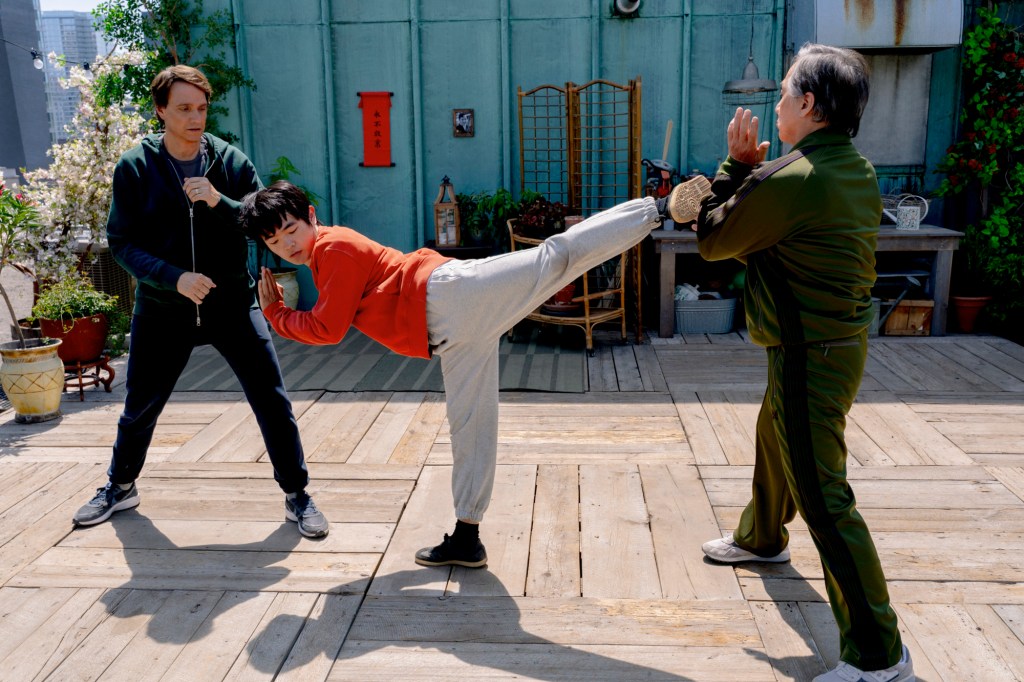
In a fit of reverse-Uno studio genius, Li becomes Victor’s shifu (teacher) after Li defends Victor from loan shark henchmen in an alleyway brawl whose action choreography is classic Jackie Chan and the film’s best display of martial arts stunts. Victor, himself a former boxing champ, enlists the aid of Li in order to win some cash and pay off the loan sharks. Li trains Victor using kung fu techniques he has mastered from Han.
So far, bits and pieces of the Karate Kid grocery list – a master, a student, a romantic interest, a jealous bully, and a tournament fight. Except the part where the main character has to karate instead of kung fu and the tournament is boxing.
The fix: Victor is unable to pay off his debts, so Li takes it upon himself to enter the Five Boroughs karate tournament to win the cash, the girl and himself. But how to learn karate quick in order to join? Han helps Li by seeking the help of – you guessed it – Daniel LaRusso (Ralph Macchio.) Actually, Han was looking for his old friend Mr. Miyagi (Pat Morita), who in the story traveled to Beijing long before he became a karate sensei in Osaka. “One tree, two branches” would probably rattle some purists on the origins of karate, but they’re all Asian, right, Hollywood? (I must say, opening the film with beautifully restored archival footage from Karate Kid II was a pleasant surprise.)
With the karate in the kid established, the last ingredient missing is the signature “move” that always finishes off the antagonist. Li polishes his kung fu with Han and learns karate from Daniel to master the secret dragon kick that no one in the five boroughs knows about. Suffice it to say, the movie, like all Karate Kid installments, ends in a crowd-pleaser.
While action choreography is commendable (most likely due to the presence of Chan), the film’s storytelling suffers from jarring editing that defies emotional, time, and visual continuity. Unnecessary cutaways to a surly Connor. Unclear passage of time (or the lack of it.) Sudden emotional shifts. It was like the editor was ticking of a grocery list of shots. It would have been nice to see each of the five boroughs of New York shown during the Five Boroughs tournament, but the suggested places are perfunctory. It just is “Five Boroughs.” Wen and Knight’s characters are mere caricatures, and while half of the film revolves around solving Victor’s problem, Jackson’s name isn’t in the film’s billing. He literally is half of the story.
So the new film isn’t a total disappointment. It retcons the 2010 “Kung fu kid” back into karate despite the presence of Han. Wang ably handles both the dramatic and the physical requirements of Li, although to us Asians he clearly doesn’t look like a teenager anymore. As a coming of age film, Wang doesn’t fit the glove in this sense.
With Daniel’s re-introduction into the films, the franchise is open to further explore the Miyagi universe on the big screen in ways that they haven’t in all six seasons of Cobra Kai. Bullying, romance, teen angst, coming of age, internal reflection, mystical philosophies – whatever they haven’t explored yet, whether or not it makes sense. Taekwondo aliens? Maybe not. Jedi karate? Who knows?
Karate Kid: Legends is out in cinemas now from Columbia Pictures.
(Images and trailer link courtesy of Columbia Pics PH)
Novocaine is out in cinemas now from Paramount Pictures.
This will be short.
If you’re some sort of masochist, this movie is for you.
This movie is for you if you like medical shows that feature bare bones in open flesh, whether they’re drama, comedy, or reality.
If you like riding rollercoasters up in front or way back with arms up in the air, this movie is for you.
Not for the faint of heart, and definitely not for ordinary viewing. This has been the most fun I’ve had since Anora.
Nathan Caine (Jack Quaid, fresh off the horror-comedy Companion) has a medical condition that bars him from feeling any pain. One ordinary day, this condition will help him become a hero.
Cute chemistry with love interest Sherry (Amber Midhunter of Prey) is amplified by a similarly cute soundtrack. Fil-Am Jacob Batalon plays a sidekick once again.
Some good parts include the bad guy resembling a certain eyeliner-Vice President, plus the hero gets to deface a swastika.
Amber Midthunder as “Sherry” and Jack Quaid as “Nate” in Novocaine from Paramount Pictures.Jack Quaid as “Nate” in Novocaine from Paramount Pictures.
Novocaine is bone-breaking, teeth-shattering, not-for-the-squeamish fun! Hollywood, I want a sequel!
Novocaine, directed by Dan Berk and Robert Olsen, is R16 in Philippine cinemas now.
Relatives looking for relatives. Lost individuals searching for inner peace. Anora is A Real Pain, Paddington (that’s my humor there, sorry.).
One of the most hysterical comedies to come out in years, Anora is a refreshing, cool indie breeze in a town overrun by repetitive IP content.
A whirlwind wedding between New York exotic dancer Anora (Mikey Madison) and the spoiled son of a Russian billionaire Ivan (Mark Eydelshteyn) turns into a hysterical night of comedy after Ivan’s parents find out and tell their henchman Toros (Karren Karagulian) to have the marriage annulled by any (legal) means necessary. Yura Borisov assists Toros quietly on the side as Igor. We get to root for him towards the film’s end.
Although, Anora itself suffers from a bit of repetitive gags in the middle of its hilarious one night of chaos. A brilliant knee-slapping first act, sympathetic characters, and a killer ending all sprung from Sean Baker’s superb film writing. Mikey Madison was electrifying from start to end.
Less magical and joyful than Paddington 2 (2017) but still cute as a bear and sweet as marmalade, Paddington in Peru is fun-ish, delightful, and innocent entertainment for bears of all sizes.
A letter sent from Peru informs Paddington (Ben Whishaw) that his beloved Aunt Lucy (Imelda Staunton) is inexplicably missing, which prompts the little bear and the rest of the Brown family to heigh off to the Peruvian highlands. Antonio Banderas serves as the boat captain guide Hunter Cabot, while Olivia Colman is the Reverend Mother of the Home for Retired Bears.
However, I must say that parents accompanying their children to see this should look out for unintentional travel red flags set in motion by Paddington (don’t leave your family behind; don’t go into uncharted territories; always tell someone where you’re going, don’t follow strangers – flags that Paddington clearly ignored), in case the little ones get adventurous from these ideas.
Jesse Eisenberg’s impressive sophomore story, A Real Pain, is a deeply poignant road trip that explores sorrow and acceptance, showcasing an affecting performance from Kieran Culkin.
Cousins David (Jesse Eisenberg) and Benjie (Kieran Culkin) join a historical tour of Poland in memory of their recently deceased grandmother, but old grudges resurface while on the road. That’s a bummer if you’re stuck with the same person for several days.
All awards nominations A Real Pain has received are certainly worthy.
Anora is currently exclusively in Ayala Malls Cinemas (week of January 20th.) A Real Pain comes after on January 29th also exclusively in Ayala Malls Cinemas. Paddington in Peru opens on January 29th from Columbia Pictures.
The cheers from the young fans at the screening of Sonic the Hedgehog 3 were the loudest among the Hedgehog screenings I’ve attended, and it makes sense because the latest installement is the most enjoyable of the bunch.
Of course, that fan base has grown in age and in size since the supersonic hedgehog barged into Hollywood’s videogame-movie competition via a character design controversy back in 2020.
What I didn’t expect was for the reactions to the third film – no frills called Sonic the Hedgehog 3 – to be that loud. As in, “oh my god, oh my god, oh my god!” I’m pretty sure that young boy will be watching the movie again.
There’s no need for a Part 1 and Part 2 refresher, families can just jump right in and enjoy the adventure as the story, while having some links to the earlier films, can be understood on its own.
SEMI-SPOILERS AHEAD.
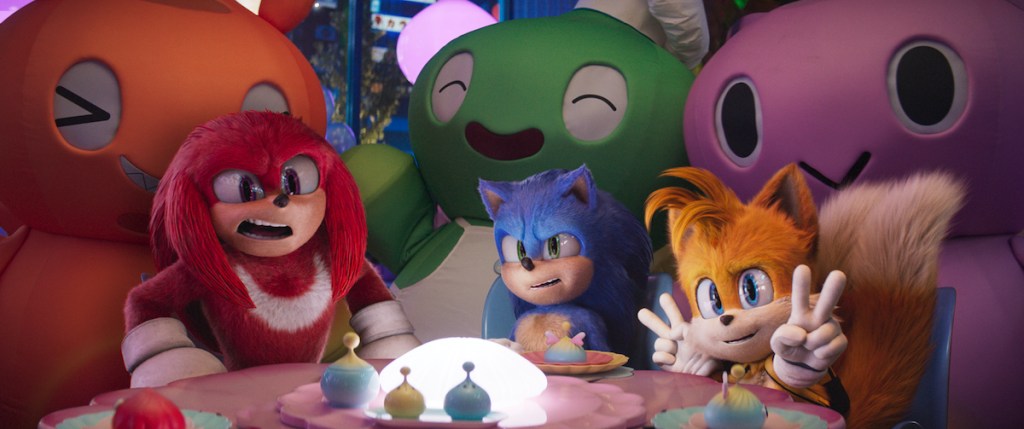
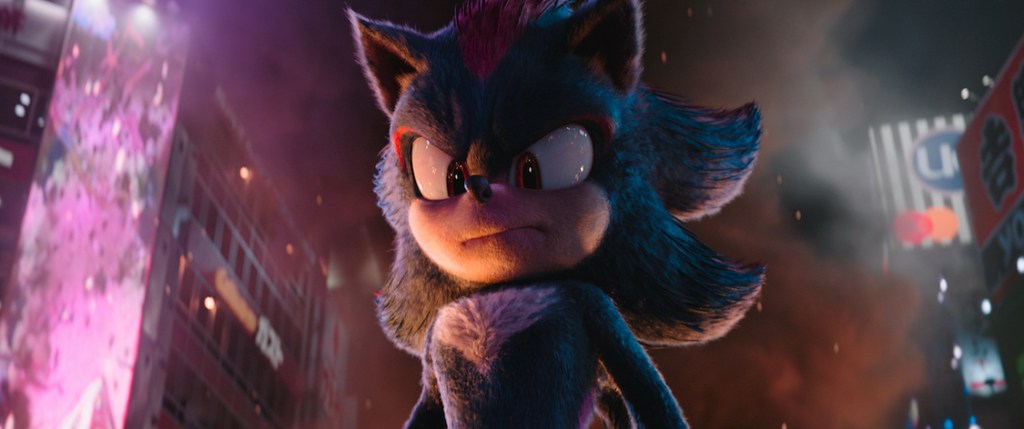
In Part 3, a powerful new alien hedgehog named Shadow (Keanu Reeves) emerges from a secret laboratory with a revenge plot against humans who wronged him in the past and placed him in some form of cryo-sleep. Sonic (Ben Schwartz), Knuckles (Idris Elba) and Tails (Colleen O’Shaughnessey) are recruited by Guardian Units of Nations (GUN) to defeat the new hedgehog, but are easily overpowered.
Sonic (Ben Schwartz), Knuckles (Idris Elba) and Tails (Colleen O’Shaughnessey) in Sonic the Hedgehog 3 from Paramount Pictures and Sega of America, Inc.
Shadow (Keanu Reeves) in Sonic the Hedgehog 3 from Paramount Pictures and Sega of America, Inc.
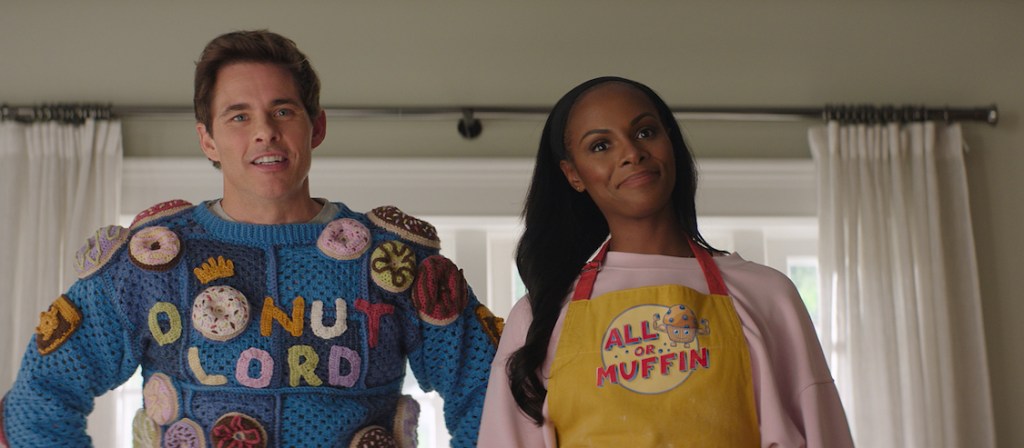
James Marsden as Tom and Tika Sumpter as Maddie in Sonic the Hedgehog 3 from Paramount Pictures and Sega of America, Inc.
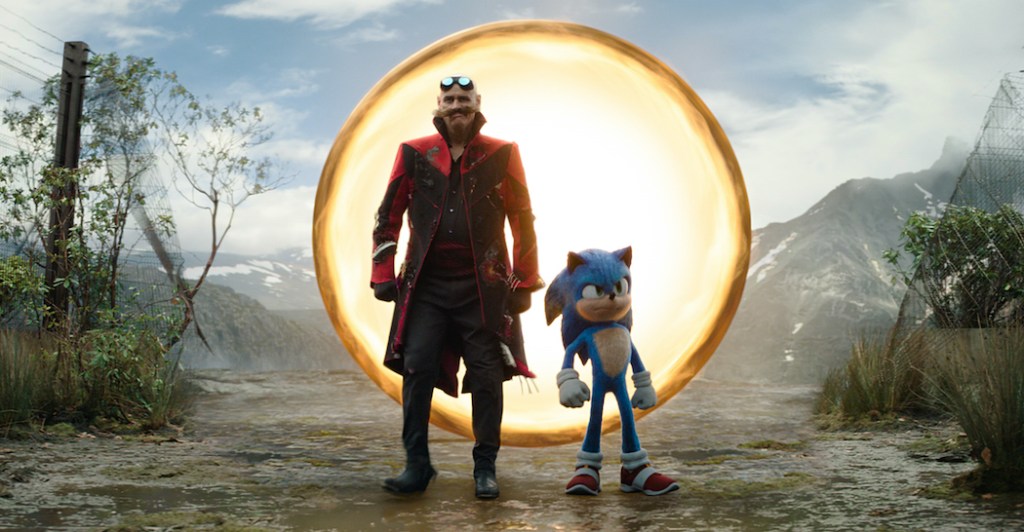
Jim Carrey as Ivo Robotnik and Sonic (Ben Schwartz) in Sonic the Hedgehog 3 from Paramount Pictures and Sega of America, Inc.
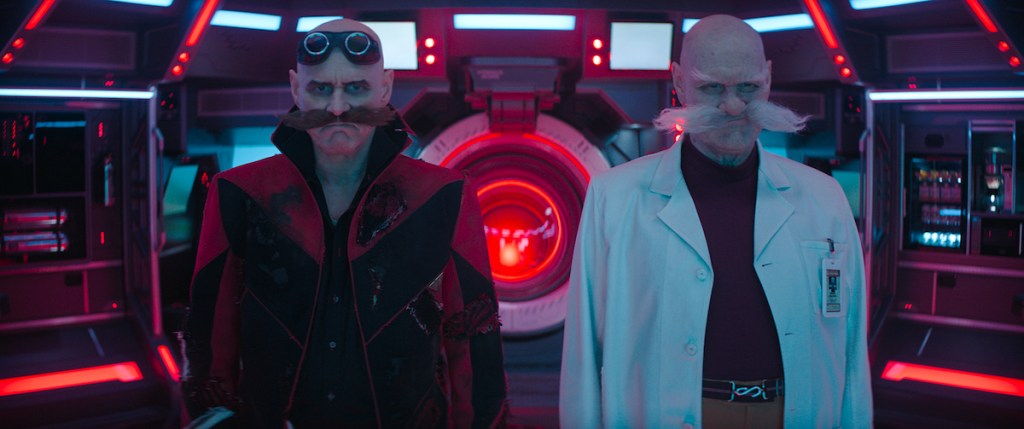
Jim Carrey as Ivo Robotnik and Gerald Robotnik in Sonic the Hedgehog 3 from Paramount Pictures and Sega of America, Inc.
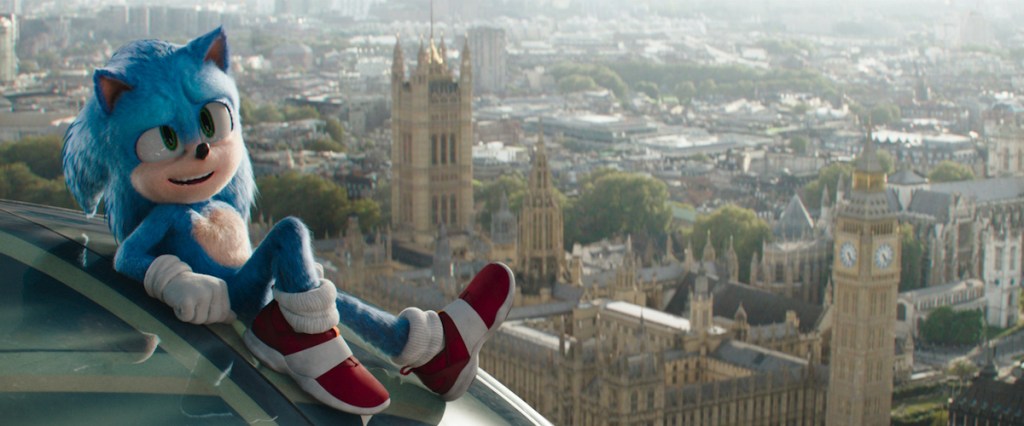
Sonic (Ben Schwartz) in Sonic The Hedgehog 3 from Paramount Pictures and Sega of America; Inc.
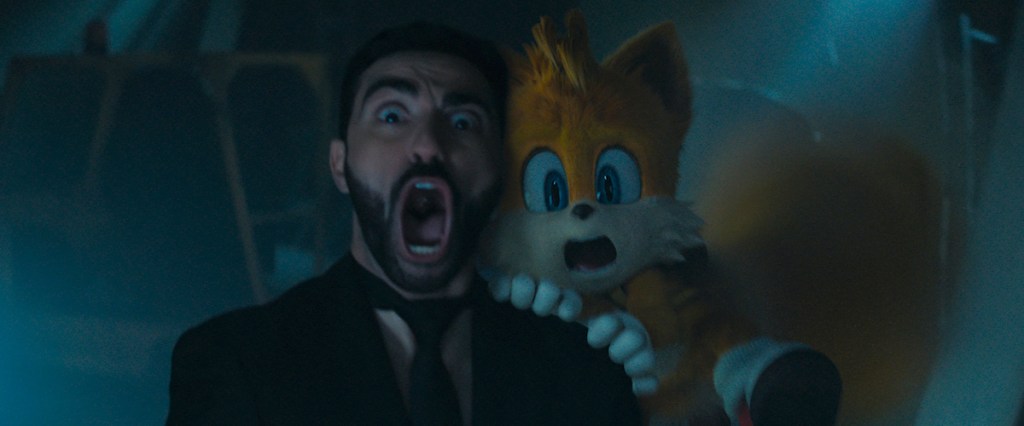
Lee Majdoub as Agent Stone and Tails (Colleen O’Shaughnessey) in Sonic The Hedgehog 3 from Paramount Pictures and Sega of America; Inc.
The heroes decide to team up with erstwhile enemy Ivo Robotnik (Jim Carrey) to gain some technological power to defeat Shadow, but as they work together, another villainous surprise arises – Gerald Robotnik, Ivo’s lost grandfather (also played by Jim Carrey.) Just as technologically genius as Ivo, Gerald turns out was behind the release of Shadow. Together with Tom (James Marsden) and Maddie (Tike Sumpter), the team races from Tokyo to London to outer space to defeat the evil plans of the Robotniks.
END OF SUMMARY
You can add Ivo Robotnik to the list of classic Jim Carrey characters just like his Grinch, the comedian is definitely in his element as the iconic villain of the Sonic universe.
Sonic the Hedgehog 3 is simply the goofiest installment with non-stop one-liners and witty punchlines and no pretentions for gravitas. Just all-around crazy antics that even the confused plot and illogical situations don’t matter. Uncomplicated entertainment that the family can enjoy together. Stay until after the credits.
Directed again by Jeff Fowler, the live-action-animation hybrid also has a returning cast with Jim Carrey, Ben Schwartz, James Marsden, Tika Sumpter, Idris Elba, Colleen O’Shaughnessey, Natasha Rothwell, Shemar Moore, Adam Pally, Lee Majdoub, plus newcomers Alyla Browne and Krysten Ritter, with Keanu Reeves joining the franchise as the voice of Shadow the Hedgehog.
Sonic the Hedgehog 3 is out in Philippine theaters this January 15th.
Images and link courtesy of Paramount Pictures.
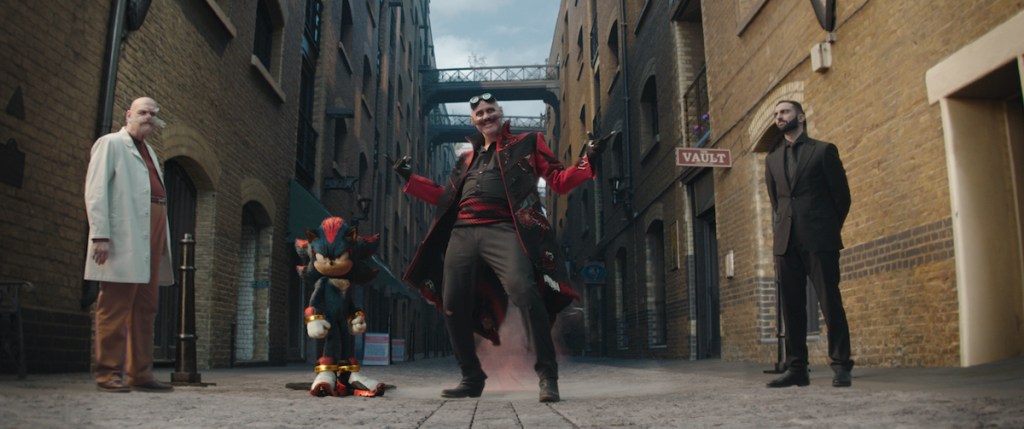
By the way, this scene from the movie is located in Malt Mill, along Shad Thames, near the Tower Bridge in London. Photo below is my picture of the street last August, 2024.
Jim Carrey as Ivo Robotnik and Gerald Robotnik, Shadow (Keanu Reeves) and Lee Majdoub as Agent Stone in Sonic the Hedgehog 3 from Paramount Pictures and Sega of America, Inc.
Just came from the special screening of Kpop boy band Tomorrow X Together’s virtual mini-concert Hyperfocus, presented by Ayala Malls Cinemas.
In Tagalog we would call this “BITIN!” (incomplete, short, not enough) but in a positive way. It’s quite an enjoyable virtual mini-concert experience featuring some of TXT’s greatest hits.
It’s quite like one of those “KCON featured-artist specials” during the pandemic when people watched Kpop concerts online and the visuals were band members in lavish virtual computer-generated sets. Or in this case as if one is transported inside their music videos and the boys are literally right in front of you. Plus a lengthy backstage behind the scenes of the VR production after the performances.
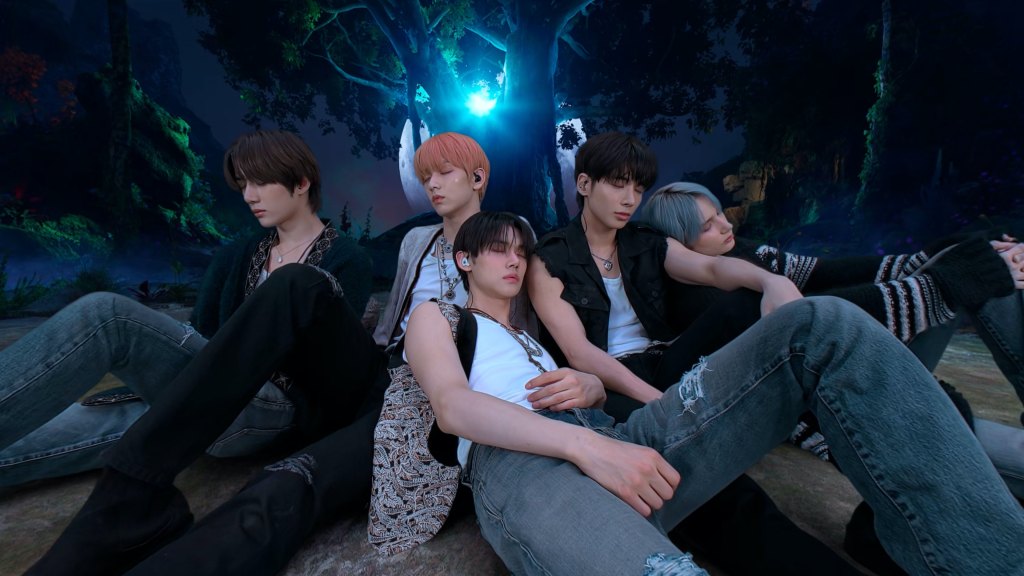
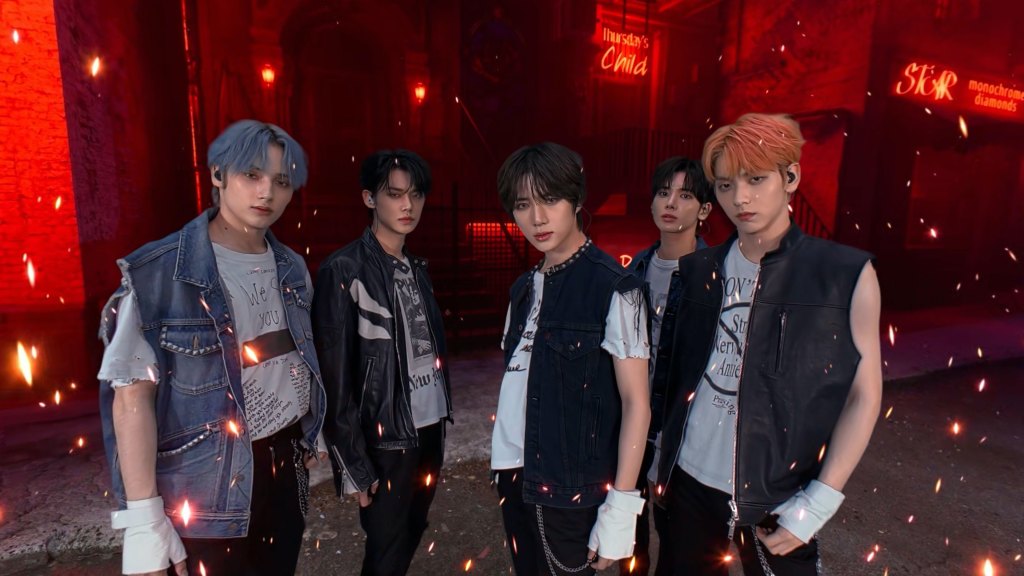
The show began with the lively Sugar Rush Ride, then a dreamy sequence transported us to Magic Island. My favorite performance from the show followed next in a grungy street set for the show-stopping energetic Good Boy Gone Bad. Tinnitus was er, “revealing” especially for those with Taehyun biases, and then the show ends in Deja Vu. The band members hold a brief “interaction” at the beginning, middle and end of the show. After the Behind The Sccnes (I’m avoiding using three letters there), TXT performs the colorful MOA Diary dedicated to their loyal fans as a fitting finale to the show.
But the entire show could’ve added three to five more songs, considering that the band already has several albums in their discography. Where’s Anti-Romantic? 0x1=Lovesong? Their debut Crown? I mean, if we’re talking greatest hits and fan favorites.
Subtitles could’ve also helped the intermission chitchat be better appreciated by non-speakers of Korean. It wasn’t a deal breaker, but would’ve been nicer to have understood everything they said, instead of grasping at the few words and phrases I’ve picked up through years of listening to Kpop.
Overall very fun and enjoyable with fantastic performances and colorful VR-visuals (although in the Philippines, the show is in no-glasses 4DX) but a bit short and quick. Hyperfocus definitely would easily leave MOAs wanting for much more from these very talented gents from Big Hit.
#TXT #Tomorrow_x_Together Hyperfocus is in Philippine Cinemas January 15.
Horror films are a dime a dozen in Hollywood for the exact reason that this sequel is out. For every dozen of these, one or two will make so much bank that their producers will expectedly seek a second try to repeat the creatvie and dollar magic again. Remember Jason Voorhees? He was out Fridays at least 13 times.
Anyway, my point is that I believe that Parker Finn who wrote and directed the first Smile movie and started this addition to pop culture mythology probably had a sequel in mind soon after the first, despite what’s claimed by the production.
They say Smile was initially conceived as a self-contained story and Finn didn’t anticipate to create a second one. “But I knew that if I was going to approach the sequel, I needed to find a character I could fall in love with all over again and something thematic and emotional to explore,” shares the filmmaker. Something tells me that the germ for the sequel started early because we got a sequel real quick.
Almost two years to the dot, we now have Smile 2 – a bigger, bloodier expansion of the Smile franchise.
Smile 2 is the same torturous ride but on a bigger stage and with bloodier carnage. Similar jump scares, but also new. The same confident flair with the camera, but also more ambitious. Which means, for fans of the original, Smile 2 is something to smile about.
Those who already have an understanding of the mechanics of the Smile curse would probably enjoy the build ups and the tension more. Those who are new to this will get enough to not get confused too much, but will get the jump scares for sure.
On with the review.
SEMI SPOILERISH BE WARNED. I’ve already said what to expect from the sequel, further reading might spoil some details. But I will definitely not spoil most of the film’s surprises including the ending. You’ve been warned.
The film opens with Joel (Kyle Gallner, the detective from the first movie) in an explosive attempt at ending the curse that doesn’t go as planned, resulting in the story next. The scene impresses with choreographed camera work and carefully planned stunts in a simulated one-take that reminds one of Extraction and Atomic Blonde. Right off the bat, director Parker Finn is telling the audience that they have a lot of tricks and surprises up their sleeve and the sequel has a bigger budget to do these this time.
The audience is then introduced to global pop song superstar Skye Riley (the very versatile Naomi Scott) in the thick of her demanding preparations for a concert world tour. Think Gaga x Taylor level of popularity. What strikes me is the film’s generous servings of original songs that accompany her rehearsals – songs that are believably true pop song productions but originally composed for the film – the ambitions of this film are almost umbelievable. Is it “just” a B-movie horror film? It seems to refuse definition.
Seeking some chemical relief from the physical strain, Skye becomes exposed to the Smile curse through an acquaintance who is in the opening scene. Skye is shocked, but just like the rest of her traumas, Skye refuses to confront them and pretends control in front of her team and the public. Thus the sequel’s premise is established: what happens when a popular star is exposed to the curse?
Naomi Scott stars in Paramount Pictures Presents A Temple Hill Production A Parker Finn FIlm “SMILE 2”
The first film established that the curse thrived from a person’s unresolved trauma, and Skye was the perfect victim for the second film because of this. The more she dismissed her pain, the worse the curse’s manifestations became, the deeper she sunk into personal hell.
Skye is the polar opposite of Rose (Sosie Bacon) the protagonist in Smile 1. Rose was an everyday person with a job, friends, and a relationship who fought against but eventually lost to the curse. Her back story trauma was not of her own fault. It was natural for the audience to have rooted for Rose to win.
Skye on the other hand shuts off everyone around her, her friends abandoned her, no pets, lives alone and has a back story that spells she should deserve what befalls her fate. As if it was a done deal for the get-go, and the proceedings are just to punish the audience with the physical and psychological torture she was to receive.
Fortunately, the film makes sure to communicate that nobody deserves the evil that the curse brings to its victims. The audience is subjected to brutal, visceral body horror and intense psychological test as Skye tries to regain control of her body and mind. Pretty sure the curse is punishment extreme for anyone with a troubled past. Towards the end, Skye fights to defeat the curse.
Smile 2 is an impressive production, from the costumes, the visual design, effects both practical and computer generated, to a very creative scene involving motion choreography similar to modern jazz without music – it’s a great display of next-generation filmmaking from a promising new director in Parker Finn. I also liked that the film didn’t take itself too seriously, and occasionally “says cheese” and lets its hair down with campy instances that elicited some laughter. Psychological relief for the audience from the all its intense moments.
Scott impresses with her versatility required by her character, but the trauma feels repetitive and less devastating compared to Bacon’s Rose in the first film. Somehow it doesn’t feel like building up even if events become more intense.
But of course with all the praises come some observed shortcomings – in particular, with its myth-building and mechanics. I’m not sure if the production planned a third film as soon as the second was green lit, but curse-horror fan staples such as The Ring established a path not just to end the curse but to defeat the evil entirely. Or in the case of other Asian horrors like Ju-on or Shutter, a defeatist acceptance to the finality of the curse. That the protagonists were beyond redemption in the first place, no matter what. Smile 2 launches the curse literally to a broader audience, but then what? The entire planet smiles? I feel like this edition is more Smile1.5 than a part 2. Film 3 would still have to do some explaining about the Smile monster. Again, right off the bat, the film establishes that she doesnt deserve the audience’s sympathy. Dont get me started how a big superstar like Skye had a small team to take care of her.
It’s an impressive expansion into franchise territory even if it needs filling in some more detail into its myths. We’ll definitely get the third film to do that and more so long as the boxoffice keeps smiling on this emergent franchise.
——————————-
#Smile2 is out in Philippine cinemas now from Paramount Pictures Philippines @paramountpicsph
Images and trailer link from Paramount Pictures International
Who knew that, after so many releases, the Transformers franchise could (still manage to) engage the audience emotionally? Totally didn’t expect to enjoy Transformers One. Did I just get more than what my eyes met?
I had low expectations, as many probably have. The typical movie going and pop culture audience should be reasonably familiar with the warring factions of Autobots and Decepticons on a metallic planet far, far away who somehow continued their war here on Earth. After all, we have been subjected to a long history of films, tv shows, video games and toys since the comics and original animated show first appeared in September 1984.
Transformers One returns to the planet Cybertron, before the rivalry began.
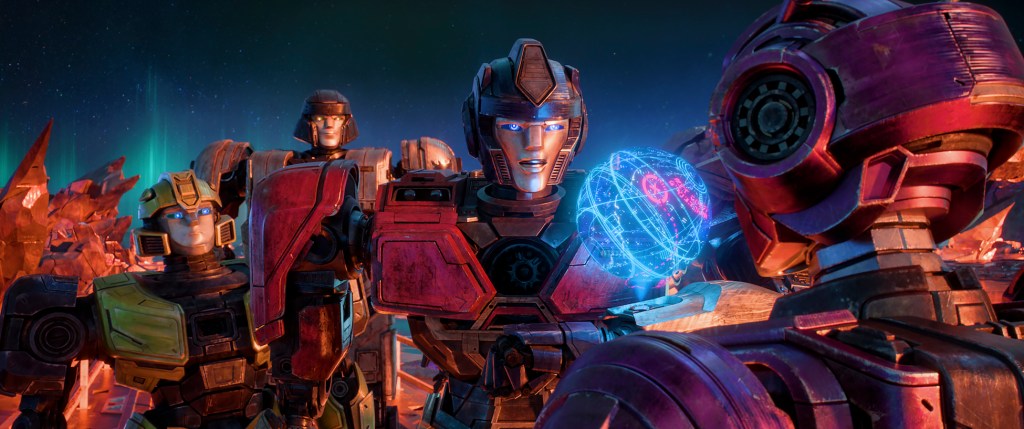
Orion Pax (Chris Hemsworth) and D-16 (Brian Tyree Henry) are two lowly mining bots among many non-transforming bots assigned to dig out precious energon crystals from deep inside their planet.
They discover a beacon that seems to lead to the Matrix, a legendary gem that has the power to restore the flow of energy on the planet. They agree to seek it out, recruiting the bubbly B-127 (Keegan-Michael Key) and the reluctant former security Elita-1 (Scarlett Johansson) along the way.
Above ground, the beacon leads the group to Alpha Trion (Lawrence Fishbourne) – one of the ancient original Prime defenders of Cybertron against the invading alien Quintessons. Alpha Trion reveals the truth about the death of the Primes and Sentinel, who has since lorded over their city of Iacon. He gifts the group with Transformation cogs, enabling them transformation power.
Also on the surface, the group meets the former High Guard of Cybertron led by Starscream (Steve Buscemi) who seek revenge against Sentinel. D-16, who has taken Sentinel’s deception personally, muscles his way against Starscream to gain leadership of the soldiers. But Sentinel’s guards surprise them, capturing many and defeating the rest.
Orion recruits the remaining to free the citizens from Sentinel’s slavery and bring Sentinel down. But D-16 would rather do things his way and use his new power to create a new society. Thus the rivalry begins.
How they literally become Optimus Prime and Megatron is the ultimate highlight of the film, grandiose in dramatization, enough to send the audience to rapt applause, with a few tears shed I’ve been told (not mine, but I was close.)
L-r, Brian Tyree Henry (D-16), Keegan-Michael Key (B-127), Scarlett Johansson (Elita-1) and Chris Hemsworth (Orion Pax) star in PARAMOUNT ANIMATION and HASBRO Present In Association with NEW REPUBLIC PICTURES
A di BONAVENTURA PICTURES Production A TOM DESANTO / DON MURPHY Production
A BAY FILMS Production “TRANSFORMERS ONE”
L-r, Keegan-Michael Key (B-127), Brian Tyree Henry (D-16), Chris Hemsworth (Orion Pax) and Scarlett Johansson (Elita-1) star in PARAMOUNT ANIMATION and HASBRO Present In Association with NEW REPUBLIC PICTURES
A di BONAVENTURA PICTURES Production A TOM DESANTO / DON MURPHY Production
A BAY FILMS Production “TRANSFORMERS ONE”
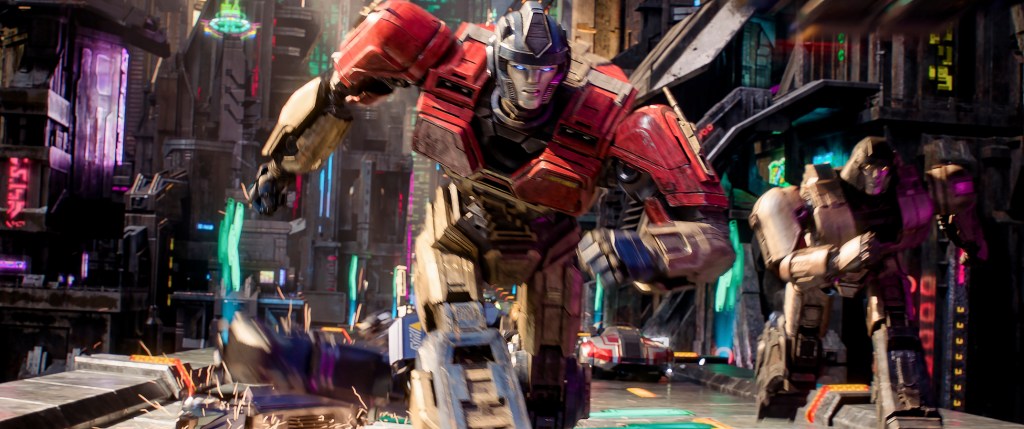
Chris Hemsworth (Orion Pax/Optimus Prime) stars in PARAMOUNT ANIMATION and HASBRO Present In Association with NEW REPUBLIC PICTURES
A di BONAVENTURA PICTURES Production A TOM DESANTO / DON MURPHY Production
A BAY FILMS Production “TRANSFORMERS ONE”
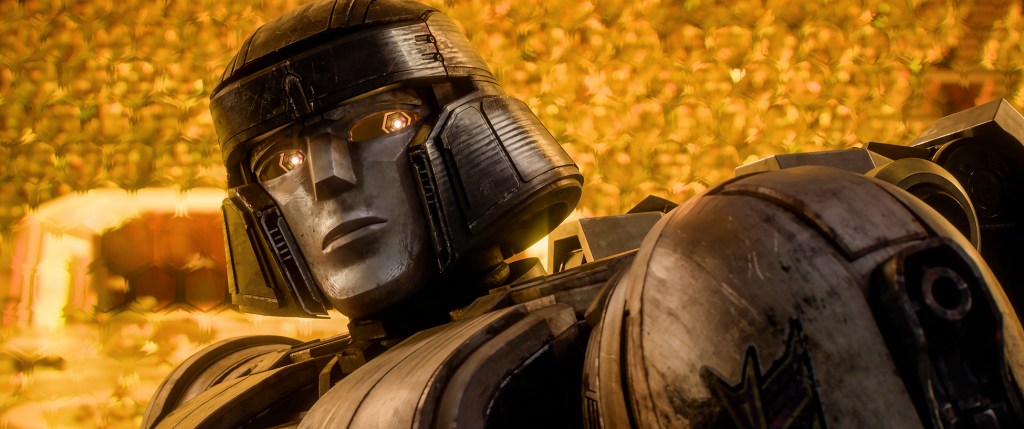
Brian Tyree Henry (D-16/Megatron) stars in PARAMOUNT ANIMATION and HASBRO Present In Association with NEW REPUBLIC PICTURES
A di BONAVENTURA PICTURES Production A TOM DESANTO / DON MURPHY Production
A BAY FILMS Production “TRANSFORMERS ONE”) stars in PARAMOUNT ANIMATION and HASBRO Present In Association with NEW REPUBLIC PICTURES
A di BONAVENTURA PICTURES Production A TOM DESANTO / DON MURPHY Production
A BAY FILMS Production “TRANSFORMERS ONE”
Chris Hemsworth (Orion Pax), left, and Brian Tyree Henry (D-16) star in PARAMOUNT ANIMATION and HASBRO Present In Association with NEW REPUBLIC PICTURES
A di BONAVENTURA PICTURES Production A TOM DESANTO / DON MURPHY Production
A BAY FILMS Production “TRANSFORMERS ONE”
In terms of lore, I think the newest revelation is adding an heirarchal (or class) system in the city that places non-transformers at the bottom of the societal heap. This makes the last third of the story somewhat of a traditional workers’ revolt against the elite, except that the other leader of the revolt intends to take authoritarian control.
What makes this a big fun to watch is the humanizing of the robots, who speak in relatable, often humorous terms – their personalities leaping off the screen from the script to the voice acting, and expressive faces that are an improvement over the designs of previous Transformers. So much so that I think Hemsworth can now do more voice acting assignments and give the other Chris (Pratt) a challenging run for his voice money. Well, maybe.
Cybertron is a fully-realized alien metallic world from underground to surface – which I admit I couldn’t appreciate from the trailer. Let’s admit that the trailer looks like a mashup of all the film’s highlights (which it is) and doesn’t give off alien planet feels right away much like how trailers of Avatar did it.
But characters with heart and a story with a clear dramatic arch is what sets this apart from all previous Transformers editions. Kudos to well-oiled writing, and steady direction from Josh Cooley. Some shots look amazing in 3D.
There are many callbacks to old school 80s Transformers (from the design of the bots to their voices, to familiar phrases and items. Hello, GoBots!) but the story is enjoyable and easily digestible enough for newbies. Smart editing keeps this war movie safe viewing even for youngsters (with their guardians’ supervision.) Stay until after the end credits for additional scenes.
I have to shout out Brian Tyler’s amazing music here, not just weaving old themes with new notes to fit the scenes, but a movement that elevates the contrast between Orion and D-16 especially in the climax.
Transformers One is a surprisingly effective refurbishing of the brand, a heartfelt reworking of an old rivalry and positively the start of an exciting new way to enjoy this franchise.
Overall a badass origin movie for what will be an expected new universe of movies and Hasbro toys.
(Images and trailer link courtesy of Paramount Pictures International)








 acid reflects