Ready Player One
Directed by Steven Spielberg
Based on the novel by Ernest Cline
Slight spoilers, beware!
You could care so much about this film – or – you could care less.
Ready Player One is classic Spielbergian screen magic – minus a truly riveting story.
At the SXSW Festival special screening last March, director Steven Spielberg was quoted as saying, “Just remember one thing: The side windows are for cultural references, the windshield is for a story. If you look straight ahead, you can always follow the story.” Indeed, because all the hype and some reviews that heap all the hyperbole they could dump on RP1 largely center on its spellbinding spectacle. And those aren’t wrong at all.
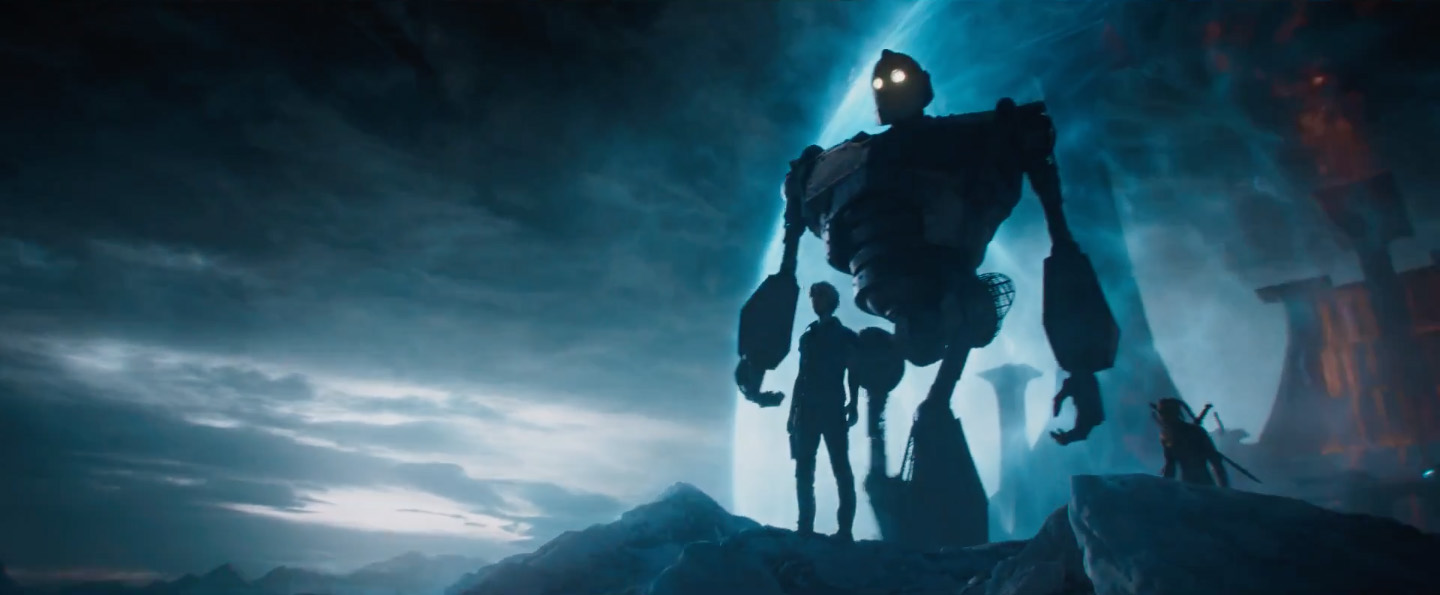
To say that Ready Player One has stunning visuals and a staggering profusion of 1980s pop-cultural references is an understatement. Repeated screenings on the largest screens possible are necessary just to point out the layer upon layer upon layer of 1980s pop-culture costume, background, character, sound, design and easter eggs that Stranger Things has yet to scratch the surface of. Spielberg knows what he has made. He said in the same screening, “This is not a film that we’ve made, this is — I promise you — a movie.” It’s a popcorn flick.
The movie centers around the Oasis – a virtual world where people in the year 2045 can do everything in from pole dancing, to playing music to defeating bad guys in a virtual distant planet – in order to win cryptocurrency which can be used in the real world. Except in their world, their cryptocurrency isn’t clouded in controversies. Back to the story.
So the recently-deceased inventor of the Oasis, James Halliday (Mark Rylance) hid easter eggs in the virtual world, and the first person to crack the code and the keys inherits the half-trillion-dollar game. In the months since this message appeared, no one has won any of the keys yet, until Wade Watts.
Wade Watts (Tye Sheridan) is an 18 year old gamer from the slums of Ohio who spends his days playing the virtual open game. Thank goodness for his obsession with Halliday and an impressive fanboying of everything 80s pop culture, he gets to crack the first code and finishes a canon-ball run type of street race where those who fail lose all their crypto and their (game) life.
Wade, who in the Oasis is known as Parzival, meets and sort of establishes an alliance with several other gamers including Art3mis (Olivia Cooke) and his game BFF Aech (Lena Waithe.) Also known as the First Five who found the first key, their group develops an understanding to help each other out in order to win the game.
However in the real world, hundreds of gamers have been recruited by the largest virtual company Innovative Online Industries to win the game for its CEO Sorrento (Ben Mendelsohn.) Sorrento is so keen to win the game for himself that he has hired goons to physically harm Wade and his family. And so, a battle for the real and virtual worlds take place, with those against Sorrento and IOI as the revolutionaries. Or the resistance. Sure. Guess which side wins.
I’m sounding so cynical towards a movie that doesn’t promise to change the world. But let’s not forget two things here: that for each film, the story (whether text, subtext or documentary) takes primary consideration, and, that RP1 is directed by Spielberg. Which brings us back to the director’s own caveat at the SXSW screening.
Wade’s heroic quest is the story. Without prior knowledge of the novel, I naturally assumed that the pop cultural references in the movie would serve as clues to solve Halliday’s (or Anorak’s) puzzle. Yes and no. Yes only towards the end, but mostly as eye-candy to geek out on.


(Photos from Warner Bros Pictures)
I repeat Spielberg’s caveat because that is what RP1 is: a movie – a middling narrative with superlative visuals. A fun ride, but not the transcendent stuff that the devout would tend to ascribe to the master.
I mean we’re talking about the filmmaker responsible for Jaws, Close Encounters of the Third Kind, Schindler’s List, E.T., Minority Report and Empire of the Sun, to name a few. I saw Jurassic Park in the theaters 27 times (granted, I was processing the passing of my father months before that) and seeing different kinds of people responding to what was onscreen was personally an epiphany.
But Spielberg was not responsible for the source material (the novel), which may have read better than it was cramped onscreen.
RP1 reminded me of James Cameron’s digital colossus Avatar from 2009, in which the hero is shown to gradually prefer staying in his avatar form in the “alternate world” rather than his reality. The similarities are few, but just like Avatar, the audience is immersed into a lush alternate world visually distinct from our (or the character’s) reality.
The thing is, I didn’t care so much for Wade, nor for anyone else on screen. Again, these characters and their relationships may have been fleshed out more in the novel, I just didn’t find anyone interesting much less care each time anyone unlocks a key. Casting is interesting, on the other hand, especially the multiracial motley crew of the First Five. If only the humans outside their avatar form had more screen time. We all know Spielberg does magic with onscreen children, so adding to my very short list of disappointments is the short screen time of Philip Zhao who plays the eleven year-old Sho.
As everyone who has seen the film has already said, RP1 is bursting to the seams with visual flair – 80s references or not. The entire show is a definitive crowd pleaser – from the thrilling street race at the beginning of the movie to the over-the-top mass battle at the end. It’s full of Spielberg kinetic flair, such as suspending the player on wires without realizing that it would result in complicating the characters’ escape. There’s a lot of those witty details onscreen. Anyone who has had Massively Multiplayer Online RPG experience would get the same feel of seeing hundreds of players simultaneously doing their own thing in the game. Achievement unlocked – if the movie’s aim is to entertain, entertain it does.
Spielberg also makes many references to the works of his fellow filmmakers – most often of whom is Robert Zemeckis who helmed Back To The Future, and he gets a plot device named after him in RP1.
But the scene I enjoyed most and was the best rendered apparently isn’t in the novel. Stanley Kubrick’s horrific The Shining gets a full sequence reference when the First Five find out that they must survive Overlook Hotel in order to obtain the second key. This entire sequece not only is cleverly played out, but is actually quite horrific – true to the nature of the horror classic.
Alas, Ready Player One can only be summed up as a visually stunning adventure. It’s far from the master’s least remarkable outings (definitely not the abominable Mel Brooksian 1941) but the lack of meat in its narrative just doesn’t make it as closely memorable as the director’s best works.
Leave a Reply